
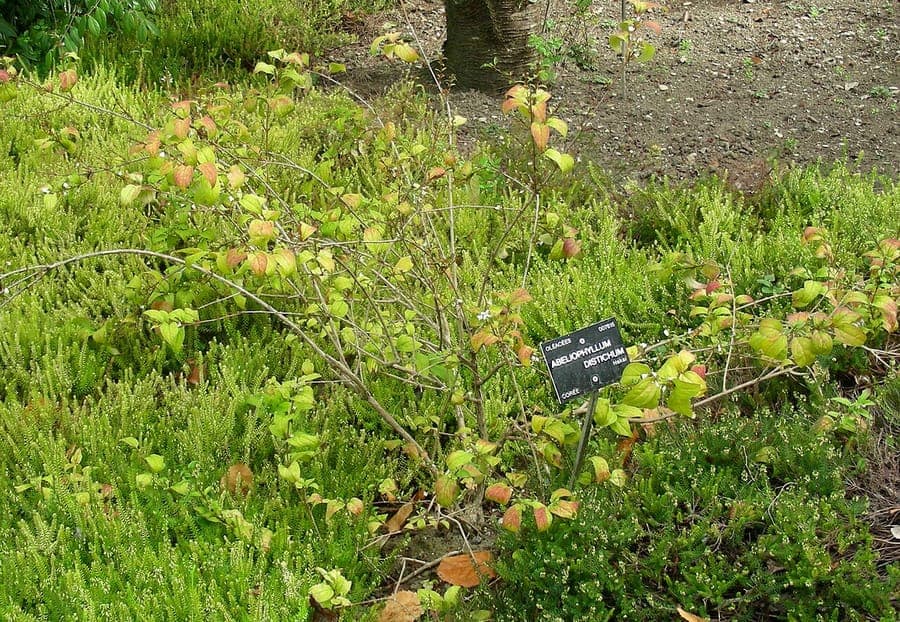
Another one of my pictures: This photograph was taken by Medium69 (William Crochot) and released under the license stated below. You are free to use it for any purpose as long as you credit the author (William Crochot), the Source (Wikimedia Commons) and the license (CC-BY-SA 4.0) in close relation to the image. Please do not upload an updated image here without consultation with the Author. The author would like to make corrections only at his own source RAW. This ensures that the changes are preserved.Please if you think that any changes should be required, please inform the author.Otherwise you can upload a new image with a new name. Please use one of the templates derivative or extract. / CC BY-SA 4.0, via Wikimedia Commons
White-forsythia: complete guide
Abeliophyllum distichum
Want to see White-forsythia: complete guide in your garden?
1 minute, no credit card
Overview
White-forsythia, botanically known as Abeliophyllum distichum, is an underrated gem in the garden that blooms when most other plants are still dormant. This deciduous shrub, a member of the Oleaceae (olive family), is the sole species in its genus and originates from Korea. Its charming, star-shaped white flowers often appear as early as February or March, even before the leaves emerge, and release a delightful, almond-like fragrance. It's a compact shrub that rarely exceeds 1.5 to 2 meters in height and achieves a similar spread, making it an excellent choice for both small and large gardens.
At gardenworld.app, you can create a garden design that perfectly complements the early bloom and compact form of the White-forsythia, allowing you to fully enjoy this special shrub in your outdoor space. It's a plant that offers significant visual interest during the often-grey winter months and serves as a welcome harbinger of spring. The flowers, weather permitting, also attract the first early insects, contributing to the biodiversity of your garden. Its branches are quite slender and elegant, giving the plant a delicate appearance.
Appearance & bloom cycle
Abeliophyllum distichum is renowned for its abundant flowering on bare branches. The flowers are small, approximately 1 to 1.5 cm in diameter, and feature four star-shaped petals. They are typically pure white, though a faint pink blush can sometimes be present, especially in cooler temperatures or on specific cultivars. The blooms appear in clusters along the branches, covering the entire shrub with a cloud of white. The flowering period varies but generally begins in February and can extend into April, depending on the weather and the plant's specific location. After flowering, light green, oval leaves emerge, which may sometimes develop an attractive purplish tint in autumn, although this is not always as spectacular as with other fall-colouring shrubs.
Its branches are quite slender and have a light brown colour. The growth habit is more loose and spreading rather than rigidly upright. Without pruning, the shrub can adopt a somewhat irregular but natural form. The flower buds are formed in late summer and autumn, so early frosts can sometimes affect flowering, but generally, the plant is very reliable in its bloom. The fragrance of the flowers is subtly sweet and reminiscent of almonds, especially on milder winter days. This makes it an ideal plant to place near a pathway or seating area, allowing you to fully appreciate its scent.
Ideal location: sun, shade, or partial shade
The White-forsythia thrives best in a location with full sun to light partial shade. Full sun encourages the most abundant flowering and a more compact growth habit. A spot receiving at least 6 hours of direct sunlight per day is ideal. In partial shade, the plant will still bloom, but possibly less profusely and with a looser growth form. Avoid deep shade, as this will result in sparse flowering and weak growth. Due to its early flowering time, it's important to consider shelter from biting easterly winds and late night frosts, which can damage the flowers. A sheltered spot against a south-facing wall or among other evergreen shrubs can work wonders for its bloom.
When choosing the location, also consider its fragrance. Place the shrub where you can easily pass by it, for example, near the front door, a patio, or a window, so you can catch its delightful almond scent when the plant is in bloom. The plant is not particularly fussy, but proper site preparation, as described below, will significantly improve its health and flowering. Also, ensure the plant has enough space to assume its natural shape without being immediately stifled by larger, more aggressive plants.
Soil & underground requirements
Abeliophyllum distichum is not extremely demanding regarding soil, but it prefers well-drained, fertile soil. A slightly acidic to neutral pH level (between 6.0 and 7.0) is ideal. Heavy clay soils should be improved with organic matter such as compost or well-rotted leaf mould to enhance drainage. Sandy soils can benefit from the addition of compost to increase moisture retention. The plant does not tolerate wet feet, especially in winter, which can lead to root rot. Therefore, ensure a location where excess water can drain easily. When planting, dig a hole twice as wide as the root ball and just as deep. Mix the excavated soil with a generous amount of compost before placing the plant. This gives the roots a good start and ensures sufficient nutrients.
The root ball should be thoroughly moist when planting. After placing the plant in the hole, backfill with the improved soil mix and gently firm the soil. Then, water generously. For the first few weeks after planting, it is crucial to keep the soil moist to help the roots establish. A mulch layer of bark chips or compost around the base of the plant can help retain moisture, suppress weeds, and moderate soil temperature. However, this mulch layer should not touch the stem directly to prevent fungal issues.
Watering: when and how much
After planting, regular watering is essential, especially during dry periods in the first growing season. The soil should be consistently lightly moist, but never waterlogged. Check the soil moisture by sticking your finger about 5 cm deep into the earth; if it feels dry, it's time to water. A mature Abeliophyllum distichum is reasonably drought-tolerant once well-established but will perform better with consistent moisture, particularly during long, dry summers. During the flowering period in late winter and early spring, additional watering is usually not necessary unless the winter has been exceptionally dry and the soil has dried out deeply.
In summer, when the plant is in full leaf, deep watering once a week may be necessary during prolonged dry spells. It's better to water thoroughly less often than to give small amounts frequently, as this encourages the development of deeper roots. Ensure that the water reaches the root zone and doesn't just sit on the surface. In autumn and winter, additional watering is rarely needed unless there's a very long period without rain or snowfall, and the soil completely dries out. Watch for signs of water stress, such as drooping leaves, though this is less common with Abeliophyllum distichum than with other plants. Overwatering is more detrimental than underwatering for this plant, so be cautious with your watering regimen.
Free design
Want to see White-forsythia: complete guide in your garden? Make a free design now.
Pruning: when and how
Pruning the White-forsythia is not strictly necessary for the plant's health, but it does help maintain its shape and stimulate flowering. The best time to prune is immediately after flowering, usually in April. If you prune too late (for example, in summer or autumn), you will remove the flower buds that have already formed for the following year, resulting in fewer blooms. The plant flowers on old wood, so be careful with this.
Start by removing any dead, damaged, or diseased branches. After that, you can remove any branches that are crossing or rubbing. To rejuvenate the shrub and keep it open, you can remove 1/3 of the oldest branches down to the base each year. This encourages the growth of new shoots that will flower in subsequent years. If the shrub becomes too large or has an undesirable shape, you can apply a more rigorous rejuvenation prune by cutting all branches back to about 30-40 cm above the ground. This will result in a year without blooms, but the plant will grow back vigorously, and flowering will be abundant again in the following years. Always use sharp and clean pruning tools to minimize damage to the branches and prevent diseases.
Maintenance calendar
January/February: Check for frost damage after severe cold spells. Consider light protection for young plants during extreme cold. Enjoy the first flower buds opening.
March: Peak flowering period. If there's prolonged drought and mild temperatures, provide light watering if necessary. Avoid pruning to not disturb the bloom.
April: Immediately after flowering is the ideal time for pruning. Remove dead, damaged, and crossing branches. Apply rejuvenation pruning if desired. Give the plant an organic fertilizer for a good start to the growing season.
May/June: Leaves are fully emerged. Check for pests or diseases. Ensure adequate water during dry spells. Replenish mulch layer if needed.
July/August: Focus on watering during dry periods. The plant now forms flower buds for the next year, so avoid pruning. Light fertilization may be applied if the plant appears weak.
September/October: Leaves may begin to change colour. Provide a final deep watering before winter. Check the mulch layer.
November/December: The plant enters winter dormancy. No specific actions are needed, unless extreme frost is expected. Check that branches are not breaking under heavy snow loads.
Winter hardiness & protection
Abeliophyllum distichum is a very hardy shrub and is classified in USDA zones 5 to 8. This means it can tolerate temperatures down to approximately -29°C without significant damage. In the UK and other similar climates, it is generally excellent winter hardy and rarely requires extra protection, except in extremely cold winters or in very windy locations. Young plants are always slightly more sensitive than established specimens. For young plants, it may be advisable to provide some extra protection during the first winter, for example, by mulching the base of the plant with a thick layer of leaves or straw, or by covering the shrub with horticultural fleece if severe frost and biting winds are forecast. This is especially important if the plant is in an open, unsheltered spot.
The flowers themselves, however, are more susceptible to frost. Although the plant blooms early, late night frosts can damage opened flowers, causing them to turn brown and drop. This is usually not a problem for the plant's overall health, but it can reduce the bloom for that particular year. Therefore, choose a somewhat sheltered location, for example, against a wall or hedge, to protect the flowers from the coldest winds. Good drainage is also crucial in winter, as wet roots in frozen ground can be fatal. Ensure that the soil around the plant does not become waterlogged during the winter months.
Companion plants & combinations
White-forsythia is a wonderful plant to combine with other early bloomers or evergreen plants that provide a beautiful backdrop for its delicate white flowers. Consider evergreen shrubs such as Rhododendrons (which bloom later but remain green all year), Yew (for a crisp, dark green background), or Skimmia (which also offers winter colour with berries and sometimes flower buds). Combine it with other early bloomers like Hamamelis (witch hazel) for contrasting yellow, orange, or red flowers, or with Helleborus (hellebore) which also bloom in winter and early spring and provide ground cover.
For beautiful layering, you can plant Abeliophyllum distichum with underplantings of early spring bulbs such as snowdrops (Galanthus), crocuses (Crocus), or winter aconites (Eranthis hyemalis). These bloom simultaneously and create a lovely carpet of colour at the feet of the shrub. Ornamental grasses that retain their structure in winter, such as Carex (sedge) or Festuca (fescue), can also be a nice addition. Place the White-forsythia where its early bloom can be best appreciated, for example, at the edge of a border, near an entrance, or in an informal hedge. It is a versatile shrub that fits many garden styles, from cottage to modern.
Concluding
Abeliophyllum distichum is a plant that every gardener should consider, especially those yearning for early blooms and a touch of elegance in the winter garden. Its understated appearance belies a surprising resilience and an enchanting fragrance that awakens the senses when the rest of the garden is still asleep. With the right care and placement, this White-forsythia will put on a spectacular show year after year.
Whether you are a novice gardener or a seasoned expert, this shrub is relatively easy to maintain and rewards you richly. For more inspiration on how to integrate Abeliophyllum distichum into a harmonious garden design, you can always visit gardenworld.app. Don't forget to visit your local garden centres for quality plants and expert advice. Happy gardening!
Want to see White-forsythia: complete guide in your garden? Make a free design now.
Upload a photo, pick a style, and get a photorealistic design with plant list in under a minute.
No credit card required


Similar plants
Rough menodora: complete guide
Menodora scabra
Full guide to Menodora scabra: a drought-tolerant desert subshrub with bright yellow flowers, ideal for rock gardens and xeriscapes.
Fraxinus dipetala: complete guide
Fraxinus dipetala
California ash or two-petal ash from southwestern USA. Beautiful spring flowers, drought-tolerant. Experimental choice for warm Mediterranean front gardens.
Syringa komarowii: complete guide
Syringa komarowii
Syringa komarowii is a striking lilac from central China with elegant flower spikes and lovely foliage. Discover the complete care guide here.