
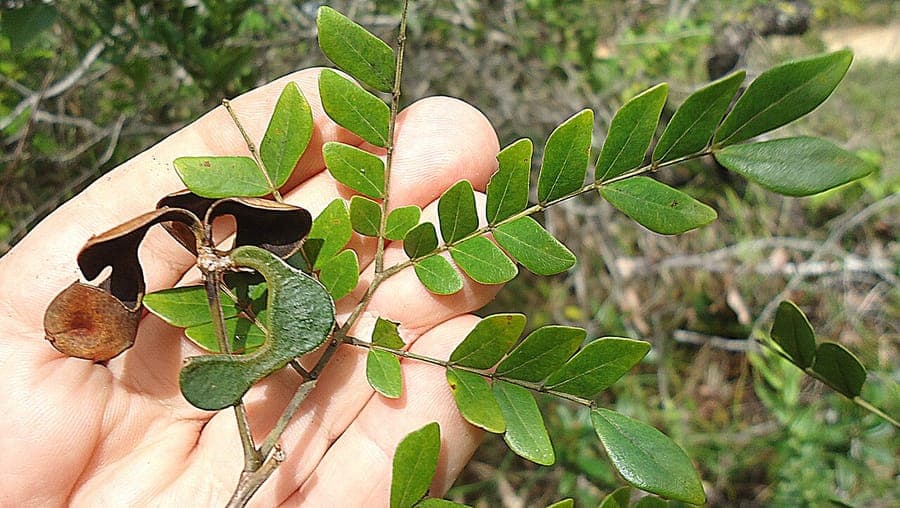
Alex Popovkin, Bahia, Brazil / CC BY 2.0, via Wikimedia Commons
Soapwood: complete guide
Abarema jupunba
Want to see Soapwood: complete guide in your garden?
1 minute, no credit card
Overview
Abarema jupunba, commonly known as Soapwood, is a captivating tree native to the tropical and subtropical regions of Central and South America. This medium-sized tree belongs to the Fabaceae family, the pea or legume family, which is often evident in the structure of its leaves and flowers. While not widely known in all temperate regions, Soapwood offers a unique addition to gardens in warmer climates, or as a container plant in colder areas, thanks to its attractive foliage and interesting growth habit. The common name 'Soapwood' may refer to traditional uses of its bark or seeds, though this is not the primary reason for cultivating the plant in a garden setting.
For those dreaming of an exotic garden, Abarema jupunba can be a magnificent focal point. At gardenworld.app, you can create a garden design that perfectly integrates tropical or subtropical plants like the Soapwood, taking into account the specific requirements of this special tree. It is a plant that, with proper care, provides a lush and green ambiance to any outdoor space.
Appearance & Bloom Cycle
The Abarema jupunba is an evergreen tree that can reach heights of 10 to 20 meters in its natural habitat, though it often remains smaller in cultivation, especially when grown in containers. Its most striking feature is its bipinnately compound leaves, composed of numerous small, oval or oblong leaflets neatly arranged along a petiole. These leaves are glossy green, giving the tree a dense, luxuriant appearance. Young shoots may exhibit a reddish tint, providing a lovely contrast to the mature foliage.
Soapwood flowers are relatively understated but charming. They appear in fluffy, spherical clusters, typically white to cream in color. While not as flamboyant as some other tropical blooms, their delicate structure and subtle fragrance often attract insects. The flowering period varies but generally occurs during the warmer months, from late spring to summer. After flowering, the tree develops pods characteristic of the legume family, which contain the seeds and can add an interesting texture to the tree after the flowers have faded.
Ideal Location: Sun, Shade, or Partial Shade
Abarema jupunba thrives best in a location with full sun to light partial shade. In its natural tropical environment, it receives abundant sunlight, which is crucial for healthy growth and flowering. A minimum of 6 hours of direct sunlight per day is recommended. If the tree is placed in too shady an environment, it will grow less compactly, produce fewer flowers, and its leaves may lose their intense green color. In very hot climates, a bit of afternoon shade might be desirable to prevent leaf scorch, but generally, bright light is key.
For those growing Soapwood as a container plant in colder regions, it is important to place it in the sunniest spot in the garden or on the patio during summer. In winter, it must be brought indoors and kept in a bright, frost-free location, such as near a south-facing window. Ensure there is sufficient light, even indoors, to minimize leaf drop.
Soil & Underground Requirements
Soapwood has specific soil requirements. It prefers well-draining, fertile soil that is slightly acidic to neutral (pH 6.0-7.0). Heavy clay soil that retains water should be absolutely avoided, as this can lead to root rot. A sandy loam, enriched with organic matter, is ideal. This ensures good drainage and sufficient nutrients.
When planting, whether in the ground (in suitable warm climates) or in a pot, it is advisable to amend the soil. Mix compost or well-rotted manure into the existing soil to improve its structure and fertility. For container plants, a high-quality potting mix for Mediterranean or tropical plants, blended with perlite or coarse sand for extra drainage, is a good choice. Ensure the pot has adequate drainage holes. The roots of Abarema jupunba spread reasonably, so a spacious pot is essential for healthy development.
Watering: When and How Much
Water is essential for Abarema jupunba, especially during the warm growing months. The soil should be consistently moist but never waterlogged. A good rule of thumb is to water when the top 2-3 cm of soil feels dry to the touch. In summer, this might mean watering daily or every other day, depending on temperature and pot size.
In winter, when growth slows and the plant is indoors, watering should be significantly reduced. Allow the soil to dry out further between waterings, but prevent the root ball from completely desiccating. Overwatering in winter is a common cause of problems like root rot. Preferably use rainwater or softened water, as the plant can be sensitive to chemicals and high lime content in tap water. Always ensure excess water can drain from the pot to prevent stagnation.
Free design
Want to see Soapwood: complete guide in your garden? Make a free design now.
Pruning: When and How
Pruning Abarema jupunba is primarily aimed at shaping the tree, removing dead or damaged branches, and promoting compact growth, especially for container plants. The best time to prune is in late winter or early spring, before new growth begins.
For young trees, light formative pruning can help establish a strong central leader and a balanced crown. Remove crossing branches and those growing inwards. For mature trees, you can annually remove dead, diseased, or weak branches. If the tree becomes too large, it can be cut back to limit its size. However, be cautious with radical pruning, as this can affect the current year's bloom. For container plants, regular pruning is important to maintain the desired size and shape and encourage the plant to become bushier. Always use sharp and clean pruning tools to prevent diseases.
Maintenance Calendar
- January - February: Reduce watering for indoor overwintering plants. Check for pests. Begin light pruning to maintain shape and remove dead branches.
- March - April: Gradually increase watering as days lengthen and warm up. Start applying a balanced liquid fertilizer (every 2-4 weeks). Prepare plants for moving outdoors.
- May - June: Place container plants outdoors in a sunny spot after all danger of night frost has passed. Continue regular watering and fertilizing. Watch for the first signs of bloom.
- July - August: Peak growth and flowering. Water regularly and abundantly, especially during dry periods. Continue fertilizing as directed. Check for pests like spider mites or aphids.
- September - October: Gradually reduce fertilization. Prepare container plants for indoor overwintering; bring them indoors before the first frost. Reduce watering.
- November - December: Further minimize watering for indoor overwintering plants. Ensure adequate light. Regularly check for diseases and pests, which can spread faster indoors in dry air. No pruning or fertilizing.
Winter Hardiness & Protection
Abarema jupunba is a tropical plant and is not winter hardy in colder climates, including much of Northern Europe. It cannot tolerate any frost. The USDA hardiness zones for this plant are typically zones 10-11, meaning temperatures below 0°C can be fatal.
In areas where temperatures drop below 10°C, Soapwood must be grown as a container plant and overwintered indoors. Choose a bright, frost-free space, preferably with a consistent temperature between 10-15°C. A conservatory, a bright garage, or an unheated but frost-free room are suitable options. Ensure good air circulation to prevent fungal diseases and keep watering to a minimum. Protect the plant from drafts and sudden temperature changes. In spring, when temperatures consistently remain above 10°C and all danger of frost has passed (usually after the 'Ice Saints' in mid-May), the plant can be moved outdoors again. You can often find suitable indoor plant care products and advice at local garden centres.
Companion Plants & Combinations
For a tropical ambiance in the garden or on the patio, Abarema jupunba combines beautifully with other exotic plants. Consider:
- Strelitzia (Bird of Paradise): With its striking, colorful flowers, Strelitzia forms a brilliant contrast with the green foliage of the Soapwood.
- Musa (Banana Plant): The large, lush leaves of the banana plant create an instant tropical feel and beautifully complement the finer leaflets of the Soapwood.
- Alocasia (Elephant Ear): The impressive leaves of Alocasia, often with prominent veins, contribute to a lush underplanting.
- Phormium (New Zealand Flax): Although not tropical, the graphic forms and diverse leaf colors of Phormium offer a modern contrast and structure.
- Coleus (Painted Nettle): For underplanting in pots, Coleus plants with their variegated leaves can provide a splash of color. Plants like these are available at garden centres, where you can also find suitable potting soil and fertilizers.
These combinations create a layered effect, mimicking the dense vegetation of a tropical forest. Always ensure that companion plants have similar requirements for sunlight and water to ensure harmonious growth.
Conclusion
Abarema jupunba, or Soapwood, is a beautiful and unique addition for enthusiasts of exotic plants. While it requires some extra care in colder climates, particularly regarding winter protection, you will be rewarded with a lush, evergreen tree that brings a tropical ambiance to your garden or patio. With the right attention to location, soil, water, and pruning, this special tree will provide years of enjoyment. If you need assistance integrating this or other exotic plants into your garden design, gardenworld.app offers the tools and inspiration to help you realize your dream garden. Good luck with your Soapwood!
Want to see Soapwood: complete guide in your garden? Make a free design now.
Upload a photo, pick a style, and get a photorealistic design with plant list in under a minute.
No credit card required


Similar plants
Tall Silky Lupine: complete guide
Lupinus elatus
Tall silky lupine is a fast-growing Californian perennial with silvery foliage and blue-purple flower spikes, ideal for a prairie-style garden.
Garfield Lupine: complete guide
Lupinus garfieldensis
The Garfield lupine is a rare, fast-growing American perennial for alkaline, dry grassland gardens, with striking blue flower spikes.
Lupinus elegans: complete guide
Lupinus elegans
Lupinus elegans, the elegant lupine, is a spectacular blooming plant from Mexico with blue flower spikes. Care, cultivation and garden use.