

Japanese maple burnt leaf edges: wind and drought, not disease
By the GardenWorld editorial team, updated on
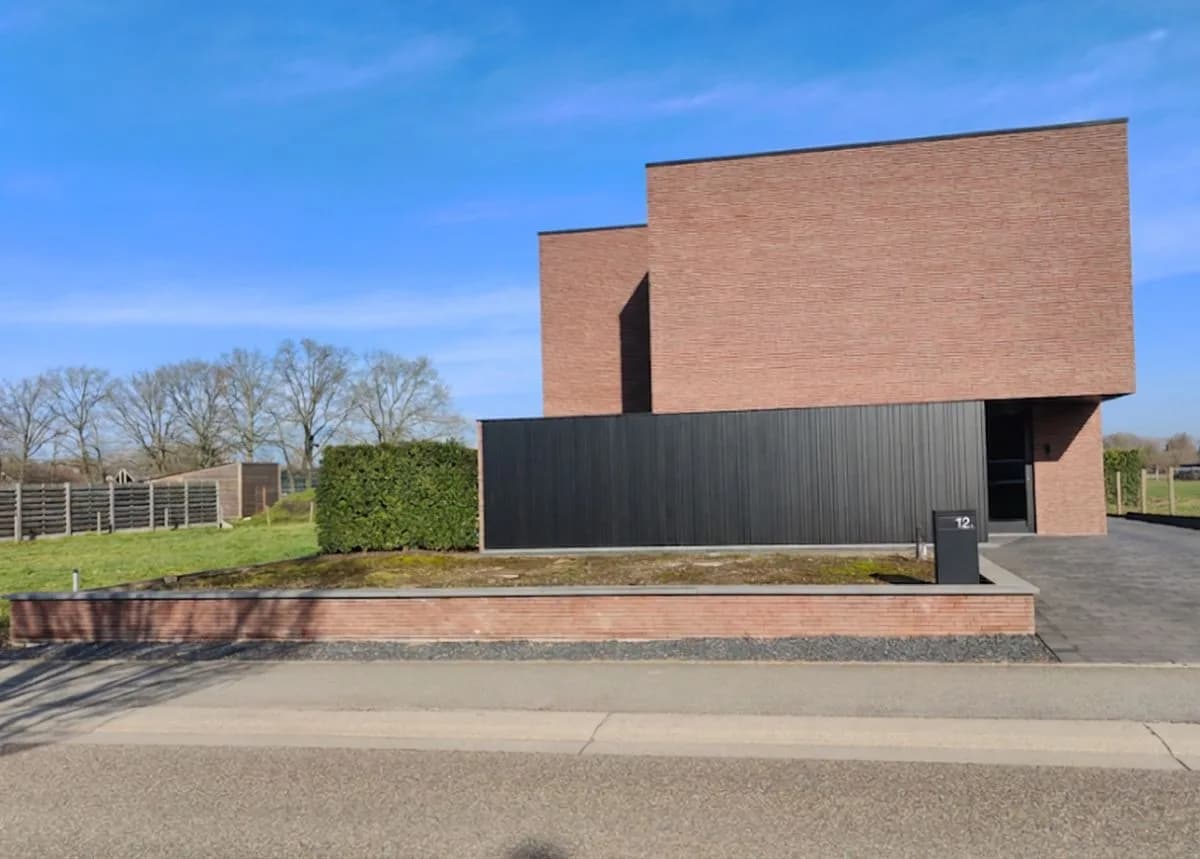
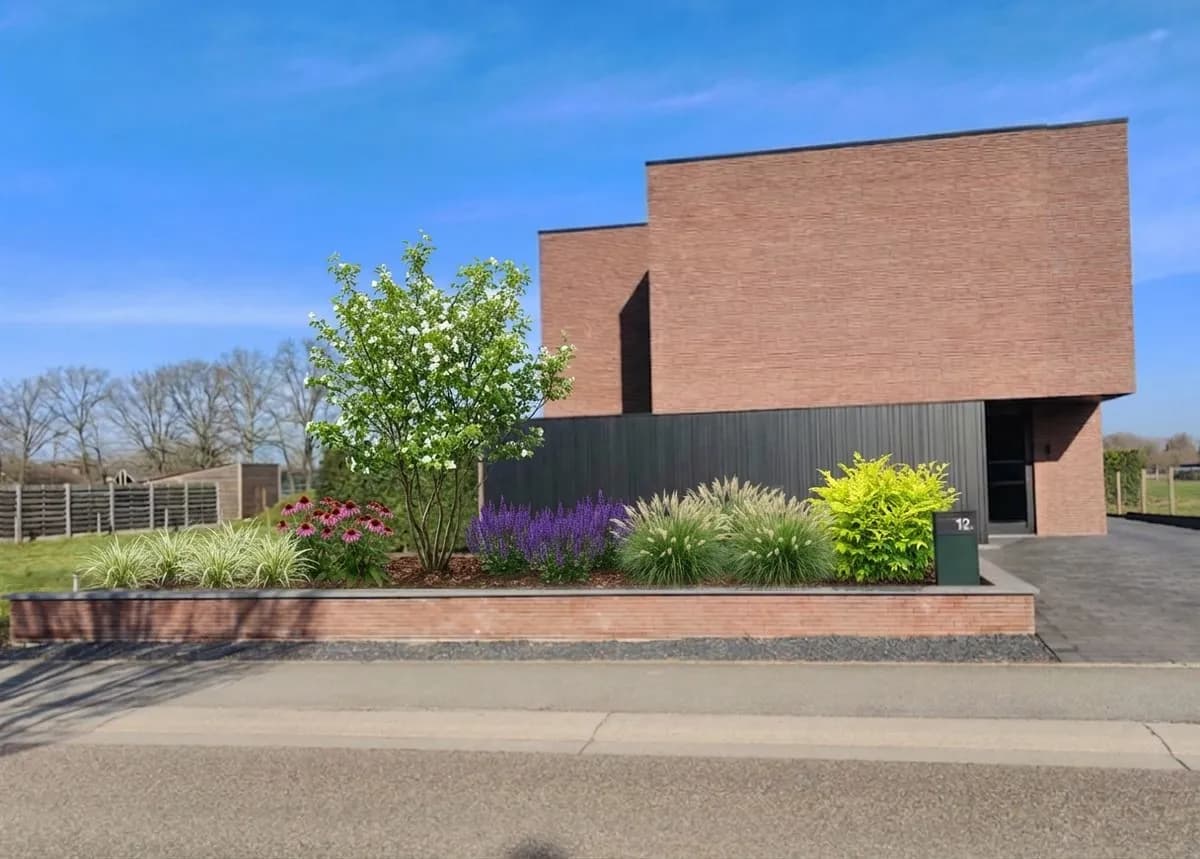
Want to see this in your garden?
Full design in HD: €7.99
Why do Japanese maple leaves get brown, scorched edges?
On a Japanese maple (Acer palmatum), the leaf edges do not turn brown because of disease, but because the leaf loses more moisture than the roots can replace. Wind and strong afternoon sun pull water out of the thin, delicate foliage faster than the roots can keep up, so the plant stops feeding the outer edge of the leaf, and that edge dies off. This happens most in July and August, on hot, dry, windy days.
You do not need to remove the tree, and it is not a fungus or virus that spreads to other plants. Scorched edges are a reaction to the conditions, and with a few changes to position, mulch and watering you can prevent them next year.
The causes: wind, sun and soil
Four factors work together. Wind dries out the leaf directly: a stiff breeze for half a day can already cause visible damage, especially on young trees with thin foliage. Afternoon sun, between noon and 4pm, is the strongest part of the day and pulls the most moisture from the leaves; Japanese maples prefer part shade, not full sun.
Dry air speeds up evaporation, and a warm, windy day without rain is the worst combination of the year. Poor or compacted soil makes it harder for roots to take up water; in a pot this is even more of a problem, since the rootball is small and can dry out within a single day at 25 degrees with wind.
The right spot: part shade, not full sun
Japanese maples are originally woodland edge plants. They want morning sun and shelter from the harshest hours of the day. A north-east or north-west facing spot works well: the morning sun warms the tree, and from around midday it falls into the shade of the house or a larger tree.
A fully south-facing spot without shelter is risky, especially combined with wind. A hedge, fence or wall on the windy side helps enormously. In a pot, a quiet corner of the terrace is better than a spot against a south wall, where heat lingers and wind swirls around the pot.
Not sure if the spot you have in mind is sheltered enough from wind and sun? On gardenworld.app you can see how the tree would look in your own garden first, before you move it.
Mulch: protecting the soil against drying out
Mulch is the first, easiest step. A layer of 5 to 10 cm of leaf mould, wood chips or well-rotted compost around the tree keeps the soil cooler and moister, and slows down evaporation considerably. Always leave 5 to 10 cm clear around the trunk itself, so it does not start to rot.
Use autumn leaves, wood chips (not fresh, wet chips that heat up as they break down) or your own compost. In a pot, mulching is trickier because there is little room; place the pot inside a larger, empty pot and fill the gap with mulch or wood chips. That insulates the rootball against both heat and frost.
Watering: deep and regular, not shallow
A small splash of water often feels right, but it actually keeps roots shallow. It is better to water less often but thoroughly, so the water reaches the bottom of the pot or deep into the soil and the roots grow downward to find it.
In July and August, check the top 3 cm of soil with your finger every day. If it feels dry, water thoroughly until it runs out of the bottom of the pot. In autumn and spring there is usually enough rain and you can leave most of it to nature. Never let a pot stand in a saucer of water: waterlogged roots die just as fast as dry ones.
Free preview
Create your own garden design
Moving the tree: your fastest fix
Does your tree already have scorched edges? Moving it works fastest. In a pot this is simple: place it a few metres away, out of the wind and the harshest sun.
In open ground it is harder, but still possible in October or November: dig up a generous rootball so as many roots as possible stay intact, and plant it straight away in its new, more sheltered spot. This year's damaged leaves will not recover, but next spring, usually around late April, a well-planted tree will grow fresh new leaves.
Feeding and soil: less is more
Japanese maples naturally grow in poor woodland soil and need very little feeding. Too much nitrogen produces large, soft leaves that lose even more water, which makes scorching worse.
Once a year, in April, a handful of well-rotted compost is enough. They like lightly acidic soil, a pH between 5.5 and 6.5; in strongly alkaline, lime-rich soil the leaves turn yellow and growth stalls. In a pot, use potting compost for rhododendrons and azaleas, or ordinary potting compost mixed with some extra organic compost.
Pruning: timing makes the difference
Never prune a Japanese maple in late winter or early spring: just before and during bud break, sap pressure rises in the trunk, and a cut will bleed heavily for a long time, weakening the tree. Prune instead in July or August, while the tree is in full leaf, or during deep winter dormancy in November or December.
Remove only dead branches or ones that cross and rub against each other; the natural, open shape is part of the tree's charm. Avoid sawing off large, thick branches; trimming small twigs is always fine.
Step by step
Step 1: Diagnose the problem
Scorched edges are evenly brown, dry and papery, starting at the tip and edge. If you see black spots or wet, soggy patches instead, that points to a fungus or disease, not scorch.
Step 2: Move the tree
Look for a spot with morning sun and shade from midday onward, sheltered from wind. In a pot, simply move it a few metres; in open ground, relocate it in October or November with a generous rootball.
Step 3: Top up the mulch
Check the layer around the tree. If it is thinner than 5 cm or missing entirely, add 5 to 10 cm of leaf mould or wood chips, leaving some space clear around the trunk.
Step 4: Run the water test
Feel 3 cm below the surface with your finger. If it feels dry there, water thoroughly. If it feels moist, wait another day. This is the only test you really need.
Step 5: Stop feeding and wait for spring
Skip extra fertiliser while the tree recovers. The damaged leaves stay on until autumn and then fall as usual; fresh leaves appear the following spring.
Frequently asked questions
Do scorched leaf edges recover? No, the dead part of the leaf does not come back. The leaves fall in autumn as normal. Once you have fixed the cause, the tree will grow healthy new leaves the following spring.
Is scorching contagious to other plants? No. It is a reaction to wind, sun and lack of moisture, not a fungus or virus, so it does not spread to nearby plants.
Should I move it into deeper shade instead? Not fully. Japanese maples like morning sun until around noon, followed by shade or filtered light. A spot in deep shade all year round actually produces a weaker, less attractive tree.
Should I trim off the scorched leaves? No, leave them on. The tree still draws nutrients back from the leaf before it drops. Trimming does not help and creates extra wounds where disease can enter.
See it in your own garden first
Want to know if a Japanese maple with its delicate foliage suits your garden, and whether you have the right spot for it? Upload a photo of your garden to gardenworld.app and see a free preview of a new design with this plant. The sharp image with the full plant list costs a one-time 7.99 euros, no subscription.
Create your own garden design
Upload a photo, pick a style, and get a photorealistic design with plant list in under a minute.
Full design in HD: €7.99
Related articles
 Planting
How to prune a Japanese maple: form and elegance
Japanese maple (Acer palmatum) pruning requires finesse. Learn how to preserve natural form and keep the tree healthy with minimal intervention.
 Planting
What if bay/laurel leaves get black edges: cause and remedy
Your bay laurel (Laurus nobilis) has brown to black edges on leaves. Learn what causes this (usually water, salt, wind) and how to fix it.
 Planting
Choosing drought-resistant plants
Drought-resistant plants save water while keeping your garden green and beautiful. The best species at a glance.