

Hanging a birdhouse: size, hole and placement per species
By the GardenWorld editorial team, updated on
Want to see this in your garden?
Full design in HD: €7.99
Why hang a birdhouse?
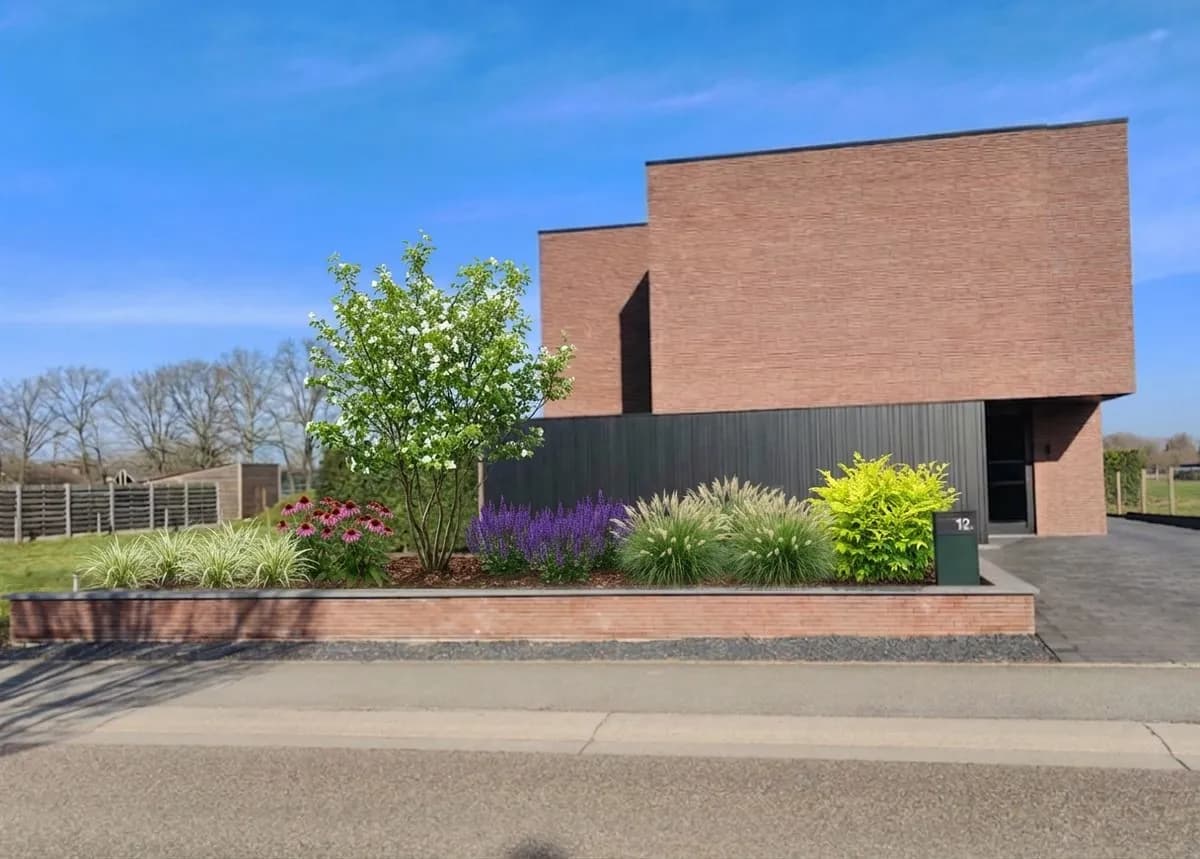
Birdhouses help garden birds find a safe place to raise their young. Especially in gardens with few natural nesting holes, such as in built-up areas, artificial nest boxes are worth their weight in gold. A well-placed birdhouse not only attracts tits and robins but also helps sustain the population of garden birds in your neighbourhood. They eat dozens of insects daily, so you get fewer problems with aphids, flying insects and caterpillars. Not sure which spot in your garden works best? On gardenworld.app you can see a preview of your own garden first, with a good spot for a birdhouse.
A birdhouse is not just any wooden box. The size of the entrance hole, the height at which you hang it and the direction it faces determine which bird species will nest there. Hang a house too low and cats have their meal instantly. Too small a hole and only the tiniest birds fit in. Too large and predators can reach inside. With the right measurements you hang it properly and get visitors.
Great tit: the 32-millimetre hole
The great tit (Parus major) is one of the most common nest box birds in Flanders and the Netherlands. You recognise them by their black head with white cheeks and the thin white line down the centre of their belly. They are about 14 centimetres long.
For a great tit the hole is exactly 32 millimetres (3.2 centimetres). Not 31 and not 33: birds really do need that precision. A 32-millimetre hole fits a great tit perfectly and keeps larger birds out. A starling or wood pigeon is too large and damages the box from inside if it tries to force its way in. A blue tit is smaller and needs less space, so it will not fit a 32-millimetre hole either.
Hang the great tit house between 1.5 and 2 metres high, not higher. Many people think birds prefer to sit high, but great tits are more comfortable at mid-height where they can still get in and out easily. Make sure the floor slopes slightly (has pitch) so rainwater runs off. Without drainage the eggs can rot or drown.
Blue tit: the 28-millimetre hole
The blue tit (Cyanistes caeruleus) is smaller than its larger cousin, the great tit. You recognise it by its blue crown, white cheeks with a blue eye-stripe, and a yellow underside with a faint, broken dark line. It weighs only around 10 to 11 grams, so it needs a smaller hole: 28 millimetres.
A 28-millimetre hole is selective: it shuts out the great tit (which is heavier and broader in the shoulders) but lets the blue tit pass through easily. If you hang two birdhouses in your garden with a different hole size each, you make room for multiple species at once. They do not then compete for the same boxes.
Place the blue tit house slightly higher than the great tit house, around 2 to 2.5 metres. Blue tits like some privacy and dare to nest further from the ground. Also make sure here that the roof has pitch and that water can drain away.
Robin: the half-open birdhouse
The robin (Erithacus rubecula) is more cautious than tits and does not always accept a closed nest box with only a hole. Instead, a robin wants a half-open birdhouse: a box without a front, or with large openings on two sides.
There is a special robin birdhouse that looks like a half-tunnel. It is open at front and back, has no roof but side walls that keep the rain out. It pairs well with so-called nest trays: a tray you fasten under an eave or against a wall. Robins like to nest close to human activity, so hang the box against your shed or under the eave of your garden house.
Robins do not nest high. They nest 1.5 to 2 metres high, in quiet places where they are not constantly disturbed. A robin will never nest in a spot where you walk past every day. Hang the house therefore somewhere removed, against a wall or in a thick hedge.
Height: the right distance from the ground
The height at which you hang a birdhouse determines who nests in it. Three rules of thumb: the higher, the safer for the birds (further away from cats and diggers), but also the harder for you to clean and monitor.
For great tits: 1.5 to 2 metres is ideal. They are heavy birds (around 18 grams) that fly well, so they dare to sit at mid-height. Do not hang the box too high, because young birds fall out and can no longer follow their parents.
For blue tits: 2 to 2.5 metres. They are lighter and more agile in flight, so they accept higher houses.
For robins: 1.5 to 2 metres against a wall. They like to see what is happening, so not so high that they miss all entrance threats.
For spotted flycatcher or swallow (species using open houses): 2 to 3 metres, on the side of your garden where there is little foot traffic.
Treecreeper and woodpecker like to hang houses 2 to 4 metres high in thick trees. They peck their own hole, so a ready-made birdhouse is overkill for them.
Direction and avoiding sunny spots
The direction a birdhouse faces is crucial. Birds do not want direct sun shining inside, because the nests get too warm and the eggs bake.
Hang birdhouses with the entrance facing east or northeast. Here the morning sun shines in, which is good (it warms up), but the harsh midday sun (south and west) stays outside. Never point the hole south or west.
Also make sure the entrance is not directly against a wall that stands in the full sun. If your house leans against your sunny garden shed, it becomes an oven inside. A shaded spot is much better. Birds feel safer in shade (less visible to predators) and the nest stays cool.
Free preview
Create your own garden design
Cats: protection is essential
Cats are the biggest reason birdhouses fail. A cat lurks under the box, jumps, and hop: young birds are gone. Or worse: the parents dare not fly out for fear of exposing their nest.
Protect birdhouses from cats by hanging them on smooth poles (no trees with strong side branches where cats can climb). A metal pole of at least 2 centimetres in diameter gives cats no grip. Place the pole at least 2 metres away from overhanging branches or walls, so cats cannot jump.
Alternatives: hang the house on the side of your garden shed or cabin, at least 2 metres high, so cats cannot reach it. Or fasten it to a thick hedge (really thick, not through it) where a cat cannot crawl.
A smooth collar around the pole also helps: cut a piece of PVC pipe lengthways, clip it around the pole at about 1.5 metres high, and fix it in place with tape or a cable tie. Cats get no grip on it and slide off.
Cleaning and maintenance per season
Birdhouses get dirty. After a nesting season there are bits of bird droppings, dead insects, bits of bird food, and sometimes even dead birds in the house. Without cleaning, diseases spread fast.
Clean birdhouses at the end of August or early September, when the last young have fledged (in the Netherlands around August; in Flanders sometimes until late September). Remove all debris with a spatula. Use no chemicals: clean water and a dry cloth is enough. Let the box air out.
For boxes where two broods have been (this sometimes happens in warm years), you can do an interim cleaning in July. Just make sure you do not disturb the second nest.
In winter you can leave the house hanging (birds sometimes use it as a sleeping place on cold nights). You do not need to wrap it or add extra insulation: birds generate warmth from each other and from their feathers.
Check each spring that the roof is still secure, the nails are not rusty and the hole is not damaged. A sagging roof edge lets water in.
Step-by-step
Step 1: Choose the right birdhouse for the bird species
Decide which bird species you want to attract. Great tit (32 mm hole), blue tit (28 mm), robin (half-open), or something else. Buy or build a house suitable for that.
Step 2: Hang the house at the right height
Great tit 1.5 to 2 metres. Blue tit 2 to 2.5 metres. Robin 1.5 to 2 metres against a wall. Use a pole or hook that birds can reach but cats cannot.
Step 3: Point the hole east or northeast
Never south or west. Make sure the midday sun does not shine directly inside. Test with your hand: the morning sun can enter, the afternoon sun must stay outside.
Step 4: Protect against cats
Place the house on smooth ground, at least 2 metres away from walls or branches where cats can jump. Or hang it high on a wall where cats cannot get a foothold.
Step 5: Watch for rainwater
Make sure the floor slopes and water can drain away. Check after heavy rain that it stays dry.
Step 6: Wait for birds to arrive
It can take 2 to 3 weeks for birds to discover the house. Some birds first have to lose their old nesting holes before looking for another. Patience is the secret.
Step 7: Clean at the end of August
After the breeding season (late August) remove everything from the birdhouse and clean it. No chemicals, just water and a cloth. Let it dry.
Sizes and holes summarised
Great tit (Parus major): Hole 32 mm, height 1.5-2 m, entrance east/northeast.
Blue tit (Cyanistes caeruleus): Hole 28 mm, height 2-2.5 m, entrance east/northeast.
Robin (Erithacus rubecula): Half-open box, height 1.5-2 m against wall, entrance east/northeast.
Swallow (family Hirundinidae): Open front, height 2-3 m against building.
Woodpecker/Treecreeper (Picidae/Certhia): Peck their own hole. Place sawdust in the house so they peck their own hole.
Frequently asked questions
Can I hang multiple birdhouses close together?
Yes, but make sure they cannot see each other. Birds are territorial. Hang at least two birdhouses 5 to 10 metres apart. Different bird species accept each other better (great tit and blue tit together works well), but two great tit houses next to each other leads to fights.
My birdhouse stays empty. Why?
Birds search for food first. If your garden offers few insects, seeds and berries, birds move on. Plant native shrubs (hawthorn, rowan, blackthorn) and herbaceous flowers. Build a bird bath. Birds that drink usually want to nest too.
Is it harmful if I clean the house during the breeding season?
Yes. Do not touch it between April and July. If you want interim cleaning (with two broods), wait until the first young have completely fledged.
Birds abandon their nest halfway through. What went wrong?
Many reasons: cats lurk around, the house is too hot, too wet, or under constant disturbance from people or other birds. Parasites (fleas, lice) in the old nest can also chase birds away. Cleaning before the season helps.
See it first in your own garden
Do you doubt whether that bird species fits in your garden at that location? On gardenworld.app see it first in a preview of your own garden. Upload a photo of your garden, view a free example of a new design with native plants that attracts birds; the sharp image with a plant list costs 7.99 euros, one time, no subscription.
Create your own garden design
Upload a photo, pick a style, and get a photorealistic design with plant list in under a minute.
Full design in HD: €7.99
Related articles
 Inspiration
Bird garden with natural hedge: life and bird songs
Create a bird-friendly front garden with natural hedge, food plants and nesting spots. Birds arrive, stay, breed.
 Plant Combinations
Bird-friendly garden: plant combinations that attract birds
Turn your garden into a bird paradise with berry shrubs, nectar plants and sheltering hedges. Combos for food, nesting and water.
 Seasonal Tips
Placing nest boxes in December: timing and location
December is ideal for bird houses. Learn where to place them and how to install safe housing for winter and breeding season.