

Creating a dog-friendly garden
By the GardenWorld editorial team, updated on
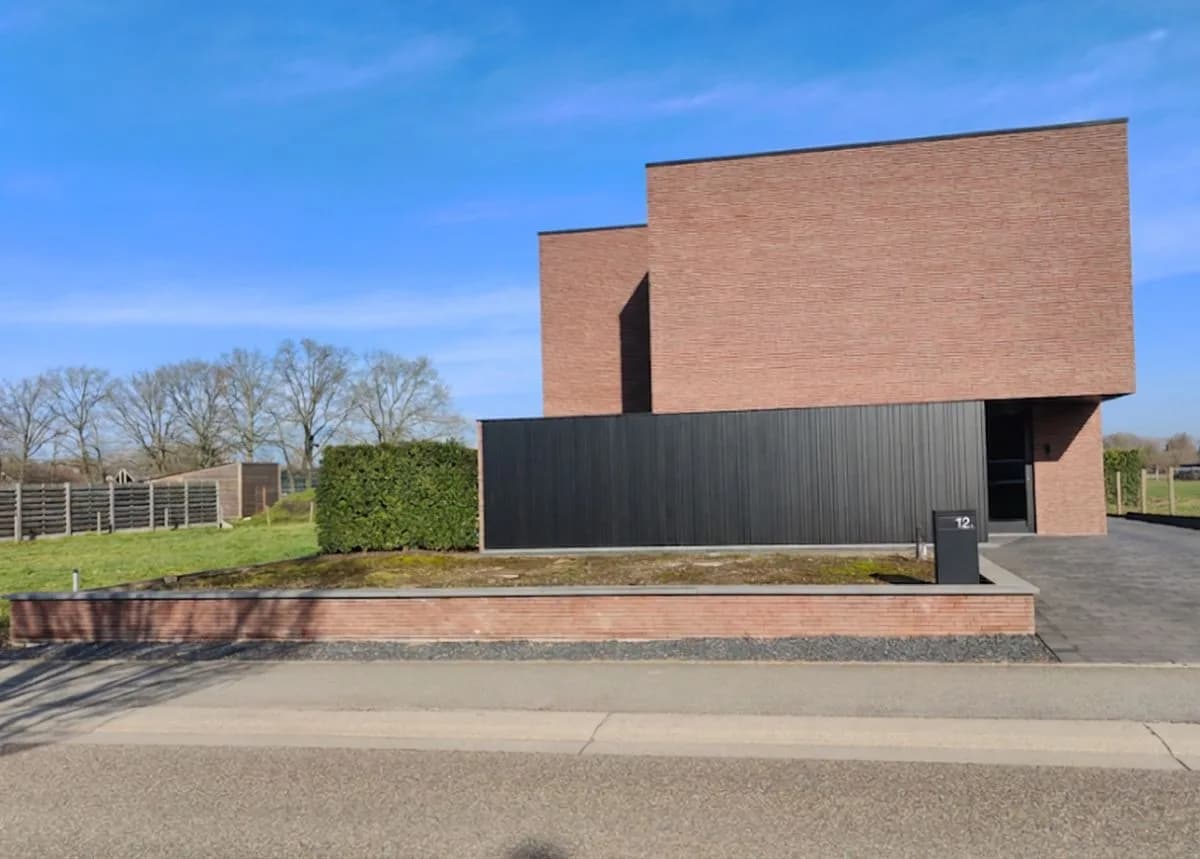
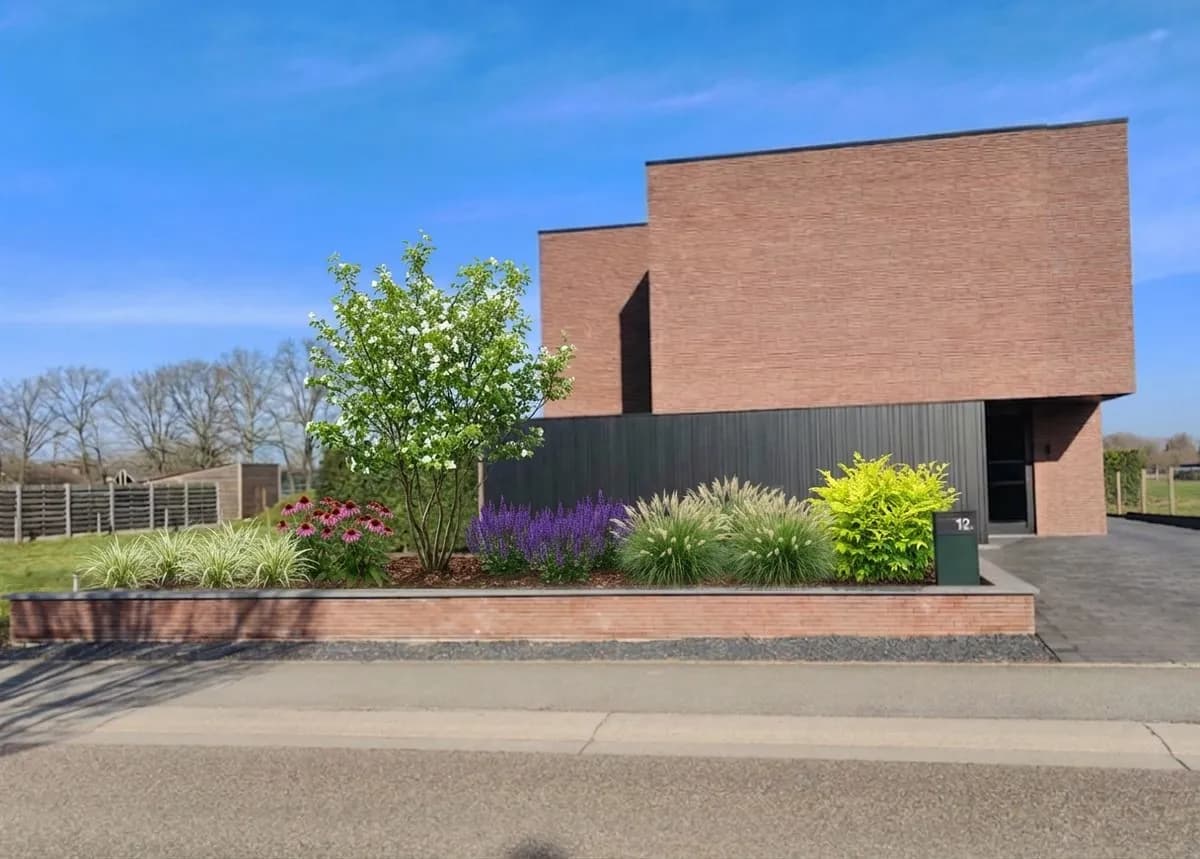
Want to see this in your garden?
Full design in HD: €7.99
Why a dog needs its own garden plan
Many gardeners only start thinking about their dog once he has already flattened a flower border. A garden planned around your dog from day one gives you real peace of mind: he can roam freely without eating a toxic plant, without trampling your prized planting, and without dragging mud through the house. That way you are not spending every weekend repairing damage, and your dog is not constantly being told off.
The plan comes down to three choices: plants that survive a knock or a determined dig, paths that feel like the obvious route so your dog chooses them over a shortcut through your borders, and one fixed corner for toileting. Get that right and your garden still looks good years later, even with an energetic young Labrador testing every boundary.
Paths for a dog: wide, firm and logical
Your dog does not need a neat garden path, just space that draws him in. Make paths at least 1.2 to 1.5 metres wide. Use gravel, compacted stone or paving, never loose stones he can carry indoors on his paws. Gravel is the cheapest option, roughly 8 to 12 euros per square metre, but it needs raking back into place a few times a year. Paving costs more, around 25 to 40 euros per square metre, but needs almost no upkeep.
Route the path so it leads your dog straight to his toilet spot and around to your seating area, never through the middle of a border. If the path is not the obvious way to go, your dog will dig his own shortcut. Curved paths work better than straight ones: they feel natural and split the garden into zones without needing a wall. Not sure which layout suits your own garden? On gardenworld.app you can see a path or zone fitted into your own garden first, before you start digging.
Toxic plants: what has to go
This is not a matter of taste. Yew is notorious among dogs: every part of the plant, including the brown seeds, can be fatal within hours, yet it is still a common hedge plant. Rhododendron, azalea, laburnum, foxglove and autumn crocus are all toxic enough to need an emergency vet visit. Walk round your own garden now and note what is already growing there.
The same caution applies to food: grapes, raisins, chocolate, onion, garlic, avocado and xylitol, the sweetener in sugar free chewing gum, are dangerous for dogs, sometimes even in small amounts. Safe in small pieces: apple with the core removed, carrot, pumpkin and banana. If you grow vegetables, put a low fence around the bed too, since raw beans and walnuts have no place near a dog either.
Sturdy planting that survives a dog
Thorny evergreens such as Ilex (holly) and Mahonia form a dense, almost impenetrable hedge that is hard to trample. One caution: holly berries are mildly toxic, so do not plant it right next to your dog's favourite resting spot, or choose a berry free male cultivar. Buddleja, forsythia, lilac and dogwood are sturdy shrubs that fill back in quickly after damage and are not toxic to dogs.
For ground cover, Waldsteinia, hardy geranium and lamium all work well: they form a dense mat that tolerates foot traffic and grows back fast. Plain lawn grass rarely survives a daily route. In spring, overseed with a tough mix of perennial ryegrass and red fescue, the same blend used for family play lawns. A large oak, beech or ash also gives shade your dog will happily lie under in summer.
Toilet corner: a gravel zone
This is the most important zone in the whole plan. Pick a corner out of sight from the street and not right next to your terrace, roughly 2 by 2 metres, marked off with low fencing around 60 centimetres high or a low border. Lay 5 centimetres of gravel over a weed membrane: without that membrane weeds push through within two years.
Hose the area down at least twice a week, not just for the smell: ammonia in urine burns grass and roots. A drainage layer 10 to 15 centimetres deep helps moisture drain away instead of pooling. Skip that layer and you get a soggy, mouldy patch by autumn.
Free preview
Create your own garden design
Shade and water: essential in warm weather
Dogs overheat faster than you do. Provide shade over at least 30 percent of the garden, ideally from a tree, though a pergola with climbing plants works too. Avoid canvas or plastic shade sails: they tear in the wind and your dog can injure himself on the torn edge.
Put drinking water in at least three spots, at the back, in the middle and near the door, so your dog does not drink from the pond and then track green water across your terrace. A plastic 5 litre bowl costs only a few euros. If you have a pond, fence it with a barrier at least 1 metre high: a dog can drown in it, and without a barrier that risk is real.
Enclosure and safety: no escape routes
Many garden designers avoid visible fencing, but with a dog a properly enclosed garden is not optional. It stops him bolting into the street after a sudden fright. Wire fencing 1.2 to 1.5 metres high is enough for smaller dogs; for a Labrador, a German Shepherd or another large breed, plan for at least 1.8 metres.
Check the mesh size carefully: small dogs climb, large dogs dig. A mesh of 25 millimetres or smaller stops a dog getting his head stuck, and a buried edge at least 30 centimetres deep stops him digging underneath. An invisible electronic fence only works for calm, well trained dogs, not one that panics: a normal fence is still the safest choice.
Garden furniture that survives a dog
Choose furniture in wood, metal or synthetic rattan that tolerates mud and claws. Cushions with a removable, washable cover are far more practical than fixed upholstery. A table in hardened wood or steel wears better than white plastic, and a parasol anchored in the ground will not topple if your dog bumps into it.
A dog bed of his own in the garden, in the shade under a tree or pergola, gives him a fixed resting spot away from your seating area, so he stays calmer when you have guests too.
Step by step
Step 1: Map your current garden
List the plants you already have and check which are toxic to dogs. Remove or relocate those now, not next spring.
Step 2: Sketch your zones
Decide on paper where the path goes, where the toilet spot sits and where you want to sit yourself. A rough sketch is enough, as long as the layout is clear.
Step 3: Build the paths
Make paths at least 1.2 metres wide in gravel or paving. Finish a route straight to the toilet spot and the seating area in a single weekend.
Step 4: Set up the toilet spot
Put up low fencing, lay a weed membrane and 5 centimetres of gravel. Add a drainage layer if your soil drains poorly.
Step 5: Plant and secure the boundary
Choose thorny hedging and sturdy shrubs, oversow with a play lawn mix, and check the fencing right around the garden before your dog is ever left outside alone.
Frequently asked questions
Does my dog have to stay on the path at all times?
No, but a dog almost always picks the easiest route anyway. Reward him for staying on the path and he will learn that within a few weeks on his own. You do not need to force the issue once the choice is obvious to him.
Can I manage without fencing?
Technically yes, but the risk is real: a dog startled by a noise can bolt straight into the street. A fence around 1.5 metres is an investment that lasts for years and prevents exactly that kind of accident.
How do I stop my dog lying in the toilet spot?
Do not add shade or a pergola there, and place his bed right next to it in a shaded spot instead. Most dogs quickly learn the difference: this is where I go, that is where I rest.
Do I have to remove my existing borders?
No, fence off your favourite borders with a low mesh of 30 to 40 centimetres. The planting stays intact and your dog simply cannot get in.
See it in your own garden first
Not sure how a dog friendly layout fits your own garden? Upload a photo on gardenworld.app and see a free preview of a new design with these zones. The detailed image with a matching plant list costs 7.99 euros, a one off payment, no subscription.
Create your own garden design
Upload a photo, pick a style, and get a photorealistic design with plant list in under a minute.
Full design in HD: €7.99
Related articles
 Garden Layout
Dog-friendly garden layout: safe pathways and sturdy plants
A dog in your garden requires smart planning. Discover how to integrate safe paths, robust plants, and play space.
 Garden Layout
Family garden design: play areas, dining, and relaxation zones
A family garden must serve multiple purposes. Learn how to organize play, dining, and relaxation in the same space without chaos.
Garden LayoutGarden play area for children: safe, fun and neatly integrated
Create a play corner children love that fits your garden design. Tips on surfaces, equipment and safety for families.