
Korean clematis: complete guide
Clematis serratifolia
Want to see Korean clematis: complete guide in your garden?
1 minute, no credit card
Overview
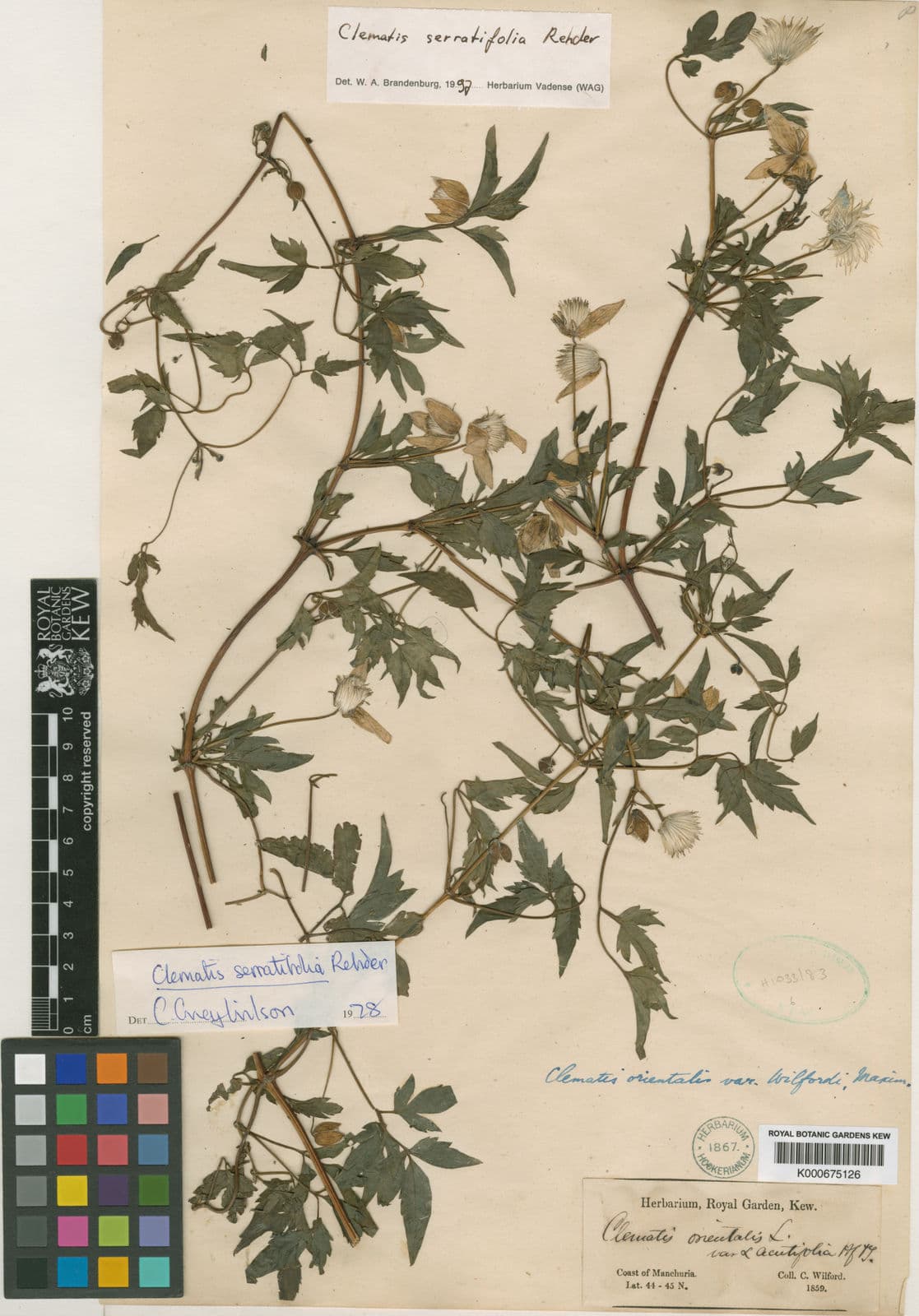
Clematis serratifolia, also known as saw-toothed clematis or Korean clematis, is a deciduous climber in the buttercup family (Ranunculaceae), native to the Russian Far East, Korea, and Manchuria. The species name serratifolia refers to the finely serrated foliage, with sharp, triangular teeth along the margin of each leaflet. What truly sets this clematis apart is its late flowering window: from August into September, dozens of small, nodding, bell-shaped flowers appear in a soft lemon yellow, carrying a distinctly noticeable, fresh citrus scent that grows stronger in the evening. On gardenworld.app, this species is frequently recommended to gardeners looking for a fragrant climber for a pergola or patio, precisely because its bloom falls so late in the season, when many other climbers have already finished.
The plant climbs by twisting its leaf stalks around supports, reaching 3 to 4 meters in height, making it ideal for a pergola, trellis, or scrambling through a low shrub or small tree. After flowering, decorative, silvery fluffy seed heads form, remaining on the plant well into winter and offering ornamental value of their own. Clematis serratifolia is remarkably cold-hardy, considerably more so than many of the better-known large-flowered clematis hybrids, and requires little care once established.
Appearance and bloom
The foliage of Clematis serratifolia is composed of three to five leaflets with the characteristic sharply toothed margin that gave the species its name. The foliage is fresh green and remains attractive throughout summer, even before the plant comes into bloom. The stems are thin and pliable, climbing actively by wrapping leaf stalks around any available support.
Flowers appear relatively late in the season, from late August into September, and are small compared to large-flowered clematis hybrids: each flower measures 2 to 3 centimeters across, with four narrow, curled-back petals in soft lemon yellow, hanging gracefully downward on thin flower stalks. The blooms release a distinctly fresh lemon scent, making this one of the few genuinely fragrant clematis species. After flowering, fluffy, silvery-grey seed heads develop, retaining ornamental value well into winter and providing a lovely contrast against the bare winter stems of other plants.
Ideal location
Clematis serratifolia grows well in full sun to light partial shade, with at least four to six hours of sunlight daily for the richest bloom. Unlike many other clematis species, this one is not fussy about orientation and grows perfectly well against a north- or east-facing pergola, making it suitable for spots where less sun-tolerant climbers struggle.
Clematis roots generally prefer cool, shaded conditions, while the top growth seeks out sun; the classic advice "cool feet, warm head" applies to this species too. Plant low, shade-casting perennials or place a flat stone at the base of the climber to keep the root zone cool. Give the plant ample room to climb: a pergola, trellis, or an old, overgrown shrub 3 to 4 meters tall is ideal.
Soil
Clematis serratifolia thrives in moderately fertile, free-draining soil with a pH between 6.5 and 7.5, from neutral to slightly alkaline. When planting, work generous amounts of compost and some lime-rich soil into the planting hole, especially on acidic sandy ground. Heavy clay can be lightened with some coarse sand or gravel to prevent waterlogging around the roots.
Planting depth matters for clematis: set the root ball 5 to 8 centimeters deeper than it sat in the nursery pot, so the plant can recover should clematis wilt occur (though this late-flowering species is less prone to it than large-flowered hybrids). Apply a dose of compost or organic fertilizer in spring to support new growth.
Watering
Water Clematis serratifolia regularly in the first and second seasons after planting, two to three times weekly with 5 to 10 liters during dry weather, so the plant can develop a strong root system. Once established, the plant is reasonably drought-tolerant, though it flowers more abundantly with adequate moisture during summer.
Keep the root zone evenly moist but never waterlogged: standing water is the leading cause of root problems in clematis generally. Gradually reduce watering from October onward, and water only during an exceptionally dry, frost-free period in winter. For container-grown plants on a patio or balcony, weekly checking is necessary, as potting soil dries out faster.
Free design
Want to see Korean clematis: complete guide in your garden? Make a free design now.
Pruning
Clematis serratifolia falls into pruning group 3, meaning the plant is cut back hard every year in February or early March, down to 20 to 30 centimeters above ground level, just above a healthy pair of buds. This hard pruning is not only harmless but genuinely necessary: the plant flowers exclusively on new wood produced during the current season, so without pruning the flowers would shift higher and further out of sight each year.
During the annual pruning session, also remove any dead or damaged wood completely. Little further pruning is needed during summer, aside from loosening and re-tying vigorous new shoots that haven't yet found support. Feel free to leave the decorative seed heads in place well into winter before cutting the plant back in late winter.
Maintenance calendar
February-March: Hard prune to 20-30 cm above ground level. Apply compost. Check and repair support structures.
April-May: New shoots appear quickly. Begin tying growth to the pergola or trellis.
June-July: Active growth period. Water regularly during dry spells. Continue guiding shoots toward support.
August-September: Peak flowering with fragrant yellow bells. Enjoy the evening scent on the patio.
October-November: Flowering ends, decorative seed heads develop. Gradually reduce watering.
December-January: Winter dormancy. Seed heads remain ornamentally visible. Find more fragrant climbers on gardenworld.app.
Winter hardiness
Clematis serratifolia is exceptionally cold-hardy, tolerating temperatures down to roughly -30 to -35 degrees Celsius, corresponding to USDA zone 4 and warmer. This robustness, inherited from its continental origins in the Russian Far East and Manchuria, makes the species trouble-free for virtually any garden in the Netherlands or Belgium, without any winter protection.
Because the plant is cut back nearly to ground level every year, frost damage to top growth is essentially a non-issue. Only extremely young, newly planted specimens in their first autumn might benefit from a mulch layer around the root collar for extra security. For established plants, no winter preparation is needed beyond the usual late-winter pruning session.
Companion plants
Clematis serratifolia pairs well with other late-flowering climbers and shrubs that appreciate similarly moderate, fertile soil:
- Clematis 'Etoile Violette': purple flowers in July-August for extra color contrast on the same pergola
- Hydrangea petiolaris (climbing hydrangea): white flowers earlier in the season, similar climbing habit
- Lonicera periclymenum (honeysuckle): fragrant flowers that complement the clematis's citrus scent
- Rosa 'New Dawn' (climbing rose): soft pink flowers that add color earlier in summer
- Actinidia kolomikta: decorative, variegated foliage as a backdrop
- Sedum 'Herbstfreude' (stonecrop): low-growing companion at the base, keeping the roots cool
- Geranium 'Rozanne': blue flowers as shade-casting ground cover near the root zone
Combine with other clematis from different pruning groups for a pergola offering color and scent from June through October.
Closing
Clematis serratifolia is an underappreciated fragrant climber that comes into bloom precisely when many other climbers have already finished: late August and September. Its fresh lemon scent, graceful hanging flowers, and decorative seed heads make this species a valuable addition to any pergola or trellis.
Clematis serratifolia is not always stocked as standard at garden centers; look for a specialist clematis nursery or order through a supplier with a broad range of climbers. On gardenworld.app you will find a complete overview of hardy, fragrant climbers and their best combinations. With its extreme cold hardiness and annual hard prune, this Korean clematis is one of the most low-maintenance climbers you can plant.
Want to see Korean clematis: complete guide in your garden? Make a free design now.
Upload a photo, pick a style, and get a photorealistic design with plant list in under a minute.
10,000+ gardens designed already
No credit card required


Similar plants
Drummond's anemone: complete guide
Anemone drummondii
Discover Drummond's anemone (Anemone drummondii): a silvery-grey mountain plant for cool rock gardens and alpine troughs.
Aquilegia brevistyla: complete guide
Aquilegia brevistyla
Discover Aquilegia brevistyla, the elegant North American columbine. Growing tips, shade tolerance, and design ideas for woodland and shadowed gardens.
Delphinium distichum (Twospike Larkspur): complete guide
Delphinium distichum
Learn to grow Delphinium distichum, a stunning alpine larkspur. Full guide with tips for planting, care, and supporting pollinators.