
Wilson44691 / CC0, via Wikimedia Commons
Phlox divaricata: complete gids
Phlox divaricata
Wil je Phlox divaricata: complete gids in jouw tuin zien?
1 minuut, geen creditcard
Overzicht
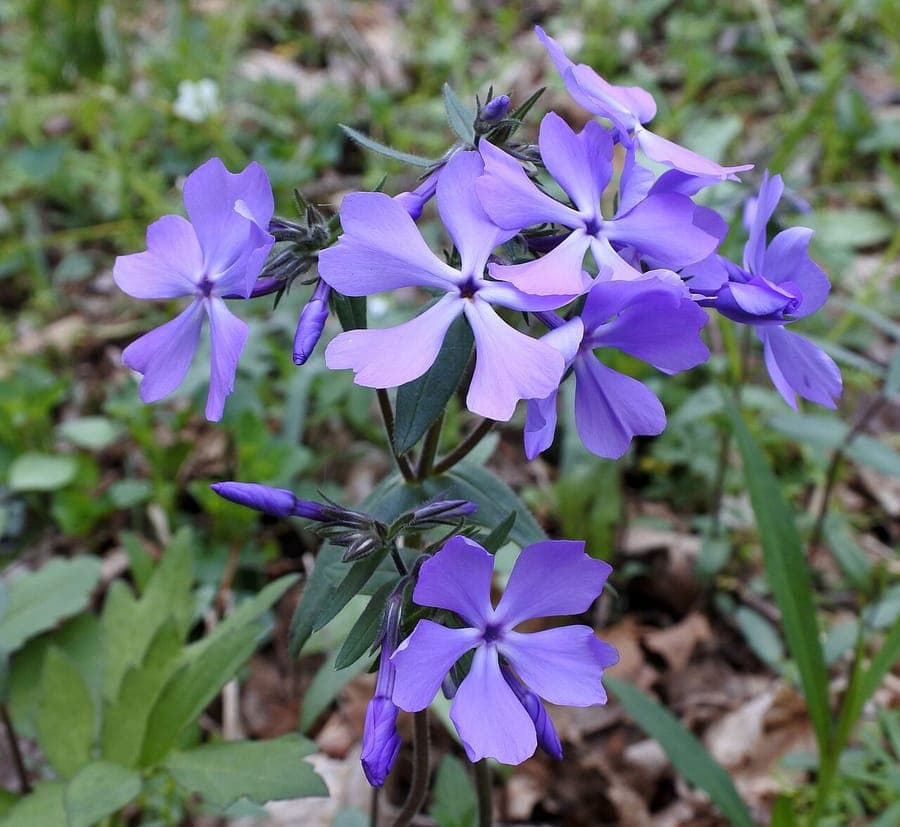
Phlox divaricata, algemeen bekend als bosflox of wilde blauwe flox, is een inheemse bosplant van Oost-Canada en het oostelijke deel van Noord-Amerika. Deze charmante plant staat bekend om zijn zachtblauwe tot paarse bloemen die in het voorjaar verschijnen. Het is een uitstekende keuze voor schaduwrijke tuinen met vochtige bodem, waar veel andere planten het moeilijk hebben.
Deze soort is een kruidachtig staander die in bosomstandigheden groeit. In tuinsituaties vormt het volledige tapijten van bloei in mei tot juni. Het is zeer geschikt voor natuurlijke of bosachtige tuin-stijlen en blijft jarenlang op dezelfde plek groeien.
Uiterlijk en bloei
Phlox divaricata bereikt doorgaans 30 tot 45 centimeter hoogte. De plant heeft smalle, lancetvormige bladeren die in het groene seizoen aanwezig zijn. In het najaar vergelen en verdwijnen ze volledig.
De bloemen zijn klein, ongeveer 2 tot 3 centimeter in doorsnee, maar verschijnen in talrijke kleine buizen die zich in pluimen groeperen. De kleur varieert van bleek lavendel tot diep blauwpaars, afhankelijk van het cultiv. Ze hebben een aangenaam, zacht parfum. De bloeiperiode is mei tot juli, op zijn hoogtepunt in mei.
Ideale locatie
Phlox divaricata groeit het best in gedeeltelijke tot volledige schaduw. In volle zon groeit het wel, maar de bloemen verbleekt sneller. De plant is perfect geschikt voor onder loofbomen of in bosachtige delen van de tuin. Schaduw is belangrijk, vooral in warme klimaten.
Een plek met beschutting tegen middagzon is ideaal. De plant luistert niet van wind, aangezien het laag groeit.
Bodem
Phlox divaricata heeft voorkeur voor vochtige, humusrijke bodem. De plant groeit in bosgrond, dus voeg organisch materiaal toe zoals bladmold, compost, of turfmengsel. Een pH tussen 6,0 en 7,0 is ideaal.
De plant accepteert ook modderige of natte situaties beter dan veel andere phloxen. Zorg ervoor dat het drainering redelijk is om wortelrot te voorkomen.
Watering
Phlox divaricata prefers consistently moist soil, especially during the growing season. Water regularly and ensure the soil does not dry out completely. Mulch around the base with leaf mold or compost to retain moisture.
During dry spells in summer, water more frequently. In autumn and winter, reduce watering as the plant dies back naturally and enters dormancy.
Gratis ontwerp
Wil je Phlox divaricata: complete gids in jouw tuin zien? Maak nu een gratis ontwerp.
Pruning
Minimal pruning is needed. After flowering, you can deadhead spent flowers to tidy up the garden. However, leaving the seed heads can attract wildlife and look natural. In autumn, as the foliage dies back naturally, you can clear away the dead material to keep the garden clean.
No major cutting back is necessary as the plant naturally sheds its foliage in winter.
Maintenance calendar
Spring (April-May): Monitor emerging shoots. Water regularly. Apply dilute liquid fertilizer once monthly. Flowers appear and bloom. Summer (June-August): Keep soil moist. Deadhead if desired. Watch for powdery mildew in humid conditions. Water during dry spells. Fall (September-November): Allow foliage to die back naturally. Water less as dormancy approaches. Clear dead material in late autumn. Winter (December-March): Plant is dormant. No maintenance needed. Protect emerging shoots if severe frost is forecast.
Winter hardiness
Phlox divaricata is very hardy, tolerating temperatures down to -25 degrees Celsius (USDA zone 3). In all regions of the Netherlands, Belgium, France, and Germany, it survives winter without protection. It is one of the hardiest phlox species and needs no special winter care.
Companion plants
Pair Phlox divaricata with other shade-loving woodland plants like hellebores, epimedium, or hosta. Combine with spring bulbs like wood anemones or erythronium for a layered spring display. Ferns provide textural contrast. Other good companions include ajuga, tiarella, and woodland creeping plants.
Closing
The forest phlox is an invaluable plant for shady, moist gardens and woodland settings. Its delicate blue flowers and reliable hardiness make it a mainstay of many shade gardens. Plant it and enjoy decades of spring color with minimal effort.
Find Phlox divaricata at nurseries specializing in shade plants and native species. For comprehensive garden design guidance, visit gardenworld.app. At gardenworld.app, discover how to create beautiful, naturalistic shade gardens with plants like this lovely phlox.
Wil je Phlox divaricata: complete gids in jouw tuin zien? Maak nu een gratis ontwerp.
Upload een foto, kies je stijl en ontvang binnen 1 minuut een fotorealistisch ontwerp inclusief plantenlijst.
Geen creditcard nodig


Vergelijkbare planten
Phlox alyssifolia: complete gids voor Alyssum-bladphlox
Phlox alyssifolia
Alyssum-bladphlox is een alpine roze bloemer uit Noord-Amerika. Ontdek teelt, locatie en alle zorgbehoeften voor deze prachtige plant.
Phlox richardsonii: complete gids voor Richardson's phlox
Phlox richardsonii
Richardson's phlox is een arctische bloemer die uitzonderlijk robuust is. Lees alles over teelt in extreme omstandigheden en volledige zorgbehoeften.
Polemonium foliosissimum: complete gids
Polemonium foliosissimum
Polemonium foliosissimum is een vaste plant uit de Rocky Mountains met blauwe zomerbloemen en weelderig blad, ideaal voor border en tuin.