
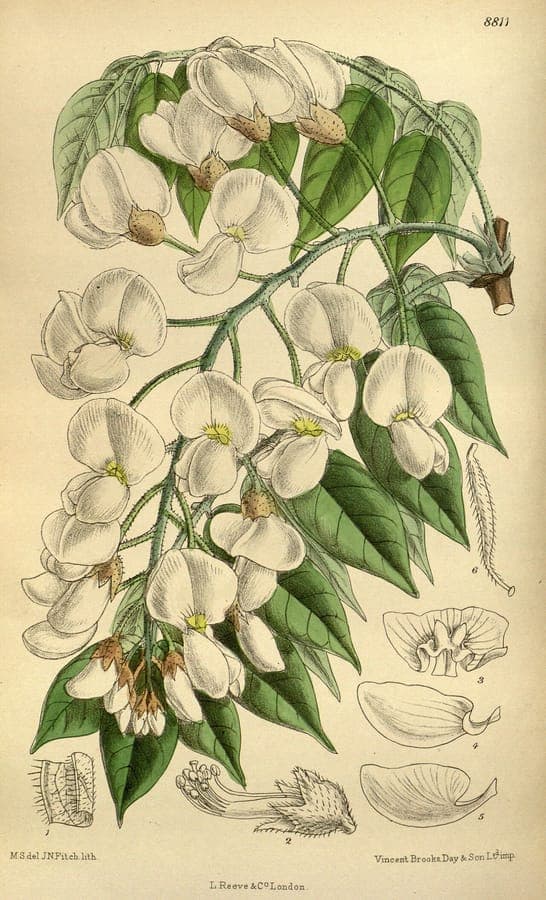
M.S. del., J.N.Fitch lith. / Public domain, via Wikimedia Commons
Wisteria brachybotrys: complete guide to silky wisteria care
Wisteria brachybotrys
¿Quieres ver Wisteria brachybotrys: complete guide to silky wisteria care en tu jardín?
1 minuto, sin tarjeta de crédito
Overview
Wisteria brachybotrys, the silky wisteria, is an elegant flowering vine from the Fabaceae family. This ornamental plant is native to China and Japan and is also known as yama-fuji (Japanese for mountain wisteria). Unlike many wisteria species, this plant grows more compactly and produces shorter, densely clustered flower racemes.
This vine offers years of spring flowering with exquisite purple or white blooms. With its refined appearance, it is a classic choice for pergolas, fences, and arbors.
Appearance and Bloom
Wisteria brachybotrys reaches 6-10 meters or more, depending on support and care. Leaves are compound, pinnate, approximately 20-25 centimeters long, with 9-13 small leaflets. They color beautifully yellow in autumn.
Flowers are the showpiece: small, fragrant purple or white flowers clustered in short (5-15 cm), compact racemes. Flowering occurs in spring, before most foliage appears. The scent is pleasant and delicate, very attractive to pollinators.
Ideal Location
Wisteria brachybotrys grows best in warm, sunny positions. Ensure at least 6-8 hours of direct sunlight daily for optimal flowering. Partial shade is tolerated but produces fewer flowers.
Provide sturdy support: pergola, fence, or trellis. This plant grows vigorously and can become heavy; weak support breaks under the load. Ensure adequate space for growth.
Soil
Wisteria brachybotrys performs best in well-draining, moderately fertile soil. A pH around 6-7 is ideal. It also accepts somewhat acidic soil. Avoid waterlogging; this causes root rot.
Add organic material when planting. Regular feeding during growth season promotes flowering.
Diseño gratis
¿Quieres ver Wisteria brachybotrys: complete guide to silky wisteria care en tu jardín? Crea un diseño gratis ahora.
Watering
Once established, this vine is fairly drought-tolerant. During growth and flowering season (spring-summer) water when soil feels dry. In autumn and winter water much less.
Ensure good drainage; waterlogging poses serious risk. Mulching around the base helps moisture retention and temperature regulation.
Pruning
Wisteria brachybotrys requires regular pruning to maintain shape and flowering. After flowering (June-July) cut back side shoots to approximately 30 centimeters. In late winter (February-March) heavier pruning is possible, but always retain main branches.
Remove dead, diseased, or weak wood. Also remove growth rubbing against support.
Maintenance Calendar
February-March: Prune in late winter; thin weak growth. April-May: Flowering; water regularly. June-July: Flowering ends; prune side shoots. August-September: Side shoots grow; check for pests. October-January: Rest period; minimal water, prepare for next season.
Winter Hardiness
Wisteria brachybotrys is winter-hardy to approximately -10 to -15°C. In temperate climates such as the UK it can overwinter outdoors. In harsher climates you can take protective measures such as wrapping young branches.
Companion Plants
This vine combines beautifully with other flowering climbers. Clematis, passion flower, or other wisterias create stunning combinations. Also at the base, early bulbs (snowdrops, crocuses) grow beautifully under the still-bare branches in spring.
Conclusion
The silky wisteria deserves a place in every garden with adequate space. With its refined flowering, pleasant scent, and elegant form, it is a classic choice for pergolas and arbors. Install this vine and enjoy full spring bloom for years to come.
Seedlings are available at garden centers. Choose healthy plants with strong stems. Visit gardenworld.app for more garden plant guides and design ideas.
¿Quieres ver Wisteria brachybotrys: complete guide to silky wisteria care en tu jardín? Crea un diseño gratis ahora.
Sube una foto, elige un estilo y obtén un diseño fotorrealista con lista de plantas en menos de un minuto.
Más de 10.000 jardines diseñados
Sin tarjeta de crédito


Plantas similares
Tall Silky Lupine: complete guide
Lupinus elatus
Tall silky lupine is a fast-growing Californian perennial with silvery foliage and blue-purple flower spikes, ideal for a prairie-style garden.
Garfield Lupine: complete guide
Lupinus garfieldensis
The Garfield lupine is a rare, fast-growing American perennial for alkaline, dry grassland gardens, with striking blue flower spikes.
Lupinus elegans: complete guide
Lupinus elegans
Lupinus elegans, the elegant lupine, is a spectacular blooming plant from Mexico with blue flower spikes. Care, cultivation and garden use.