
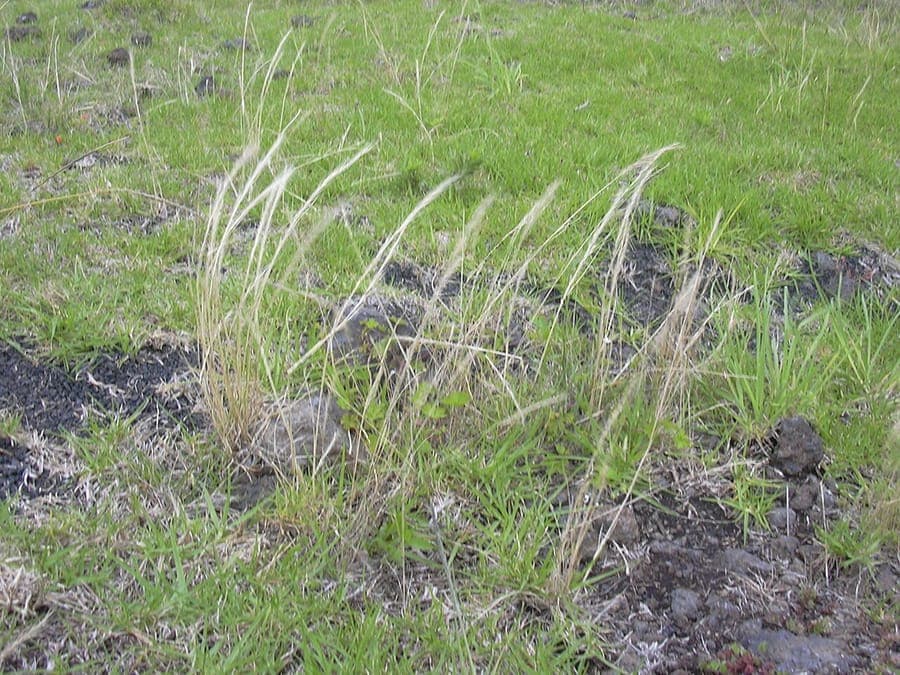
Forest & Kim Starr / CC BY 3.0, via Wikimedia Commons
Vulpia bromoides: complete guide
Vulpia bromoides
¿Quieres ver Vulpia bromoides: complete guide en tu jardín?
1 minuto, sin tarjeta de crédito
Overview
Vulpia bromoides, commonly called brome fescue or six-weeks fescue, is a graceful annual grass native to the Mediterranean region. This fine-textured ornamental grass is prized for its distinctive seedheads that resemble tiny squirrel tails, creating an ethereal, meadow-like effect in borders and gardens. Despite its delicate appearance, vulpia bromoides is remarkably easy to grow and perfect for both novice and experienced gardeners seeking minimal-maintenance beauty.
Appearance & Bloom
Brome fescue reaches 20 to 40 cm in height, forming loose, finely-branched panicles in shades of pale green to soft brown. The leaves are thin and delicate, creating an airy, feathery silhouette. Distinctive seedheads emerge from May to August, displaying characteristic curved, hooked forms. When massed in groups, these seedheads create a mesmerizing, undulating pattern that catches light beautifully throughout the growing season.
Ideal Location
This grass thrives in full sun to partial shade positions, though flowering is most prolific in sunny spots. Brome fescue is exceptionally frost-hardy and suitable for cultivation across Belgium, Netherlands, France, and Germany. The plant also excels in wildlife gardens and naturalistic planting schemes where its movement and seedheads provide vital resources for finches and other seed-eating birds.
Soil
Vulpia bromoides is remarkably unfussy about soil conditions, thriving in poor, well-drained, and acidic soils (pH 5.0-5.5). Heavy clay soils should be amended with sand and organic matter to improve drainage. The key requirement is excellent drainage; waterlogged conditions spell disaster for this Mediterranean native.
Diseño gratis
¿Quieres ver Vulpia bromoides: complete guide en tu jardín? Crea un diseño gratis ahora.
Watering
Once established, brome fescue is exceptionally drought-tolerant, requiring minimal supplemental watering. Young seedlings immediately after sowing should be kept lightly moist until germination. Mature plants can survive extended dry periods and are ideal for xeriscape gardens, rooftop plantings, and water-wise landscape schemes.
Pruning
Vulpia bromoides requires minimal pruning. After flowering fades in late August to September, dried seedheads may be removed if desired to make way for fresh growth. Alternatively, allow the plant to self-seed for effortless renewal next season. In early spring (March-April), old growth can be cut back entirely as preparation for vigorous new development.
Maintenance Calendar
March: clear dead material and prepare for growing season May: direct sow seed or start in containers May-August: flowering and growth period August: seedheads mature and dry (allow for self-seeding) September: remove spent seedheads if desired October-February: dormancy
Winter Hardiness
Brome fescue is exceptionally cold-hardy, thriving across all temperate European zones. The plant survives temperatures down to -15 degrees Celsius without damage. In extreme winters (below -20 degrees), some plants may be lost, but recovery typically occurs through self-seeding in spring.
Companion Plants
Vulpia bromoides pairs beautifully with other ornamental grasses including Stipa and Festuca species. In borders, it combines well with flowering perennials such as Coreopsis, Rudbeckia, and Echinacea. The grass is equally stunning in naturalistic meadow gardens and wildlife plantings, where its seedheads feed birds through autumn and winter months.
Closing
Brome fescue is an excellent choice for gardeners seeking ornamental grasses with minimal care requirements and maximum visual impact. Whether designing a drought-resistant garden or creating a bird-friendly border, Vulpia bromoides adds unparalleled texture and movement. Find seeds at major retailers across UK and Europe.
¿Quieres ver Vulpia bromoides: complete guide en tu jardín? Crea un diseño gratis ahora.
Sube una foto, elige un estilo y obtén un diseño fotorrealista con lista de plantas en menos de un minuto.
Más de 10.000 jardines diseñados
Sin tarjeta de crédito


Plantas similares
Sporobolus pungens: complete guide
Sporobolus pungens
Sporobolus pungens is a stoloniferous Mediterranean coastal grass with outstanding salt and drought tolerance, perfect for seaside and dry gardens.
Mediterranean aegilops: complete guide
Aegilops biuncialis
Everything about Aegilops biuncialis, a Mediterranean annual grass with ornamental spikes and outstanding drought tolerance for dry gardens.
Silver bluestem: complete guide
Bothriochloa saccharoides
Full guide to Bothriochloa saccharoides (silver bluestem): site, soil, watering, winter hardiness, pruning, and garden companions.