
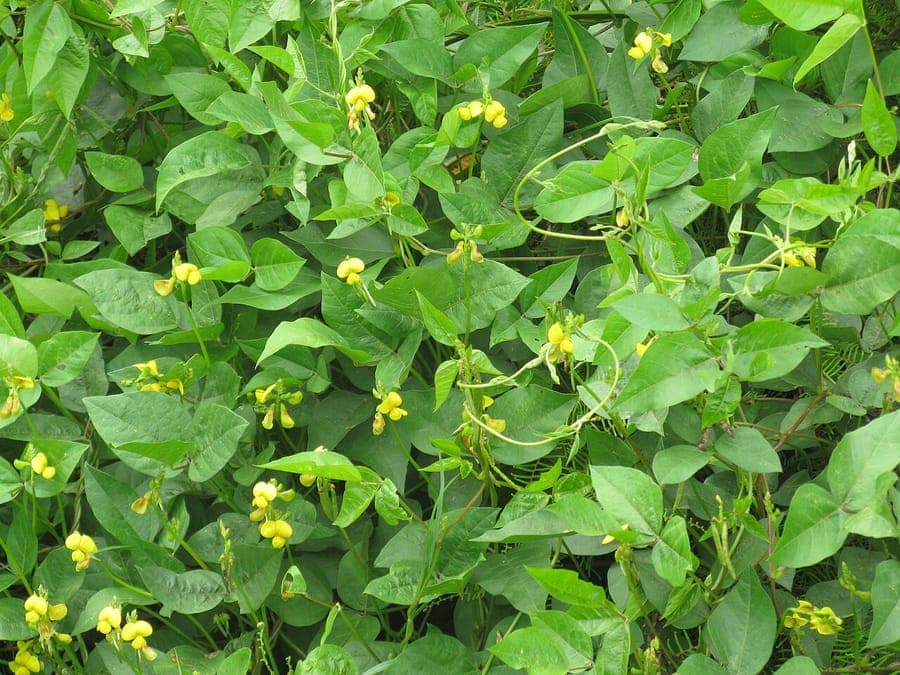
Harry Rose from South West Rocks, Australia / CC BY 2.0, via Wikimedia Commons
Vigna luteola: complete guide
Vigna luteola
¿Quieres ver Vigna luteola: complete guide en tu jardín?
1 minuto, sin tarjeta de crédito
Overview
Vigna luteola, known as Dalrymple vigna or yellow vigna, is a fascinating climbing plant from tropical and subtropical regions worldwide. This plant belongs to the Fabaceae family (pea family) and is famous for its vibrant yellow flowers that appear throughout the growing season. With its delicate growth and prolific blooming, it is an excellent choice for gardeners seeking vertical planting and tropical atmosphere.
Appearance and Bloom
Vigna luteola grows as a slender, twining vine that without support can creep along ground or climb up structures. The leaves are trifoliate (three-part) and finely textured, giving an airy, elegant appearance to the foliage. From June to October, plants produce countless small, yellow flowers in dense clusters - a warm burst of color that attracts bees and butterflies.
After flowering, small seed pods form containing seeds, completing the reproduction cycle.
Ideal Location
Vigna luteola thrives best in full sun with warm microclimate. This plant is thermophilic and does not grow well in cold conditions. In temperate climates, protection from cold winds and frost is essential. Ideally, place it in a warm, sunny spot, possibly against a warm wall or structure.
Soil
The plant grows well in well-draining soil with moderate fertility. Heavy clay soils should be lightened with sand and organic material. A pH of neutral to slightly acidic is preferred. This is not a heavy feeder, so standard garden soil is usually sufficient.
Diseño gratis
¿Quieres ver Vigna luteola: complete guide en tu jardín? Crea un diseño gratis ahora.
Watering
During the growing period, water regularly, especially in warm, dry periods. Although young plants need consistent moisture, established plants tolerate some drought. In very hot summers, daily watering may be needed. Ensure water does not accumulate around the crown.
Pruning
Vigna luteola can be pruned to control its shape, though this is not always necessary. If the plant grows too exuberantly, prune after flowering (October/November). Dead or weak branches should be removed. The plant can also be shaped to maintain a more compact form.
Maintenance Calendar
- Spring: Wait until all frost danger has passed; prune if needed
- Summer: Water regularly; feed mid-summer
- Autumn: Enjoy long flowering period; collect seeds
- Winter: Protect from frost; minimal maintenance
Winter Hardiness
Vigna luteola is not winter-hardy in temperate climates and must be replanted annually or protected. In subtropical zones, the plant can survive with frost protection.
Companion Plants
This climbing plant combines beautifully with other heat-lovers. Support it with stakes and combine with passion flower, ipomea, or other tropical climbers for an exotic appearance.
Closing
Vigna luteola offers a unique, tropical addition to temperate gardens and is ideal for heat-loving gardeners. With regular watering and good sun exposure, this plant will provide months of flowers. For advice on tropical plants, consult gardenworld.app.
¿Quieres ver Vigna luteola: complete guide en tu jardín? Crea un diseño gratis ahora.
Sube una foto, elige un estilo y obtén un diseño fotorrealista con lista de plantas en menos de un minuto.
Más de 10.000 jardines diseñados
Sin tarjeta de crédito


Plantas similares
Tall Silky Lupine: complete guide
Lupinus elatus
Tall silky lupine is a fast-growing Californian perennial with silvery foliage and blue-purple flower spikes, ideal for a prairie-style garden.
Garfield Lupine: complete guide
Lupinus garfieldensis
The Garfield lupine is a rare, fast-growing American perennial for alkaline, dry grassland gardens, with striking blue flower spikes.
Lupinus elegans: complete guide
Lupinus elegans
Lupinus elegans, the elegant lupine, is a spectacular blooming plant from Mexico with blue flower spikes. Care, cultivation and garden use.