
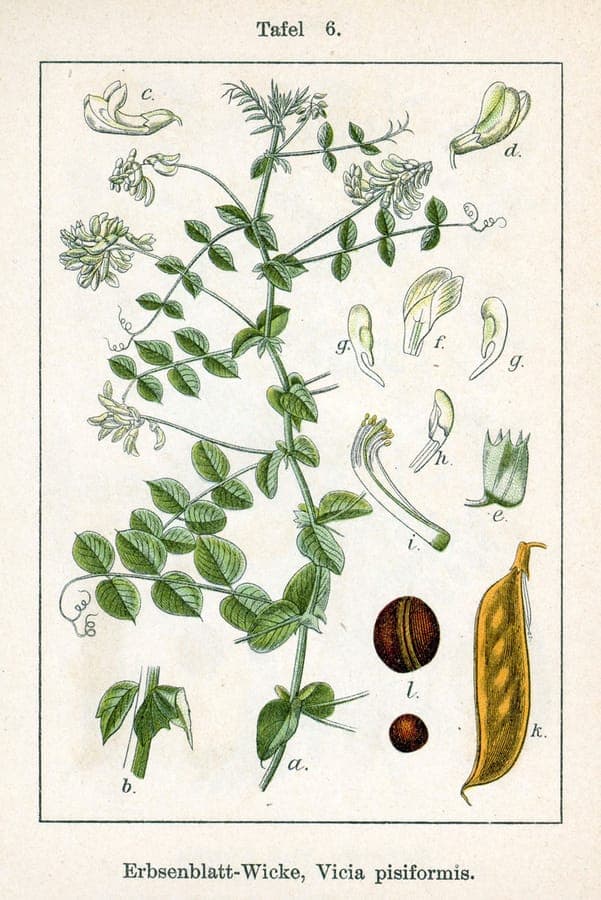
Johann Georg Sturm (Painter: Jacob Sturm) / Public domain, via Wikimedia Commons
Pea vetch: complete guide
Vicia pisiformis
¿Quieres ver Pea vetch: complete guide en tu jardín?
1 minuto, sin tarjeta de crédito
Overview
Pea vetch, scientifically known as Vicia pisiformis, belongs to the Fabaceae family and is a versatile climbing plant that occupies the space between annual and perennial classification. This plant originates from Central and Eastern Europe and naturally occurs from Europe to West Siberia and the Caucasus. With its delicate yellow flowers and tendrils that readily cling to support structures, this vetch offers both aesthetic and ecological value in gardens.
The plant grows moderately and adapts well to various garden environments. For gardeners interested in unusual yet beneficial plants that support local wildlife, pea vetch represents an excellent choice. It stands out for its delicate flower structure and proves invaluable for bees and other insects.
Appearance and Bloom
Pea vetch is characterized by its compound leaves that remarkably resemble pea foliage, hence its common name. The leaves are filigree-like, composed of multiple small leaflets that form elegant groupings. This fine leaf structure renders the plant decorative even when not flowering.
Flowers appear from May through July, displaying a striking yellow color. They grow in characteristic inflorescences and attract numerous pollinators. Following flowering, the plant produces characteristic pod fruits typical of the Fabaceae family. These pods gradually mature and assume a darker brown hue.
Ideal Location
Pea vetch thrives best in locations with abundant light. The plant requires at least six hours of direct sunlight daily. South-facing locations are ideal, though the plant can grow in partially shaded areas with slightly reduced floral abundance.
The plant is best cultivated against trellises, fences, or pergolas where it can express its climbing nature. For optimal results, provide support structures or netting for climbing. Sheltered locations are preferred, as wind can damage the delicate tendrils.
Soil
Pea vetch performs better in nutrient-rich soils with neutral to slightly alkaline pH (7.5 to 8). These preferences indicate the plant likely thrives best in fertile soil mixtures without acidic components.
To promote optimal growth, regularly add humus or compost. Excellent drainage is essential; vetches dislike waterlogged conditions. In container cultivation, avoid heavy, water-retentive soils.
Diseño gratis
¿Quieres ver Pea vetch: complete guide en tu jardín? Crea un diseño gratis ahora.
Watering
Pea vetch requires regular moisture during the growing season, especially during dry periods. Once the plant establishes strong growth and flowering, consistently moist but not waterlogged soil is ideal. Allow soil to dry slightly between waterings.
During rainy seasons, natural precipitation may suffice. Regularly check whether the soil feels moist several centimeters deep. In container cultivation, be more careful with watering, as pots dry faster than open gardens.
Pruning
Pea vetch responds well to moderate pruning. In early spring, before new growth begins, oversized tendrils can be shortened or removed to shape the plant. This also stimulates branching and denser growth.
As the plant matures, removing older sections may become necessary. This should occur in late winter or early spring. Remove dead or diseased portions throughout the growing season.
Maintenance Calendar
Spring: Check support structures, prune if necessary, and add compost. Late Spring: Expect vigorous growth; water regularly and monitor for pests. Summer: Flowering period; maintain consistent moisture and enjoy yellow blooms. Autumn: Growth slows; reduce watering as temperatures decline. Winter: Plant enters dormancy; minimal moisture needed.
Winter Hardiness
Pea vetch is reasonably winter-hardy in temperate zones. In severe winters, above-ground growth may die back, but roots typically survive. Plant this vetch where it receives winter protection from surrounding plant material or protective structures.
In very cold regions, mulching around the plant base in late autumn proves beneficial. As spring arrives, the plant will regenerate from its established root system.
Companion Plants
Pea vetch works excellently with other climbers such as ivy and valerian. Low-growing ground covers beneath the vetch's framework can create interesting textural contrasts. Other Vicia species also serve as suitable companions.
Moreover, these vetches suit mixed border arrangements, increasing vertical dimension.
Final Thoughts
Pea vetch represents a subtle yet worthwhile plant for the collector's garden. Its delicate yellow flowers, interesting leaf structure, and utility as a climber make it a valuable addition. For both professional gardeners and hobbyists, this plant offers numerous possibilities for structural design and wildlife support.
Note: Find this plant at specialty nurseries and garden centers across Europe.
¿Quieres ver Pea vetch: complete guide en tu jardín? Crea un diseño gratis ahora.
Sube una foto, elige un estilo y obtén un diseño fotorrealista con lista de plantas en menos de un minuto.
Más de 10.000 jardines diseñados
Sin tarjeta de crédito


Plantas similares
Tall Silky Lupine: complete guide
Lupinus elatus
Tall silky lupine is a fast-growing Californian perennial with silvery foliage and blue-purple flower spikes, ideal for a prairie-style garden.
Garfield Lupine: complete guide
Lupinus garfieldensis
The Garfield lupine is a rare, fast-growing American perennial for alkaline, dry grassland gardens, with striking blue flower spikes.
Lupinus elegans: complete guide
Lupinus elegans
Lupinus elegans, the elegant lupine, is a spectacular blooming plant from Mexico with blue flower spikes. Care, cultivation and garden use.