
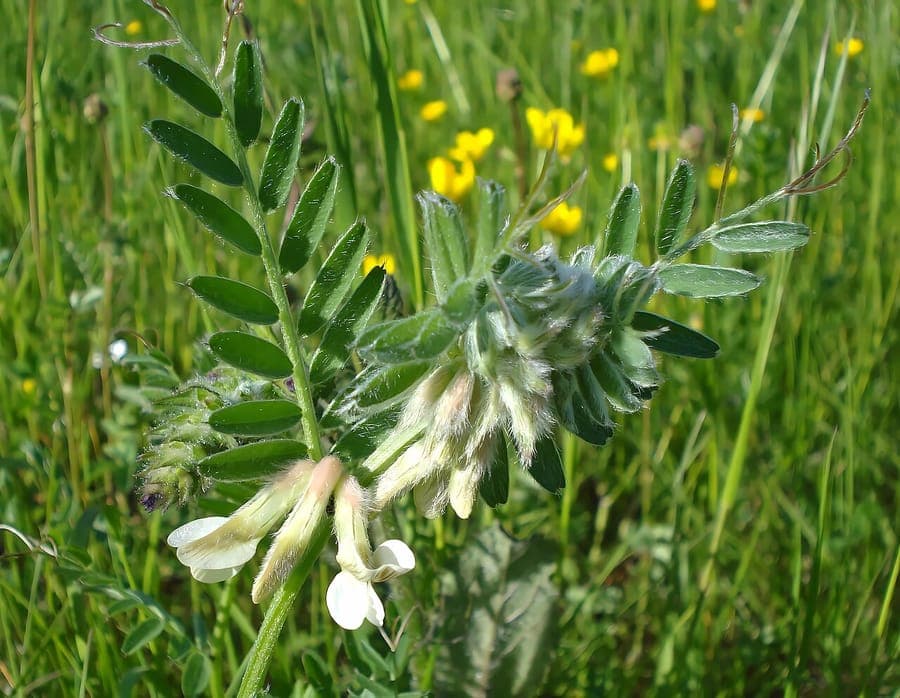
Fornax / CC BY-SA 3.0, via Wikimedia Commons
Hungarian Vetch: complete guide
Vicia pannonica
¿Quieres ver Hungarian Vetch: complete guide en tu jardín?
1 minuto, sin tarjeta de crédito
Overview
Hungarian Vetch (Vicia pannonica) is a vigorous plant from the Fabaceae family, native to South-Central Europe through Iran and Libya. This climbing or semi-spreading plant is known for its purple to pink flowers and compound foliage. Hungarian Vetch is suitable for borders, wildflower meadows, and as a ground cover in temperate to warm climates.
Appearance and Bloom
Hungarian Vetch reaches approximately 30-100 centimeters in height and forms a sprawling to semi-spreading plant. The leaves are compound, with many small, blue-green leaflets. The flowers are approximately 0.8-1.2 centimeters, purple to pink-violet, appearing in small clusters. The flowering period extends from May through August, providing extended summer color.
Ideal Location
Hungarian Vetch grows best in full sun. The plant needs at least six hours of direct sunlight for optimal growth and blooming. The plant tolerates partial shade but flowers less abundantly in shaded environments. A sunny position promotes dense growth.
Soil
Hungarian Vetch grows on virtually all soil types, from acidic to moderately alkaline. The plant thrives best on well-draining, moderately fertile soil with pH 7.5-8.0. Heavy soils work well for this hardy plant. As a legume, the plant self-fixes nitrogen, so additional nitrogen fertilization is unnecessary.
Diseño gratis
¿Quieres ver Hungarian Vetch: complete guide en tu jardín? Crea un diseño gratis ahora.
Watering
After planting, water the plant regularly until well established. Adult plants are drought-tolerant and need water mainly during sustained dry spells. Excessive watering can lead to disease. Water at the base of the plant.
Pruning
Hungarian Vetch requires minimal pruning. After blooming, spent flowers can be removed. Heavy pruning is not needed, though wild growth can be controlled. In spring, damaged or dead twigs can be removed.
Maintenance Calendar
Spring: Remove winter damage. Summer: Water during sustained drought. Autumn: Remove spent flowers. Winter: Minimal maintenance.
Winter Hardiness
Hungarian Vetch is hardy to about -15 degrees Celsius. In very cold regions, winter protection with mulch may be beneficial. The plant can also be used in warmer climates.
Companion Plants
Hungarian Vetch grows well with other climbers and vigorous-growing plants. Combinations with Clematis, Jasmine, and other climbing plants work well. In wildflower borders, the plant fits nicely in schemes with other legumes.
Closing Remarks
Hungarian Vetch is a vigorous plant ideal for gardeners seeking something different. The purple flowers and sprawling growth make it a unique choice. Available at garden centers online at gardenworld.app/en and gardenworld.app/nl.
¿Quieres ver Hungarian Vetch: complete guide en tu jardín? Crea un diseño gratis ahora.
Sube una foto, elige un estilo y obtén un diseño fotorrealista con lista de plantas en menos de un minuto.
Más de 10.000 jardines diseñados
Sin tarjeta de crédito


Plantas similares
Tall Silky Lupine: complete guide
Lupinus elatus
Tall silky lupine is a fast-growing Californian perennial with silvery foliage and blue-purple flower spikes, ideal for a prairie-style garden.
Garfield Lupine: complete guide
Lupinus garfieldensis
The Garfield lupine is a rare, fast-growing American perennial for alkaline, dry grassland gardens, with striking blue flower spikes.
Lupinus elegans: complete guide
Lupinus elegans
Lupinus elegans, the elegant lupine, is a spectacular blooming plant from Mexico with blue flower spikes. Care, cultivation and garden use.