
Daderot / CC0, via Wikimedia Commons
Walter's viburnum: complete guide
Viburnum obovatum
¿Quieres ver Walter's viburnum: complete guide en tu jardín?
1 minuto, sin tarjeta de crédito
Overview
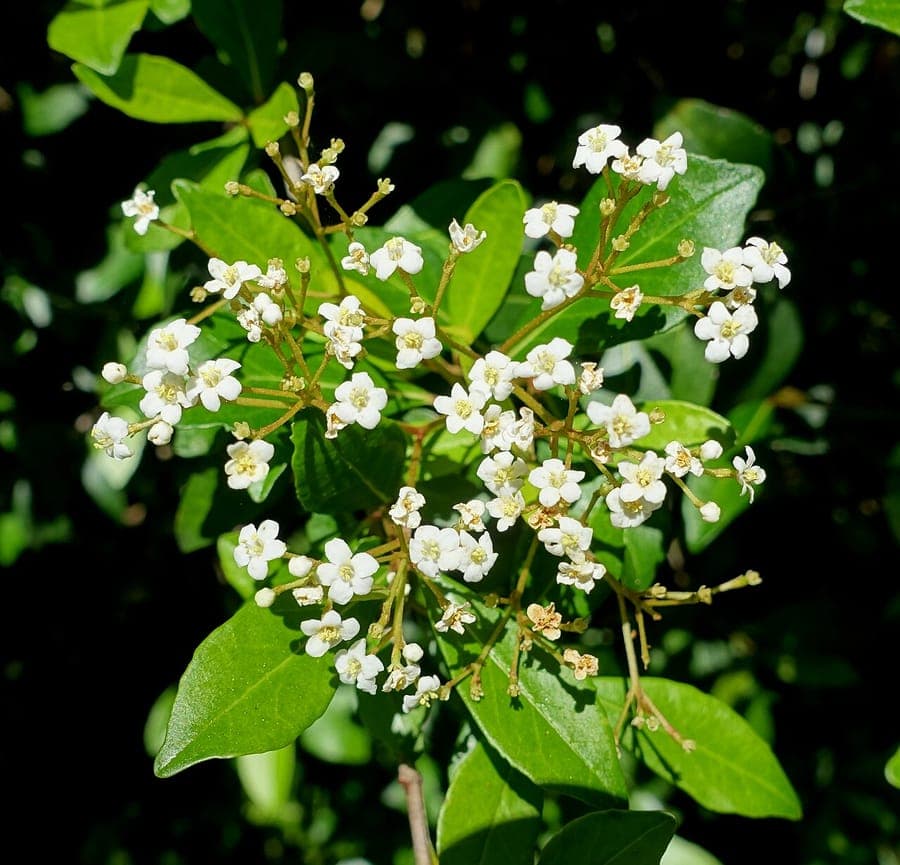
Viburnum obovatum, commonly known as Walter's viburnum, small-leaf viburnum, or small-leaf arrowwood, is a compact, evergreen shrub native to southeastern United States, from Florida to Louisiana and eastward. This species belongs to the Viburnaceae family and distinguishes itself through remarkably small, obovate leaves and very dense, compact growth habit.
Walter's viburnum is an excellent choice for sheltered gardens in temperate climates. The evergreen foliage, elegant form, delicate white flowers, and black autumn fruits provide year-round interest. The plant is highly versatile in design and can be used in both formal and informal settings.
Appearance and bloom cycle
Viburnum obovatum grows as a compact, densely-foliated shrub reaching approximately 1-2 metres high and 0.6-1.2 metres wide. Leaves are very small, 1-3 cm long, obovate (reverse egg-shaped) or elliptic, very dark green and glossy. Foliage remains green year-round and provides attractive backdrop for other plantings.
Flowers are small, approximately 3-4 mm in diameter, white to pale pink, and grouped in small, compact, flat flower clusters (cymes) of 2-4 cm diameter. The flowering period runs from March through May, with subtle, delicate fragrance.
Following flowering, small red fruits develop, ripening from green to black-purple in autumn. These berries remain ornamental throughout the season and are highly attractive to birds.
Ideal location
Walter's viburnum thrives in full sun to partial shade: a minimum of four to six hours of daily sunlight. The plant grows more slowly in deep shade. Protection from strong wind is preferred, although the plant is wind-tolerant.
Ideal applications include:
- Formal, compact borders
- Low screens and hedge-like plantings
- Small gardens where compact form is valuable
- Container cultivation in pots
- Japanese-style gardens
- Bird-welcoming plantings
- Subtle, elegant designs
Explore gardenworld.app for combination ideas with other compact evergreen shrubs.
Soil requirements
Walter's viburnum is highly adaptable to various soil types, thriving in sand to clay soils. It prefers well-drained soils but tolerates somewhat moisture-retentive soils. The plant grows slower in very fertile soils.
Ideal soil parameters:
- pH: 5.5-7.5 (acidic to neutral)
- Moisture: moderately dry to moderate
- Organic matter: low to moderate
- Texture: no specific preference
- Drainage: good to excellent
When planting in heavy soils, addition of sand or gravel improves drainage.
Diseño gratis
¿Quieres ver Walter's viburnum: complete guide en tu jardín? Crea un diseño gratis ahora.
Watering
Walter's viburnum, once established, is highly drought-tolerant and requires minimal supplemental water. Young plants, however, need consistent moisture until strong roots develop.
Watering schedule:
- Young plants: maintain evenly moist soil for first 4-6 weeks
- Established plants: water only during extreme drought
- Container plants: allow soil surface to dry between waterings
- Overwatering causes root rot
The plant thrives in rainy climates without supplemental water.
Pruning
Walter's viburnum requires minimal to moderate pruning to maintain compact form. Natural growth is already very compact.
Pruning schedule:
- March (before flowering): Light pruning for shaping
- May-June: Light pruning after flowering
- July-September: Remove dead or damaged wood
- October-February: Minimal pruning
Heavy pruning can damage form and is not recommended.
Maintenance calendar
March: Flowering preparation, light pruning April-May: Flower observation, regular care June-July: Fruit observation, removal of dead wood August-September: Bird watching, fruit development October-November: Black fruit observation, bird feeding December-February: Minimal maintenance, winter protection where needed
Winter hardiness
Viburnum obovatum is hardy to USDA zone 8a-8b (minimum temperature -10 to -6 degrees Celsius). In northern Netherlands and Belgium, protection or sheltered planting is necessary. In milder southern climates, it can overwinter without protection.
Overwintering strategies:
- Zone 8-8b: Sheltered location, apply mulch
- Zone 7-8: Plant against heat-reflecting wall, burlap protection
- Colder zones: Container cultivation, move to cool greenhouse in winter
- Plant tolerates brief frost periods but suffers under prolonged cold
Companion plants
Walter's viburnum pairs beautifully with:
- Holly (Ilex crenata, I. glabra)
- Boxwood (Buxus sempervirens, B. microphylla)
- Sarcococca (Sarcococca hookeriana)
- Skimmia (Skimmia japonica)
- Euonymus (Euonymus japonicus, E. fortunei)
- Pittosporum (Pittosporum tobira)
- Myrtle (Myrtus communis)
- Honeysuckle (Lonicera nitida)
- Azalea (Rhododendron spp.)
Explore gardenworld.app for formal border combinations.
Final thoughts
Walter's viburnum is an excellent, underrated choice for temperate gardens favouring compact, elegant forms. Exceptionally small leaves, compact growth, and year-round interest make it ideal for modern, minimalist designs. Source plants from specialized tree nurseries. Consult gardenworld.app for formal garden design inspiration.
¿Quieres ver Walter's viburnum: complete guide en tu jardín? Crea un diseño gratis ahora.
Sube una foto, elige un estilo y obtén un diseño fotorrealista con lista de plantas en menos de un minuto.
Más de 10.000 jardines diseñados
Sin tarjeta de crédito


Plantas similares
Guelder rose: guia completa
Viburnum opulus
Una guia detallada de Viburnum opulus: crecimiento, cuidado, poda y condiciones ideales de plantacion. Aprende como cultivar guelder rose exitosamente en tu jardin.
Viburnum davidii: complete guide
Viburnum davidii
David's viburnum is a compact, evergreen shrub with elegant foliage and blue berries. Learn to cultivate and maintain this refined plant at its best.