
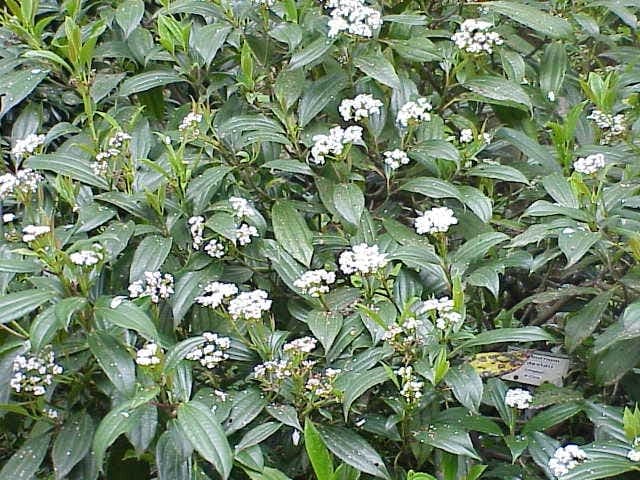
Kurt Stüber [1] / CC BY-SA 3.0, via Wikimedia Commons
Viburnum davidii: complete guide
Viburnum davidii
¿Quieres ver Viburnum davidii: complete guide en tu jardín?
1 minuto, sin tarjeta de crédito
Overview
David's viburnum, botanically Viburnum davidii, is a compact, evergreen shrub from China. This elegant shrub reaches only 1.2 to 1.5 meters height with similar width, making it perfect for smaller gardens. The shrub is known for its glossy, dark green foliage and particularly its striking turquoise to blue berries that stand out beautifully against winter grayness.
The viburnum is a valuable addition to modern gardens due to its compact form, year-round availability and bird-friendly fruits. This is a plant offering long-term interest.
Appearance and bloom
David's viburnum has oblong, ribbed leaves 5-10 centimeters long with deep dark green color. The leaves retain their green color year-round, providing extra winter landscape value.
Blooming occurs May-June with small white-pink flowers arranged in dense, flat clusters. These flowers are subtly beautiful and attract bees. After flowering, fruits develop first red, then becoming dark blue - this only occurs if multiple shrubs are planted for pollination.
The berries are a true highlight and persist into winter, providing bird food.
Ideal location
David's viburnum grows best in partial shade to full sun, depending on climate. In warmer regions (USDA zone 6+), the plant tolerates full shade. In cooler regions, the shrub prefers more sunlight.
The plant should be protected from strong winds, though reasonably wind-resistant. A position at garden edges works well.
The shrub is hardy to about -10 degrees Celsius, so in very cold regions winter protection may help.
Soil
David's viburnum grows in virtually all standard garden soils. The plant prefers slightly acidic, well-draining soil with pH between 5.5 and 6.5. The plant also tolerates neutral soils.
Well-draining soil is essential - heavy clay soils should be improved with sand and compost. Winter moisture can cause problems, so ensure good drainage.
Organic material like leaf mold or garden compost worked in at planting helps water retention and nutrient status.
Diseño gratis
¿Quieres ver Viburnum davidii: complete guide en tu jardín? Crea un diseño gratis ahora.
Watering
Young shrubs should be watered regularly, especially the first growing season. Water deeply but allow soil to dry between waterings. This promotes deep root systems.
Once established, the shrub tolerates normal rainfall. In dry periods, water helps, but this plant is not water-demanding. Overwatering is a bigger problem than underwatering.
In winter, minimal water is needed. Check soil moisture by feeling the ground.
Pruning
David's viburnum needs minimal pruning thanks to its naturally compact form. The shrub can tolerate pruning if you wish to apply some shaping.
After flowering (July), light pruning can maintain form. Remove only long shoots or damaged branches. Avoid heavy pruning that can limit growth.
In early spring, pruning can refresh form, but this prevents that year's flowering.
Maintenance calendar
Spring: check for winter damage and feed. Summer: monitor soil moisture, prune after flowering. Fall: enjoy blue berries. Winter: minimal actions, protect against extreme frost.
Winter hardiness
David's viburnum is half-hardy and tolerates temperatures to about -10 degrees Celsius. In regions with more extreme frosts, winter protection with blankets helps.
Leaves may discolor in extreme cold, but the plant usually survives. In very cold regions, container cultivation can be considered.
Companion plants
David's viburnum pairs beautifully with other evergreens. Plant with bamboo, nandina or Japanese maple for texture contrast. Low-growing companions like ivy, euonymus or hellebore fill nicely.
For bloom accent, add flowering plants like heuchera, hellebore or helleborus that bloom in other seasons.
Conclusion
David's viburnum is a refined choice for modern gardens valuing compact height and bird-friendly berries. The dark green evergreen foliage and turquoise berries offer year-round visual interest. With basic care and adequate moisture, this shrub thrives. Plant at least two shrubs for optimal berry production. Visit local garden centers for this special shrub.
On gardenworld.app, you can integrate David's viburnum into your garden design. At gardenworld.app, discover how this elegant shrub delivers subtle sophistication and bird-attracting berries for your front yard.
¿Quieres ver Viburnum davidii: complete guide en tu jardín? Crea un diseño gratis ahora.
Sube una foto, elige un estilo y obtén un diseño fotorrealista con lista de plantas en menos de un minuto.
Más de 10.000 jardines diseñados
Sin tarjeta de crédito


Plantas similares
Squashberry: complete guide
Viburnum edule
Grow mooseberry (Viburnum edule): ultra-hardy North American shrub with fragrant white flowers and red autumn berries. Perfect for boreal gardens. Zone 3.
Witherod: complete guide to this elegant North American shrub
Viburnum cassinoides
Discover Viburnum cassinoides: an elegant North American shrub with white flowers, yellow fall foliage, and blue berries. Perfect for temperate garden zones.
Buddlejaleaf viburnum: complete guide
Viburnum buddleifolium
Elegant evergreen shrub with delicate foliage and white spring flowers. Perfect for sheltered borders in temperate gardens.