
Jonas Bergsten / Public domain, via Wikimedia Commons
Lingonberry: complete guide
Vaccinium vitis-idaea
¿Quieres ver Lingonberry: complete guide en tu jardín?
1 minuto, sin tarjeta de crédito
Overview
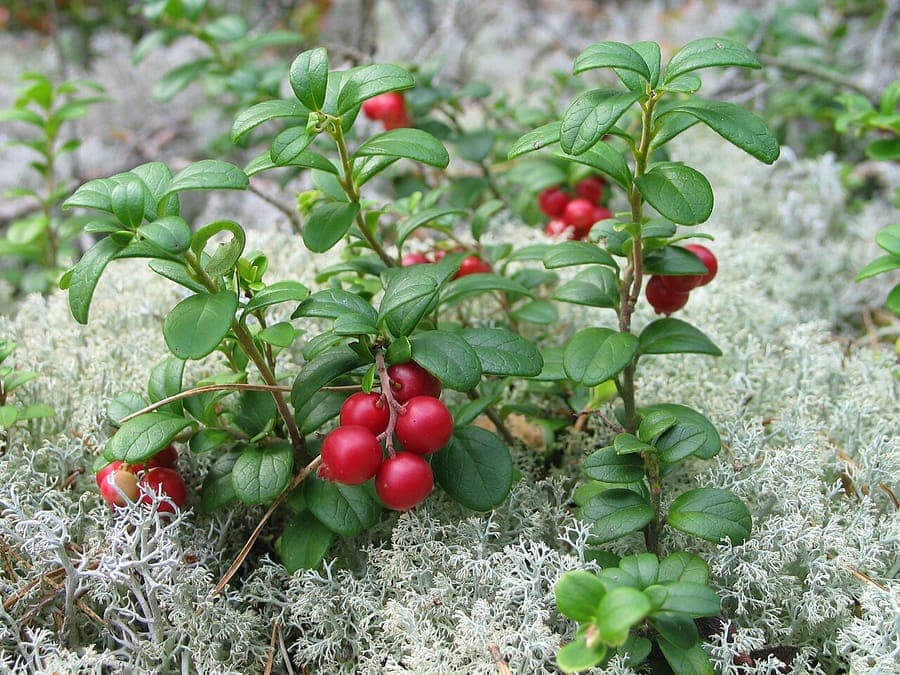
The lingonberry or cowberry (Vaccinium vitis-idaea), also called red whortleberry, is a compact evergreen shrub native across northern temperate and boreal Europe and Asia. This creeping dwarf produces shiny bright-red berries that persist from September through winter, providing valuable wildlife food when other sources are scarce. With glossy winter foliage, delicate pink flowers, and year-round interest, it delivers both ecological and culinary value.
Lingonberries are exceptionally hardy to -35C, grow very slowly (under 0.5m), and spread via underground rhizomes. Ideal for alpine gardens, heathland simulation, and low-maintenance food production.
Appearance and bloom
Lingonberry forms a low, dense, mat-forming shrub with thin stems and tiny ovate leaves. Foliage is glossy dark green year-round, becoming bronze-red in harsh winters. Flowers appear May-June: small, pale pink to white, bell-shaped, delicate.
Fruit ripens bright cherry-red, 0.8-1 cm diameter, smooth and glossy. Flavor combines tartness and sweetness; excellent for jams, sauces, and traditional Nordic preserves. Berries persist through autumn and winter, feeding birds when fresh food is scarce.
Ideal location
Lingonberry thrives in full sun to partial shade, requiring good air circulation. This open-moorland plant suits exposed positions. East to west exposures are acceptable. Avoid hot, dry, south-facing walls in warmer climates.
Unlike some ericaceous plants, lingonberry tolerates shade better than highbush blueberries, even growing beneath light deciduous canopy.
Soil
Strongly acidic (pH 4-5.5), well-drained, moist soil is ideal. Sandy-peat mixture (1:1) works perfectly. Incorporate organic matter; natural populations establish in humus-rich alpine soils and moorland.
Clayey soils need amendment with peat moss. Lingonberry naturally colonizes mountain heathland and acidic sandy moorland.
Diseño gratis
¿Quieres ver Lingonberry: complete guide en tu jardín? Crea un diseño gratis ahora.
Watering
Moderate moisture during growing season (April-September) is beneficial. In drought periods, regular misting helps. Lingonberry tolerates drier conditions than most berries. Mulch with 5 cm organic layer to retain moisture.
Once established, additional watering is rarely necessary except during exceptional drought.
Pruning
Minimal pruning needed. This very slow-growing plant's natural form is invariably attractive. Remove only visibly dead or damaged stems in spring.
If lateral spread becomes excessive (rare), gentle removal of peripheral growth controls size without stress or yield reduction.
Maintenance calendar
March: Light pruning; inspect for winter damage. April-May: Growth resumes; monitor soil moisture. May-June: Flowering; no intervention needed. July-September: Fruit development and ripening. October-November: Harvest fresh berries; feed wildlife. December-February: Dormancy; berries still valuable for birds.
Winter hardiness
Lingonberry is exceptionally hardy to -35C, naturally occurring across Nordic regions, Scotland, and subarctic Asia. No winter protection required in any temperate European climate. Snow provides additional insulation benefit.
Companion plants
Lingonberry combines beautifully with other ericaceous plants: bilberry, bog cranberry, heather varieties, and moss. In heathland-simulation gardens, it forms living ground cover. Plant in groups for woodland character.
Space plantings adequately; lingonberry spreads slowly via rhizomes but benefits from good air circulation.
Closing
The lingonberry is an exceptional choice for shade gardening, alpine meadow creation, and natural ground-cover implementation. Extremely hardy, low-maintenance, and ecologically vital throughout winter months, it delivers fresh traditional fruit while supporting bird and wildlife populations. An asset to any temperate garden.
Design comprehensive lingonberry systems integrating berries via gardenworld.app's composition tools. Consult gardenworld.app for seasonal harvest schedules and wildlife-integration strategies.
¿Quieres ver Lingonberry: complete guide en tu jardín? Crea un diseño gratis ahora.
Sube una foto, elige un estilo y obtén un diseño fotorrealista con lista de plantas en menos de un minuto.
Más de 10.000 jardines diseñados
Sin tarjeta de crédito


Plantas similares
Zenobia pulverulenta: complete guide
Zenobia pulverulenta
Everything about Zenobia pulverulenta (honeycup): siting, acid soil, pruning and the fragrant white bells, in this complete care guide.
Dwarf huckleberry: complete guide
Gaylussacia dumosa
Everything about dwarf huckleberry (Gaylussacia dumosa): acidic soil, partial shade, pruning and care for this compact North American berry shrub.
Drooping leucothoe: complete guide
Leucothoe fontanesiana
Everything about drooping leucothoe (Leucothoe fontanesiana): shade tolerance, soil, watering, pruning, hardiness and companion plants.