
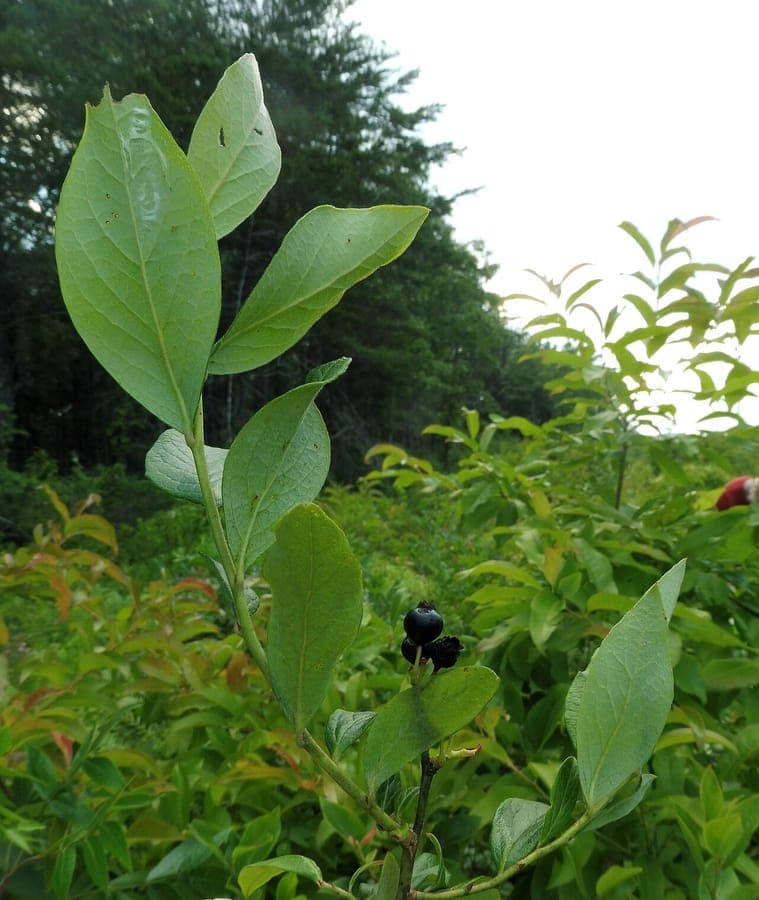
Mason Brock (Masebrock) / Public domain, via Wikimedia Commons
Vaccinium fuscatum: complete guide
Vaccinium fuscatum
¿Quieres ver Vaccinium fuscatum: complete guide en tu jardín?
1 minuto, sin tarjeta de crédito
Overview
Vaccinium fuscatum, commonly called Hairy Highbush Blueberry, is a native American shrub from the eastern United States. This distinctive hairy-stemmed blueberry offers early pink flowers and abundant dark blue to black berries that feed migratory birds. It's an excellent choice for wildlife gardens and natural understories.
Appearance & Bloom
The shrub reaches 150-250 centimeters with well-branched, hairy-textured young stems characteristic of the species. Leaves are lance to elliptic-shaped, 3-7 centimeters long, with fine hairs on nerves. Pink to white flowers bloom very early (March-April), providing early bird nutrition. Dark blue to black berries follow rapidly, highly attractive to migratory bird species.
Ideal Location
Place in full sun to half-shade with minimum three hours direct sunlight. Perfect for moist sites, woodland margins, and wetland gardens accessible to wildlife. Excellent for marshy areas and bird reserves.
Soil
Grows best in acidic, moisture-retaining soils, pH 4-6. Add generous compost and peat moss optimizing both acidity and moisture retention. Ensure drainage to prevent waterlogging, though this plant tolerates more moisture than alpine ericaceous species.
Diseño gratis
¿Quieres ver Vaccinium fuscatum: complete guide en tu jardín? Crea un diseño gratis ahora.
Watering
Water regularly, especially during growth and flowering. This plant thrives in moist conditions. Ensure soil doesn't completely dry in summer. Occasional foliage misting helps control spider mites.
Pruning
Thinning old stems after flowering promotes healthy growth. Remove dead or diseased branches immediately. Formative pruning unnecessary unless maintaining dense shapes. Avoid severe cutting on young plants.
Maintenance Calendar
Autumn: Plant September-October. Winter: Protect young plants in severe winters. Spring: Feed for flowers in March. Summer: Ensure adequate moisture. Autumn: Allow birds to harvest berries; support natural growth patterns.
Winter Hardiness
Hardy to approximately -15°C. Grows well in most Dutch gardens, though young plants may need protection in severe winters.
Companion Plants
Perfect pairings with other Vaccinium species, rhododendrons, azaleas and acid-loving plants. Beautiful combinations with bird-food shrubs like brambles and holly-like varieties. Underplant with low-growing groundcovers sharing soil preferences.
Closing
Vaccinium fuscatum deserves a place in every wildlife garden. The combination of early pink blooms, nutritious berries, and wild American heritage makes this a genuine classic choice. Learn more about garden design at gardenworld.app and create your bird paradise. Discover much more at gardenworld.app!
¿Quieres ver Vaccinium fuscatum: complete guide en tu jardín? Crea un diseño gratis ahora.
Sube una foto, elige un estilo y obtén un diseño fotorrealista con lista de plantas en menos de un minuto.
Más de 10.000 jardines diseñados
Sin tarjeta de crédito


Plantas similares
Zenobia pulverulenta: complete guide
Zenobia pulverulenta
Everything about Zenobia pulverulenta (honeycup): siting, acid soil, pruning and the fragrant white bells, in this complete care guide.
Dwarf huckleberry: complete guide
Gaylussacia dumosa
Everything about dwarf huckleberry (Gaylussacia dumosa): acidic soil, partial shade, pruning and care for this compact North American berry shrub.
Drooping leucothoe: complete guide
Leucothoe fontanesiana
Everything about drooping leucothoe (Leucothoe fontanesiana): shade tolerance, soil, watering, pruning, hardiness and companion plants.