
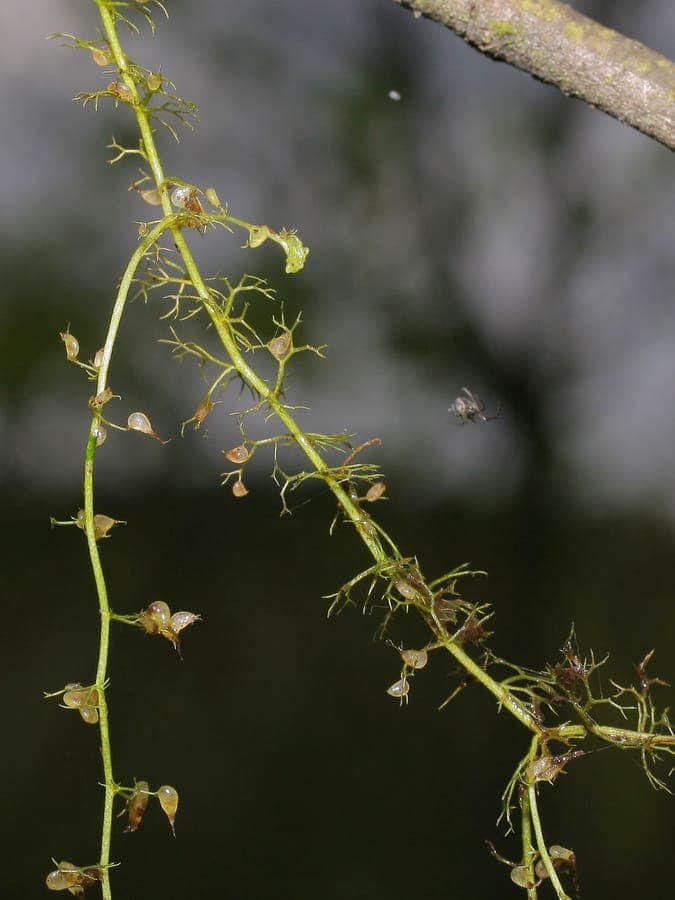
Kristian Peters -- Fabelfroh 16:14, 22 October 2007 (UTC) / CC BY-SA 3.0, via Wikimedia Commons
Utricularia minor: complete guide
Utricularia minor
¿Quieres ver Utricularia minor: complete guide en tu jardín?
1 minuto, sin tarjeta de crédito
Utricularia minor, known as the lesser bladderwort, is one of the most fascinating and unusual aquatic plants you can introduce to your garden pond. This carnivorous aquatic plant is a master at capturing microscopic animals and forms a complete ecosystem unto itself.
Overview
Utricularia minor belongs to the family Lentibulariaceae and is an aquatic plant that naturally occurs in subarctic to temperate climate regions of the Northern Hemisphere, and also in New Guinea. This unique species is completely aquatic and develops no root systems like normal plants - instead, it develops from freely floating stems.
The plant is known for its unconventional feeding method: it captures small water invertebrates such as water fleas and small larvae in microscopically small "bladders" along the leaves. This makes it a fascinating subject for nature enthusiasts and biological water gardeners.
Appearance and bloom
Utricularia minor is a delicate plant with highly branched, very small leaves that remain green and grow underwater. The leaves are covered with dozens of tiny bladders - each approximately 0.5 to 2 millimeters large. These bladders are the feeding traps of the plant.
The bloom is spectacular: from July through August, delicate, yellow flowers appear on thin stems extending above the water surface. The flowers are small but striking yellow and form a beautiful contrast with the fine green foliage.
Ideal location
Utricularia minor grows best in shallow, open water basins with abundant sunlight. Four to six hours of direct sunlight per day is ideal for flower formation. The plant can also grow in partial shade, but blooming will be less pronounced.
This plant has no preference for specific shore solutions - it floats freely in open water. Plant it in open basin areas where it can drift and move freely. Ensure good water circulation and oxygen supply in the pond.
Soil composition
As a free-floating plant, Utricularia minor has no special soil requirements. It thrives in clean water basins with good oxygen content. The plant, however, prefers soft water to hard water.
No potting soil is needed; plant this species directly in basin water. Ensure water remains clear and clean through regular water changes and good filtration.
Diseño gratis
¿Quieres ver Utricularia minor: complete guide en tu jardín? Crea un diseño gratis ahora.
Watering and moisture management
As a completely aquatic plant, Utricularia minor stands constantly in water. The plant thrives best in clean, soft water with a pH of 4.5 to 6.5. Hard water can lead to stunting and reduced growth.
Maintain clean water conditions through regular water changes (one third to half per month) and adequate filtration. Prevention of eutrophication (excessive nutrient buildup) is important to keep the plant healthy.
Pruning and shaping
Pruning is practically unnecessary. If the plant becomes too dominant in the pond and suffocates other species, gentle removal of some plant biomass can be done by pulling out several mats of plants from the pond.
The plant self-shapes as it spreads via horizontal stems. Regular observation helps determine whether the plant maintains balance with other aquatic species.
Maintenance calendar
April to May: Inspection of overwintering and preparation for growth. June to August: Growth period with possible blooming; observation of capture activity. September to October: Preparation for rest; reduction of nutrients in water. November to February: Rest period; minimal water changes tolerable.
Winter hardiness
Utricularia minor is hardy in temperate climates (zones 4-5) as the plant can sink deep into mud and achieve dormancy. In very severe winters, the plant can be moved to an unheated greenhouse or protected with extra depth in the basin.
In milder climates, the plant can remain permanently outdoors and regenerate in spring. Ensure basin water does not freeze completely, which could kill the plant entirely.
Companion plants
Utricularia minor combines well with other aquatic plants such as dwarf water lilies, small Echinodorus species, and various aquatic moss species. For structure, add some upright aquatic plants.
At the surface, floating plants such as Salvinia and small swimming plants work well together. The plant contributes substantially to natural water ecosystems.
Closing thoughts
Utricularia minor is not only decorative but also educationally interesting. The carnivorous nature of the plant makes it a fascinating subject for examination and natural history study. For gardeners interested in aquatic ecosystems, biological water filtration, and scientific observation, this plant is indispensable.
Available from specialized aquatic suppliers and increasingly from major retailers. Invest in this unique ecosystem and enjoy years of fascinating aquatic life. Visit gardenworld.app for more water garden inspiration.
¿Quieres ver Utricularia minor: complete guide en tu jardín? Crea un diseño gratis ahora.
Sube una foto, elige un estilo y obtén un diseño fotorrealista con lista de plantas en menos de un minuto.
Más de 10.000 jardines diseñados
Sin tarjeta de crédito


Plantas similares
Zigzag bladderwort: complete guide
Utricularia subulata
Utricularia subulata, a carnivorous aquatic marvel. Discover care requirements, cultivation tips and fascinating hunting mechanisms.
Pinguicula lusitanica: complete guide
Pinguicula lusitanica
Pale butterwort is a fascinating carnivorous plant with sticky leaves and delicate white flowers. Perfect houseplant. Complete care guide and tips here.
Gibba bladderwort: complete guide
Utricularia gibba
Explore the gibba bladderwort, a fascinating carnivorous plant: aquatic requirements, feeding mechanism, temperature, and care for water gardens.