
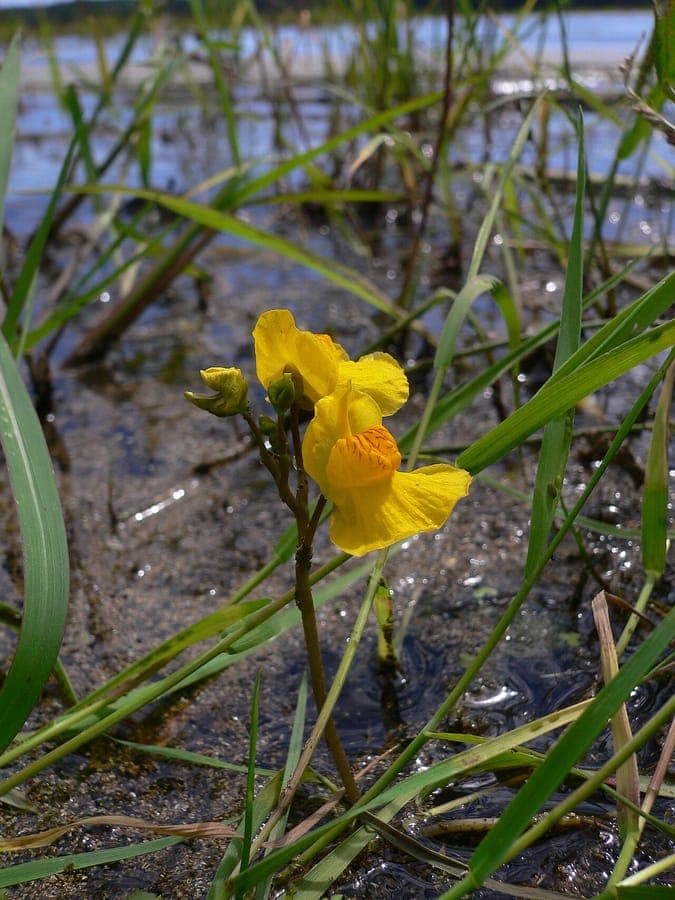
No machine-readable author provided. Botanikus~commonswiki assumed (based on copyright claims). / CC BY-SA 3.0, via Wikimedia Commons
Bladderwort: complete guide
Utricularia australis
¿Quieres ver Bladderwort: complete guide en tu jardín?
1 minuto, sin tarjeta de crédito
Overview
Bladderwort (Utricularia australis) is a remarkable aquatic plant found worldwide in freshwater environments. This carnivorous plant specializes in trapping tiny aquatic animals using microscopic bladders, making it a unique addition to water gardens and aquaria. The plant grows faster than most aquatic plants and helps keep water clean and clear by absorbing minerals and nutrients.
Appearance and Bloom
Bladderwort features very fine, thread-like submerged leaves that float or drift in water. The plant produces delicate yellow flowers that emerge above the water surface, especially during summer months from June through September. The blooms are small but striking, providing ornamental value alongside ecological benefits. The underwater portions contain tiny traps that capture small aquatic organisms for additional nutrition.
Ideal Location
Bladderwort thrives best in freshwater ponds and aquaria receiving abundant light. The plant grows well in full sun to partial shade, requiring at least 6 hours of direct sunlight daily. In aquaria, a bright spot near a window is ideal. The plant can grow fully submerged or partially emergent in marshy conditions.
Soil
Bladderwort is not soil-dependent as it grows suspended in water. In aquaria, it may float freely or rest lightly on muddy substrate. In ponds, the plant obtains sufficient nutrients from the water itself. Soft water with pH between 5.5 and 6.5 is ideal for healthy growth and flowering.
Watering
Since Bladderwort is an aquatic plant, regular water changes are essential for optimal growth. In ponds, rainwater provides natural replenishment. In aquaria, water must remain nutrient-rich and clean; weekly partial changes are recommended. Water should always be soft and free from harmful chemicals.
Diseño gratis
¿Quieres ver Bladderwort: complete guide en tu jardín? Crea un diseño gratis ahora.
Pruning
Bladderwort requires minimal pruning. Remove dead portions or excess growth if the plant becomes overgrown in the aquarium or pond. Regular thinning prevents the plant from becoming too dense and opaque. Monthly checks are sufficient to keep growth manageable in aquaria.
Maintenance Calendar
Spring: Check for dead material and start regular feeding for blooming. Summer: Perform weekly water checks and trim as needed; flowering period. Autumn: Reduce feeding as light decreases. Winter: Lower maintenance; adjust lighting in aquaria.
Winter Hardiness
Bladderwort is found in temperate climates worldwide. In the Netherlands and Belgium, it thrives in inland waters. Where water does not freeze, the plant survives winters beneath the surface. In freezing areas, plant portions may die but regenerate from roots. Protect ponds with deeper zones (minimum 80cm depth) for winter survival.
Companion Plants
Bladderwort pairs well with other aquatic plants such as water lilies, duckweed, and pondweeds. As it traps insects, it helps other plants by controlling harmful larvae. Fish can coexist in the same pond; avoid herbivorous species that would eat the plant.
Closing Thoughts
Bladderwort is a fascinating choice for those seeking a self-sustaining aquatic ecosystem. Yellow blooms and self-cleaning properties provide value in any water environment. Purchase seeds or young plants online or from specialized aquatic retailers.
Where to Buy
Find aquarium and pond plants at major garden centers. Online ordering via gardenworld.app/en or gardenworld.app/nl offers convenience and expert advice.
¿Quieres ver Bladderwort: complete guide en tu jardín? Crea un diseño gratis ahora.
Sube una foto, elige un estilo y obtén un diseño fotorrealista con lista de plantas en menos de un minuto.
Más de 10.000 jardines diseñados
Sin tarjeta de crédito


Plantas similares
Zigzag bladderwort: complete guide
Utricularia subulata
Utricularia subulata, a carnivorous aquatic marvel. Discover care requirements, cultivation tips and fascinating hunting mechanisms.
Pinguicula lusitanica: complete guide
Pinguicula lusitanica
Pale butterwort is a fascinating carnivorous plant with sticky leaves and delicate white flowers. Perfect houseplant. Complete care guide and tips here.
Gibba bladderwort: complete guide
Utricularia gibba
Explore the gibba bladderwort, a fascinating carnivorous plant: aquatic requirements, feeding mechanism, temperature, and care for water gardens.