
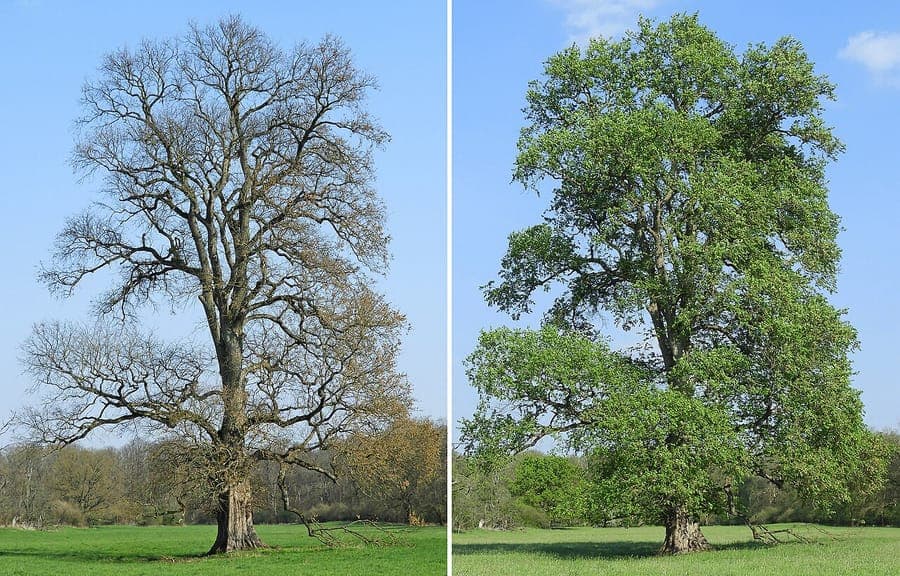
Christian Fischer / CC BY-SA 4.0, via Wikimedia Commons
Russian elm: complete guide
Ulmus laevis
¿Quieres ver Russian elm: complete guide en tu jardín?
1 minuto, sin tarjeta de crédito
Russian elm (Ulmus laevis), also known as water elm or European white elm, is an elegant European deciduous tree reaching 20-25 meters tall. This tree distinguishes itself through relatively small leaves and beautiful, very light winged fruits that flutter down like snow. It is a refined tree for moist soils and waterside locations, much more elegant than its heavier relatives.
Overview Russian elm belongs to the elm family (Ulmaceae) and originates from Europe to western Siberia. The botanical name 'laevis' refers to the smooth leaf undersurface of this species. This clearly distinguishes this elm from the much larger wych elm (U. glabra). In the Netherlands, this species has become rare due to elm disease and woodland conversion.
Origin and distribution Ulmus laevis occurs naturally from central Europe to western Siberia. The tree grows on moist soils along rivers, ravines, and in wet forests. This is particularly an East European tree; common occurrences in Poland, Russia, and around the Danube. In the Netherlands, very rare as a wild plant.
Appearance and growth habit Russian elm usually reaches 15-25 meters tall with an elegant, regularly shaped canopy. The tree grows thinner and more graceful than wych elm. Leaves are smaller (5-12 cm), smooth, finely serrated, and softly hairy on both sides. The leaves have a fine structure and seem to tremble in the wind - hence the elegant quality of this tree.
Flowers and fruits In March-April, red flowers appear just before leaf emergence. The echo of that are the beautiful, very light winged fruits that ripen in May-June. These fruits are larger and markedly more delicate than other elms - they seem almost like snowflakes drifting slowly downward. This is the most striking feature of this tree in spring and early summer.
Ideal location Russian elm grows best in sheltered to moderately exposed locations. Full sun to light shade suit equally. A very exposed position (strong wind) may limit growth. For gardens with moderate to full sun, this is an ideal tree. The tree is especially suited to waterside and moist lowland landscapes.
Soil requirements Ulmus laevis prefers nutrient-rich, moderately moist to moist soils. The tree grows best on loamy soils with regular moisture. Dry sandy soils are not suitable. Light basicity is fine (pH 7.0-7.5); very acidic soils less suitable. Wet soils are better tolerated than in many other elms.
Watering Russian elm is moderately drought-tolerant when well-established. Young trees, especially after planting, need regular water for the first growing seasons. Mature trees in moist locations need no supplemental water. On drier sites, regular irrigation must be provided, especially in dry summers.
Maintenance and pruning Maintenance is minimal for this elegant tree. Young specimens can be lightly pruned to shape. Mature trees need not be pruned unless dead branches or diseases are present. This tree naturally forms an elegant, regular shape and pruning can hinder this.
Maintenance calendar Winter: Stately silhouette visible in bare condition. No work. Spring: Bloom and leaf emergence March-May. Water young trees. Summer: Beautiful fruit display May-June. Natural growth. No interventions. Autumn: Leaf coloration October-November. Clean up fallen fruits.
Winter hardiness Russian elm is hardy to approximately -15 to -18 degrees Celsius. In temperate climates, the tree grows without problems. Young plants can, however, be sensitive to severe winters with extreme temperature fluctuations.
Disease resistance Russian elm is susceptible to the same Dutch elm disease (Ophiostoma ulmi) as other elms. No true resistance exists. Good care and adequate drainage strengthen natural resistance. Alternating with other trees in landscapes is advisable.
Companion plants In moist landscapes: willow, aspen, cherry, and bramble. For bird food: rowan, medlar, and hornbeam. Understory planting with shade-tolerant plants like mosses, silverweed, and sedges. Along water: marsh marigold and reed grass.
Conclusion Russian elm is a refined, elegant tree for moist locations and waterside sites. With its graceful leaves and breathtaking winged fruits, this tree deserves more attention in northern European gardens and parks. Though rare in commerce, this tree can be ordered from specialized tree nurseries. A bird-friendly, valuable tree for bird food and fine structure in the landscape!
Historical note: Russian elm is known as a relatively resistant elm to certain diseases, but remains susceptible to Dutch elm disease.
¿Quieres ver Russian elm: complete guide en tu jardín? Crea un diseño gratis ahora.
Sube una foto, elige un estilo y obtén un diseño fotorrealista con lista de plantas en menos de un minuto.
Más de 10.000 jardines diseñados
Sin tarjeta de crédito


Plantas similares
Wych elm: complete guide
Ulmus glabra
Discover wych elm (Ulmus glabra), a mighty deciduous tree with large rough double-serrated leaves. A classic European garden tree for large spaces.
Field elm: complete guide
Ulmus minor
Discover field elm (Ulmus minor), a compact elm species with small fine leaves. Suitable for moderate locations and as a hedging plant.