
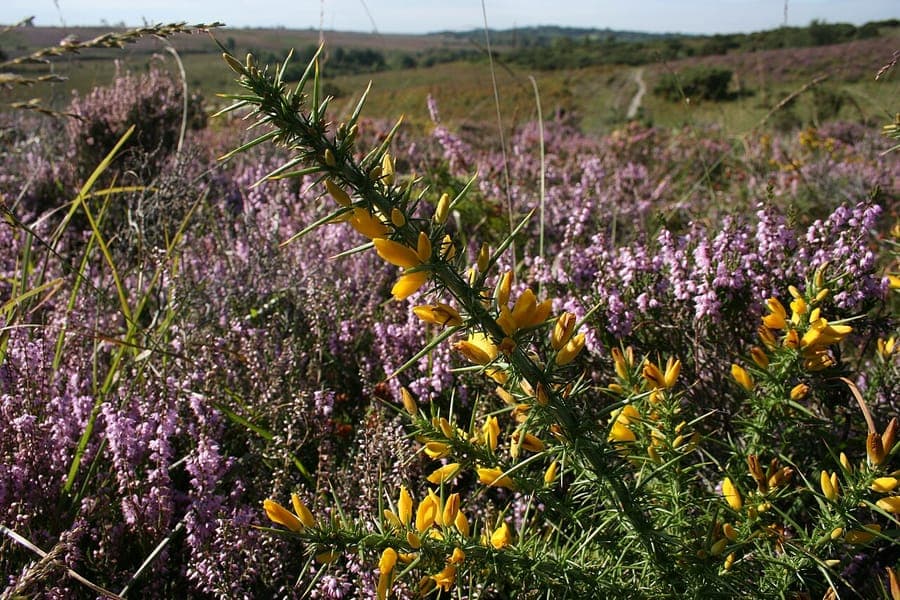
Richard New Forest / CC BY-SA 4.0, via Wikimedia Commons
Ulex gallii: complete guide
Ulex gallii
¿Quieres ver Ulex gallii: complete guide en tu jardín?
1 minuto, sin tarjeta de crédito
Overview
Ulex gallii, commonly known as western gorse or Gall's gorse, is a compact, flowering shrub that perfectly fits modern, low-maintenance gardens. This dwarf shrub from the Fabaceae family is very winter-hardy and prefers acidic soils. The shrub is native to Western Europe, especially in the borderlands between France, Ireland and Great Britain.
The plant is truly a winter bloomer and delivers yellow flowers when other plants are still sleeping. This makes it valuable for the winter landscape.
Appearance and bloom
Ulex gallii is a compact, prickly shrub that usually grows 0.5 to 1.5 meters tall. The leaves are actually fine, green thorns that remain visible year-round. These give the shrub an interesting, prickly character.
The flowers are sunny yellow and appear from August to December, with peaks in October-November. This is unusual for many flowering shrubs and makes it very valuable for autumn colors. The scent of the yellow flowers is subtly sweet.
After flowering, small seed pods form that can cause self-seeding.
Ideal location
Western gorse loves full sun. Plant it in a location with at least 6 hours of direct sun per day. In full shade it will grow poorly and bloom little.
The plant is wind-resistant and grows well in exposed positions. This makes it ideal for coastal and mountain areas.
Soil
This gorse is very tolerant of acidic soils, which is almost essential. The plant thrives best in lime-free, sand and gravel-rich soils. Heavy clay material is unsuitable.
It tolerates poor soils without any need for feeding. This is truly a plant for marginal ground where other plants struggle.
Diseño gratis
¿Quieres ver Ulex gallii: complete guide en tu jardín? Crea un diseño gratis ahora.
Watering
Once established, Ulex gallii is very drought-tolerant. Regular watering helps during the growing period, but is not necessary. The plant has deeply rooting roots that draw moisture from deep layers.
Do not water too much - this can cause root rot. The plant prefers dry conditions and shows no weakness in summer drought.
Pruning
Western gorse tolerates pruning after flowering. Cut back about a third of the branches in January or February to encourage bushiness and remove dead wood.
Avoid pruning into old wood - cut just into young green wood. Radical pruning can damage the plant.
Maintenance calendar
August-October: Peak bloom period; no special maintenance.
November-December: Excellent fall colors; no intervention needed.
January-February: Prune after flowering if needed.
March-April: Growing period begins; no feeding needed.
May-July: Summer rest period; minimal maintenance.
Winter hardiness
Ulex gallii is very winter-hardy down to -15 degrees Celsius, sometimes even colder. The plant grows very well in temperate oceanic climates of the Netherlands, Belgium, France and British Isles.
Snow cover is not a problem; under snow the plant remains undamaged. Heavy snow on the leafy branches can cause breakage, but the plant regrows quickly.
Companion plants
Western gorse combines well with other autumn and winter bloomers. Try combining it with purple heather, yellow sedum or white snowball.
Its compact form makes it suitable for borders where space is limited. Its thorns provide bird shelter.
Closing
Ulex gallii is an exceptional winter bloomer for low-maintenance gardens. With its yellow autumn flowers, excellent winter hardiness and bird attraction, it deserves more attention in modern gardens.
Find western gorse at native plant specialists or garden nurseries. For more garden ideas and design inspiration, visit gardenworld.app and gardenworld.app.
¿Quieres ver Ulex gallii: complete guide en tu jardín? Crea un diseño gratis ahora.
Sube una foto, elige un estilo y obtén un diseño fotorrealista con lista de plantas en menos de un minuto.
Más de 10.000 jardines diseñados
Sin tarjeta de crédito


Plantas similares
Tall Silky Lupine: complete guide
Lupinus elatus
Tall silky lupine is a fast-growing Californian perennial with silvery foliage and blue-purple flower spikes, ideal for a prairie-style garden.
Garfield Lupine: complete guide
Lupinus garfieldensis
The Garfield lupine is a rare, fast-growing American perennial for alkaline, dry grassland gardens, with striking blue flower spikes.
Lupinus elegans: complete guide
Lupinus elegans
Lupinus elegans, the elegant lupine, is a spectacular blooming plant from Mexico with blue flower spikes. Care, cultivation and garden use.