
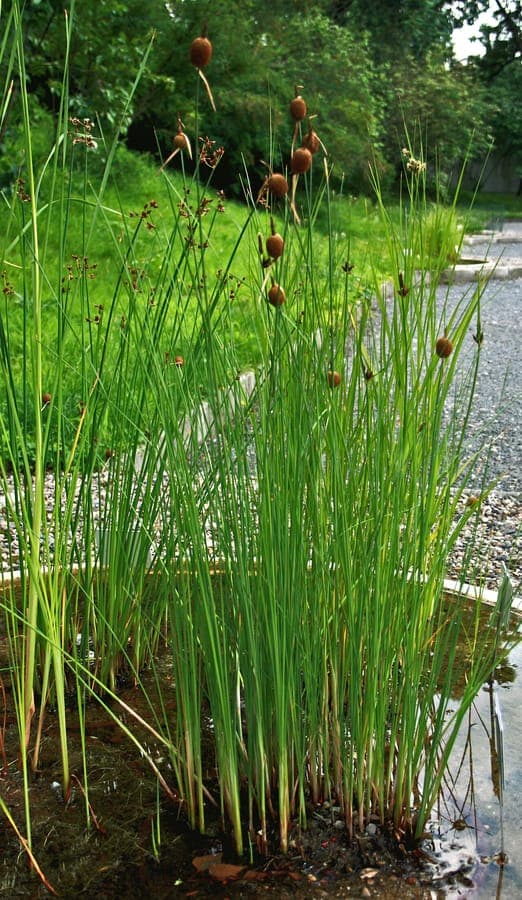
Karelj / Public domain, via Wikimedia Commons
Typha minima: complete guide
Typha minima
¿Quieres ver Typha minima: complete guide en tu jardín?
1 minuto, sin tarjeta de crédito
The dwarf bulrush, scientifically known as Typha minima, is a fascinating miniature aquatic plant that has found its place in small ponds and water features. This compact water plant is renowned for its refined appearance and low-maintenance nature, making it increasingly popular among garden enthusiasts.
Overview
Typha minima belongs to the family Typhaceae and is an aquatic plant that naturally occurs from Central and Eastern Europe to Mongolia. This unique species distinguishes itself through its significantly smaller dimensions compared to its larger relatives. The plant typically reaches a height of 30 to 60 centimeters, making it ideal for compact water features and garden ponds where space is limited.
The plant is appreciated for its aesthetic value, especially through the characteristic seed heads that extend high above the water. These seed heads replace traditional flowers and give the plant a unique appearance throughout the growing season. In heritage gardens and natural water features, the dwarf bulrush is a classic choice.
Appearance and bloom
The most striking feature of Typha minima is the compact, chestnut-brown seed heads that appear on thin stems mid-summer. Blooming typically occurs from May through July. These small, cylindrical seed heads are much more delicate and graceful than those of larger bulrush species.
The leaves are narrow, linear, and remain green throughout the growing season. They grow upright and form elegant fountains of green foliage around the plant base. In autumn, the seed heads turn dark brown and retain their form and texture, remaining decorative even in winter.
Ideal location
Typha minima flourishes best in locations with abundant light. A location with at least four to six hours of direct sunlight is essential for optimal growth and flowering. The plant can also grow in partial shade, but this results in less vigorous growth and fewer blooms.
In garden ponds and water features, the plant should be positioned on shallow shelves. A water depth of 10 to 30 centimeters is ideal for this dwarf species. Place the plant on basin shelves where it receives both stability and appropriate water temperature. Ensure the plant is not in fast-flowing water, as this can cause root damage.
Soil composition
The dwarf bulrush grows best in nutrient-rich, muddy soils that are abundant in organic material. A mixture of garden peat, compost-containing clay, and sand provides ideal growing conditions. The soil must remain moist but not waterlogged above the water surface.
Do not use standard potting soil in water features; silt-bearing garden soil works much better. Plant in special aquatic pots with perforated sides, allowing root growth and nutrient uptake from surrounding water. For long-term maintenance, supplementary nutrients via slow-release fertilizer can be added.
Diseño gratis
¿Quieres ver Typha minima: complete guide en tu jardín? Crea un diseño gratis ahora.
Watering and moisture management
As an aquatic plant, Typha minima stands almost constantly in moist terrain. In temperate climates, the plant winterizes superficially, while roots remain submerged in a dormant state. Maintain proper water levels in basins during the growing season.
Providing water circulation helps keep the plant healthy. Stagnant water can stimulate algae growth; therefore, support good water circulation systems. During dry periods, water levels in shallower containers may drop; refill before this becomes problematic for roots.
Pruning and shaping
The dwarf bulrush requires little active pruning. However, remove worn or damaged leaves during the growing season. Withered seed heads can be trimmed at the end of summer, though many gardeners prefer to retain them for their winter beauty.
If the plant becomes overgrown in the pond, gentle thinning can be performed by removing older runners. This promotes fresh growth and prevents suffocation from densely growing plant material. Usually, such pruning is only needed once per year.
Maintenance calendar
In a typical annual care schedule, spring (April) begins with checking winter condition and cleaning dead foliage. May through July the plant reaches peak blooming; observe water levels and nutritional needs during this time.
August to September is the time to clean withered seed heads and prepare the plant for dormancy. October through March is rest period when minimal maintenance is needed, except maintaining adequate water level. For Southern European zones, the plant may require light winter care.
Winter hardiness
Typha minima is extremely cold hardy to zone 5 (minimum temperature -25 degrees Celsius). The plant tolerates harsh winters excellently as long as roots remain submerged. In regions with very severe winters, it may be useful to increase water depth slightly to prevent frost penetration.
In temperate climates, the plant closes down at the end of the growing season. Leaves die back to ground level, while rhizomes survive underground. Do not unnecessarily protect basins; natural ice formation above the plant poses no problem.
Companion plants
The dwarf bulrush combines well with other small-format aquatic plants such as frogbit (Hydrocharis morsus-ranae) and various sedge species (Carex). For structure and texture contrast, add dwarf water lilies; for color, yellow irises are excellent.
At the shore, marsh plants such as meadow rue (Thalictrum aquilegiifolium) and dwarf astilbe (Astilbe) work harmoniously together. The plant also looks beautiful in rocky shore zones with low-growing groundcovers such as Soleirolia.
Closing thoughts
Typha minima is a beautiful, low-maintenance aquatic plant for gardeners seeking an elegant addition to small water features. The compact growth, refined seed heads, and winter hardiness make this species a timeless classic. Whether you are designing a formal pond or a more natural water display, the dwarf bulrush always delivers refined beauty and structure.
At many garden centers and aquatic plant suppliers (such as OBI and Hornbach in Germany), Typha minima is available. Invest in this enchanting miniature water plant and enjoy season after season of its delicate presence in your garden landscape. For more inspiration and plant advice, visit gardenworld.app.
¿Quieres ver Typha minima: complete guide en tu jardín? Crea un diseño gratis ahora.
Sube una foto, elige un estilo y obtén un diseño fotorrealista con lista de plantas en menos de un minuto.
Más de 10.000 jardines diseñados
Sin tarjeta de crédito


Plantas similares
American bur-reed: complete guide
Sparganium americanum
Everything about Sparganium americanum: location, soil, care and use of this robust North American aquatic plant in ponds and water margins.
Broadfruit bur-reed: complete guide
Sparganium eurycarpum
Everything about broadfruit bur-reed (Sparganium eurycarpum): location, soil, care, and use in ponds and waterside plantings.
Narrow-leaf cattail: complete guide
Typha domingensis
Narrow-leaf cattail is a water plant from tropical and subtropical Africa with characteristic brown flower spikes. Ideal for marsh gardens, shorelines and water gardens. Very hardy.