
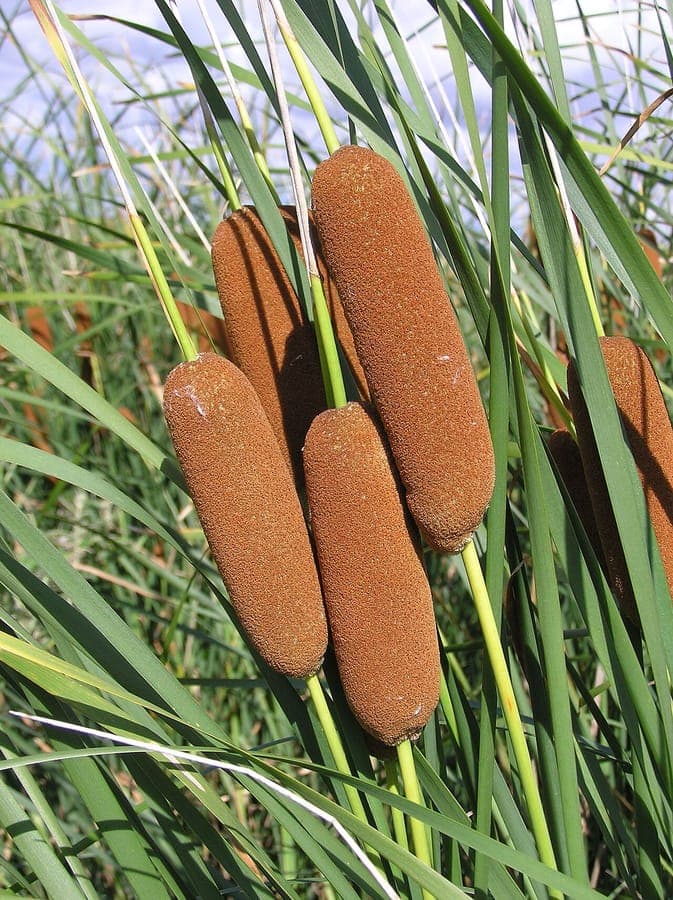
Le.Loup.Gris / CC BY-SA 3.0, via Wikimedia Commons
Laxmann's bulrush: complete guide
Typha laxmannii
¿Quieres ver Laxmann's bulrush: complete guide en tu jardín?
1 minuto, sin tarjeta de crédito
Overview
Laxmann's bulrush (Typha laxmannii) is a graceful aquatic plant from the Typhaceae family, native to Southeast Europe through Japan. This species distinguishes itself through compact, brown flower heads that appear more elegant than common cattails. With its refined growth habit and attractive flowers, it represents an excellent choice for natural water gardens and design-forward landscapes.
Appearance and Bloom
Laxmann's bulrush reaches heights of 1 to 1.5 meters, growing as a stately marginal plant. Its narrow, elongated leaves create a vertical structure that is visually pleasing. The brown flower spikes emerge from July to September and are compactly arranged, setting this species apart from other bulrush varieties. The flower material maintains excellent form throughout the season, making it valuable for garden design applications.
Ideal Location
This plant thrives along pond edges, stream banks, and marshy areas. Full sun is essential for optimal growth, though it also performs well in light dappled shade. Position the plant where it can handle wind exposure, as its vertical growth habit provides natural stability. Provide ample space for expansion, as this plant spreads via underground rhizomes.
Soil
Laxmann's bulrush grows optimally in wet to very wet soil conditions. Both clay and silt soils are suitable. For aquatic planting, this species tolerates depths from 20 to 150 centimeters. Soil high in silt and clay content encourages vigorous growth. Slightly acidic to neutral water (pH 7.0-7.5) is ideal for establishment and ongoing performance.
Watering
This plant is permanently submerged and requires no supplemental water applications. In ponds it grows as a fully or partially submerged species. For marsh areas, consistent waterfall or irrigation is recommended. Ensure the soil never completely dries out during growing season. The plant adapts well to fluctuating groundwater levels in appropriate sites.
Diseño gratis
¿Quieres ver Laxmann's bulrush: complete guide en tu jardín? Crea un diseño gratis ahora.
Pruning
Minimal pruning is required. In spring, remove dead material and damaged stems. After flowering (October-November), cut stems back to about 15 centimeters above soil level, leaving growth for frost protection. Aggressive spread can be controlled by containing rhizomes in planting baskets or thinning regularly.
Maintenance Calendar
Maintenance is minimal and undemanding. March-April: Remove dead material from the previous season. May-June: Monitor growth and planting density. July-September: Enjoy the flowers. October-November: Cut back to winter height. December-February: Leave protective growth in place. This plant experiences no specific pest or disease pressure.
Winter Hardiness
Laxmann's bulrush is completely winter hardy and tolerates temperatures to -20 degrees Celsius. In northern climates, above-ground stems may freeze back, but the plant reliably recovers each spring through rhizome sprouting. In frozen ponds, above-ground portions disappear while underground roots remain intact. No special frost protection is required.
Companion Plants
Ideal companions include water lilies (Nymphaea), watermint (Mentha aquatica), and various sedge species (Carex types). Grass-like plants such as Juncus effusus create beautiful combinations. For marginal planting, iris species perform excellently alongside this bulrush. Combine with native grasses and reeds for dynamic textural contrast in the landscape.
Closing Remarks
Laxmann's bulrush is an exceptional choice for those seeking refined, naturalistic water garden planting. Through its complete winter hardiness, minimal maintenance demands, and attractive brown flower spikes, this species deserves greater recognition in garden design. Visit gardenworld.app to discover how to integrate this plant into your garden design and landscape vision. Professional garden centers also stock specialized aquatic plants. With gardenworld.app, your dream garden becomes a reality.
¿Quieres ver Laxmann's bulrush: complete guide en tu jardín? Crea un diseño gratis ahora.
Sube una foto, elige un estilo y obtén un diseño fotorrealista con lista de plantas en menos de un minuto.
Más de 10.000 jardines diseñados
Sin tarjeta de crédito


Plantas similares
American bur-reed: complete guide
Sparganium americanum
Everything about Sparganium americanum: location, soil, care and use of this robust North American aquatic plant in ponds and water margins.
Broadfruit bur-reed: complete guide
Sparganium eurycarpum
Everything about broadfruit bur-reed (Sparganium eurycarpum): location, soil, care, and use in ponds and waterside plantings.
Narrow-leaf cattail: complete guide
Typha domingensis
Narrow-leaf cattail is a water plant from tropical and subtropical Africa with characteristic brown flower spikes. Ideal for marsh gardens, shorelines and water gardens. Very hardy.