
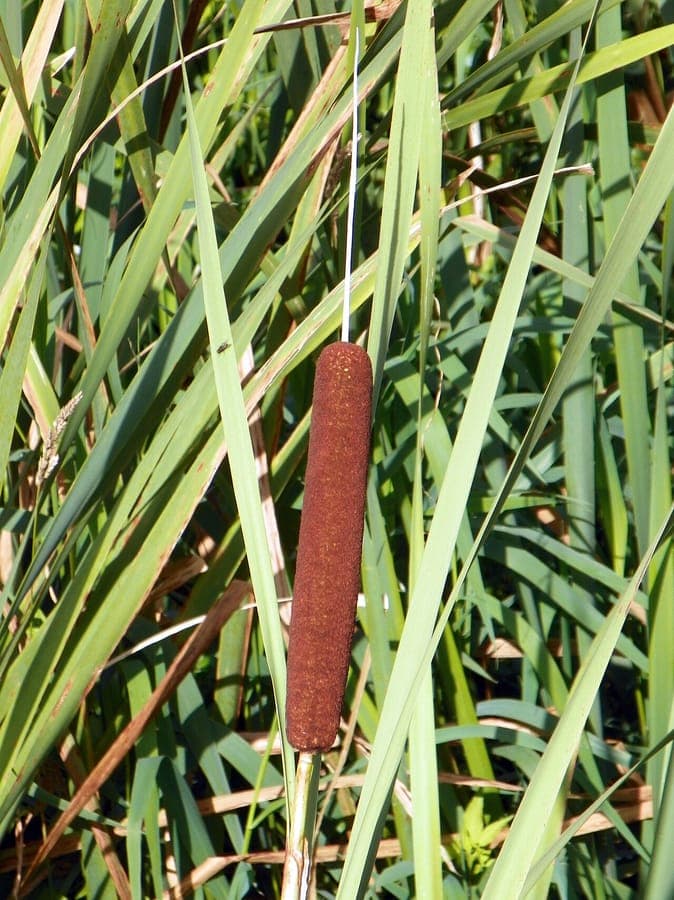
Peter O'Connor aka anemoneprojectors from Stevenage, United Kingdom / CC BY-SA 2.0, via Wikimedia Commons
Typha latifolia: complete guide
Typha latifolia
¿Quieres ver Typha latifolia: complete guide en tu jardín?
1 minuto, sin tarjeta de crédito
Broad-leaf cattail (Typha latifolia), also known as common cattail or Cooper's-reed, is one of the most recognizable water plants of the Northern Hemisphere. This powerful plant from the cattail family (Typhaceae) is known for its massive, brown flower spikes and broad green leaves that dominate the landscape in many places.
Overview
Typha latifolia is widely distributed in temperate and subtropical regions of the Northern Hemisphere, from Colombia to Bolivia and from Nigeria to Kenya. The plant grows in shallow water and marshlands and is an important part of many aquatic ecosystems. This cattail species is extremely valuable for wetland restoration and provides invaluable services in nature.
Appearance and Bloom
The plant is particularly noted for its very characteristic, massive brown flower spikes that are much thicker than those of the narrow-leaf cattail. These flower spikes can be 15 to 25 centimeters long and form at the end of the growing season. They have a very dense structure where the male flower (top) is lighter in color and the female flower (bottom) is browner.
The leaves are broader than in other Typha species, usually 10 to 20 millimeters wide. They grow in dense tufts and reach heights of 150 to 250 centimeters, making the plant very impressive in the landscape.
Ideal Location
Typha latifolia grows best in shallow water around ponds, lakes, and natural water features. The plant can grow in water 30 to 100 centimeters deep, which is deeper than the narrow-leaf cattail. The plant prefers full sun, though it can also grow in partial shade.
Place cattail in the shore zone of garden ponds for structure and bird feeding. The plant forms very dense, fast-growing vegetation that provides much shelter for waterfowl and attracts many insects.
Soil
Typha latifolia grows best in nutrient-rich, muddy soils underwater. The plant is not very critical about water or soil quality and thrives in both acidic and alkaline waters. Ensure stable water levels and good nutrient availability.
In garden ponds you can place the plant in basket pots with aquatic potting soil, so you can manage it better.
Watering
Typha latifolia is a water plant that requires continuous moisture. The plant must remain permanently in water or very wet soil. Ideally in shallow water (30-100 cm deep) where the system of underground rhizomes can grow.
Ensure the water is regularly refreshed or aerated. With stagnant garden pond water you should regularly remove dead leaves.
Pruning
Pruning is essential for managing Typha latifolia. The plant can spread very rapidly and dominate the pond. Remove dead and worn leaves regularly. At the end of the growing season (October-November) you can cut the plant back strongly to about 15 centimeters above the water surface.
Maintenance Calendar
Spring (March-May): Plant regrows after winter. Remove dead winter leaves completely.
Summer (June-August): Plant grows very vigorously. Monitor spread. Remove algae growth regularly.
Autumn (September-October): Plant forms massive brown flower spikes. An impressive period!
Winter (November-February): Plant dies above ground. Leave dead stems partially for winter birds.
Winter Hardiness
Typha latifolia is fully hardy in temperate Europe. The underground rhizomes survive the hardest winters without problem. The plant regrows irresistibly in spring.
Companion Plants
Typha latifolia combines well with other robust water plants such as reed-macer, water plantains, various sedge species, and water lilies. It also grows well with willow and birch species for bird food. For garden ponds combine it with swan flowers and other aquatic plants.
For advanced garden design see gardenworld.app for inspiration.
Closing
Typha latifolia or broad-leaf cattail is undoubtedly one of the most important water plants for serious garden designers. With its massive growth, impressive flower spikes, value for waterfowl and aquatic insects, it offers an incredible amount to the garden landscape. The plant requires some maintenance, especially regarding management of spread, but this is a small effort given the ecological and aesthetic benefits. Place cattail at the heart of your water feature and watch how the landscape transforms!
Available at major garden centers across Europe.
¿Quieres ver Typha latifolia: complete guide en tu jardín? Crea un diseño gratis ahora.
Sube una foto, elige un estilo y obtén un diseño fotorrealista con lista de plantas en menos de un minuto.
Más de 10.000 jardines diseñados
Sin tarjeta de crédito


Plantas similares
American bur-reed: complete guide
Sparganium americanum
Everything about Sparganium americanum: location, soil, care and use of this robust North American aquatic plant in ponds and water margins.
Broadfruit bur-reed: complete guide
Sparganium eurycarpum
Everything about broadfruit bur-reed (Sparganium eurycarpum): location, soil, care, and use in ponds and waterside plantings.
Narrow-leaf cattail: complete guide
Typha domingensis
Narrow-leaf cattail is a water plant from tropical and subtropical Africa with characteristic brown flower spikes. Ideal for marsh gardens, shorelines and water gardens. Very hardy.