
MPF / CC BY-SA 4.0, via Wikimedia Commons
Typha angustifolia: complete guide
Typha angustifolia
¿Quieres ver Typha angustifolia: complete guide en tu jardín?
1 minuto, sin tarjeta de crédito
Narrow-leaf cattail (Typha angustifolia) is an important water plant commonly found in shallow waters and marshy areas of the Northern Hemisphere. This water plant from the cattail family (Typhaceae) is recognized for its characteristic brown, cylindrical flower spikes that stand out distinctly in the summer and autumn landscape.
Overview
Typha angustifolia is widely distributed in temperate regions of the Northern Hemisphere. The plant is an important component of marsh ecosystems and usually grows in shallow waters 10 to 50 centimeters deep. This cattail species is highly valuable for wetland restoration and garden water features due to its ecological benefits.
Appearance and Bloom
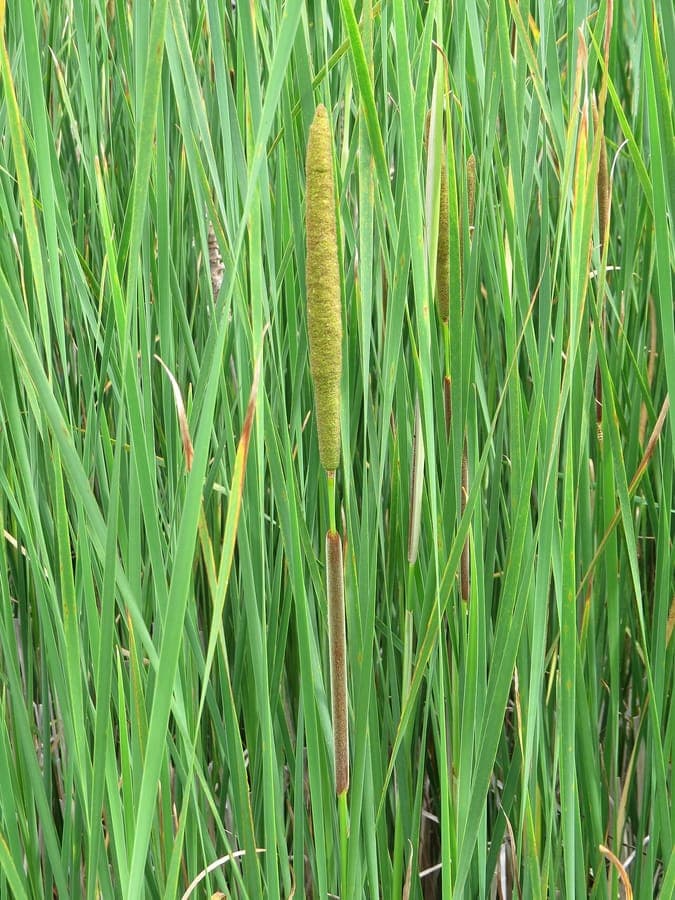
The plant is particularly noted for its characteristic brown, cylindrical flower spikes (inflorescences) that form at the end of the growing season. These flower spikes are denser and more slender than those of the broad-leaved cattail (Typha latifolia). The male flower sits on top (lighter, looser), while the female flower is below (darker, denser).
The leaves are long, narrow, and green, usually 8 to 12 millimeters wide. They grow upright in large tufts, giving the plant a distinctive vertical structure in the landscape.
Ideal Location
Typha angustifolia grows best in shallow water at the margins of ponds, lakes, and water features. The plant can grow in water 10 to 50 centimeters deep, though it also thrives in wet mud. The plant prefers full sun to partial shade.
Plant cattail in the shore zones of garden ponds where you want structure and bird food. The plant forms rapidly growing, dense mats that provide much habitat for waterfowl and aquatic insects.
Soil
Typha angustifolia grows best in muddy, nutrient-rich soils underwater. Ensure a good balance between water and silt. In garden ponds you can use special aquatic potting soil with a clay-like structure. The plant tolerates acidic and alkaline waters well.
Ensure that the plant can grow in shallow waters (to about 50 cm) and does not sink in deeper waters.
Watering
Typeha angustifolia is a water plant, so continuous water is essential. The plant must remain permanently in water or very wet soil. Keep the water clean by regularly removing dead leaves.
In garden ponds you can place the plant in pots in the water, making it easier to control and replace.
Pruning
Pruning is important for Typha angustifolia. Remove dead and worn leaves regularly. At the end of the growing season (October-November) you can cut the plant back to about 10 centimeters above the water surface. This prevents rotting of the dead parts.
Maintenance Calendar
Spring (March-May): Plant begins to grow after winter. Remove winter-dead leaves.
Summer (June-August): Plant grows vigorously. Monitor water quality. Remove any algae growth regularly.
Autumn (September-October): Plant forms characteristic brown flower spikes. A beautiful period!
Winter (November-February): Plant dies above ground. Leave dead leaves partially for winter bird foraging.
Winter Hardiness
Typha angustifolia is fully hardy in temperate Europe. The underground rhizomes survive hard winters and regrow in spring. The plant is virtually insensitive to frost as long as the roots remain in moist/wet soil.
Companion Plants
Typha angustifolia combines well with other water plants such as common reed (Phragmites australis), water plantains, and various sedge species. It also grows well with water plants and yellow water lily and other aquatic plants. For bird food, combine it with fruit-bearing trees and hedges.
See gardenworld.app for inspiration on how to integrate water plants into your garden pond.
Closing
Typha angustifolia or narrow-leaf cattail is an indispensable water plant for ecologically conscious gardeners. With its value for waterfowl, dragonflies, and other aquatic fauna, as well as its aesthetic strength in the landscape, it deserves a place in every garden pond. The plant requires relatively little maintenance after planting, making it a practical choice for both new ponds and existing water features. Consider cattail as an investment in biodiversity and natural beauty!
Available at major garden centers across Europe.
¿Quieres ver Typha angustifolia: complete guide en tu jardín? Crea un diseño gratis ahora.
Sube una foto, elige un estilo y obtén un diseño fotorrealista con lista de plantas en menos de un minuto.
Más de 10.000 jardines diseñados
Sin tarjeta de crédito


Plantas similares
American bur-reed: complete guide
Sparganium americanum
Everything about Sparganium americanum: location, soil, care and use of this robust North American aquatic plant in ponds and water margins.
Broadfruit bur-reed: complete guide
Sparganium eurycarpum
Everything about broadfruit bur-reed (Sparganium eurycarpum): location, soil, care, and use in ponds and waterside plantings.
Narrow-leaf cattail: complete guide
Typha domingensis
Narrow-leaf cattail is a water plant from tropical and subtropical Africa with characteristic brown flower spikes. Ideal for marsh gardens, shorelines and water gardens. Very hardy.