
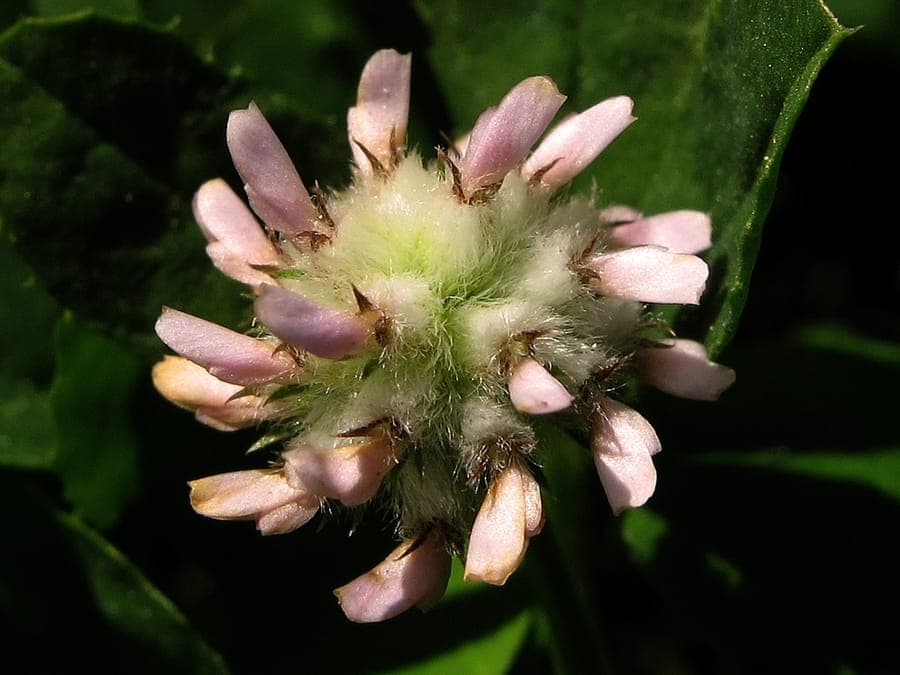
jacinta lluch valero from madrid * barcelona...., (España-Spain) / CC BY-SA 2.0, via Wikimedia Commons
Woolly clover: complete guide
Trifolium tomentosum
¿Quieres ver Woolly clover: complete guide en tu jardín?
1 minuto, sin tarjeta de crédito
Overview
The woolly clover (Trifolium tomentosum) is a beautiful Mediterranean plant known for its soft, woolly leaves and elegant purple flowers. This elegant groundcover adds texture and colour to dry, sunny gardens where it thrives excellently. With its compact growth habit and easy maintenance, it is a favorite choice for Mediterranean garden designs. The plant grows low and forms natural carpets in gravel and dry soils.
Appearance and bloom
The woolly clover forms dense, green mats fifteen to twenty-five centimetres high. The characteristic feature is the fine, woolly leaves that give a soft, greyish texture to the growing plant. The purple, sometimes pink flowers appear in May to June in compact balls. The entire plant has a lush, natural appearance. The woolly leaves give the plant a special soft appearance that makes it different from others.
Ideal location
Plant the woolly clover in fully sunny locations with at least six to eight hours of direct sunlight daily. The plant grows poorly in shade or semi-shade. A windy, open spot is ideal for ventilation. Avoid damp, enclosed locations where fungi can develop and growth is hindered.
Soil
The woolly clover feels at home on dry to very dry soils. Well-draining, poorer soils are preferred. Calcareous soils are ideal for growth. pH values of six point five to seven point five are optimal. The plant is very frost-tolerant and can grow in stony places without problems.
Diseño gratis
¿Quieres ver Woolly clover: complete guide en tu jardín? Crea un diseño gratis ahora.
Watering
Once established, the woolly clover is extremely drought-tolerant and tolerates everything. Watering is only necessary the first year in growing period. Adult plants tolerate long dry periods without problems. Excessive watering can lead to root rot and fungal growth.
Maintenance
The plant requires minimal maintenance and is very low-maintenance. No pruning required. Seed may naturally fall for self-sowing next season. Remove dead leaves in spring. Check for diseases only sporadically.
Maintenance calendar
Spring: plant seedlings or sow directly in dry soils. Summer: no maintenance for adult plants. Autumn: let seed fall for next season. Winter: no maintenance in most areas.
Winter hardiness
The woolly clover is hardy to about minus five degrees Celsius under natural conditions. In very cold areas, protection may be useful. Sowing from the previous season may germinate again next spring without problems.
Companion plants
The purple flowers of woolly clover combine beautifully with white or yellow flowers. Plant together with lavender, rosemary and other Mediterranean herbs. Suitable for dry rock gardens and xeroscapes. Combines well with marigolds and other Mediterranean plants.
Conclusion
The woolly clover is an exceptional choice for dry, sunny gardens. With its characteristic purple flowers and woolly leaves, it adds much character. Find this plant at garden centres such as Gamma or Intratuin. Visit gardenworld.app for inspiration on Mediterranean gardens and frost-hardy plants. At gardenworld.app, learn more about groundcover and drought tolerance.
¿Quieres ver Woolly clover: complete guide en tu jardín? Crea un diseño gratis ahora.
Sube una foto, elige un estilo y obtén un diseño fotorrealista con lista de plantas en menos de un minuto.
Más de 10.000 jardines diseñados
Sin tarjeta de crédito


Plantas similares
Tall Silky Lupine: complete guide
Lupinus elatus
Tall silky lupine is a fast-growing Californian perennial with silvery foliage and blue-purple flower spikes, ideal for a prairie-style garden.
Garfield Lupine: complete guide
Lupinus garfieldensis
The Garfield lupine is a rare, fast-growing American perennial for alkaline, dry grassland gardens, with striking blue flower spikes.
Lupinus elegans: complete guide
Lupinus elegans
Lupinus elegans, the elegant lupine, is a spectacular blooming plant from Mexico with blue flower spikes. Care, cultivation and garden use.