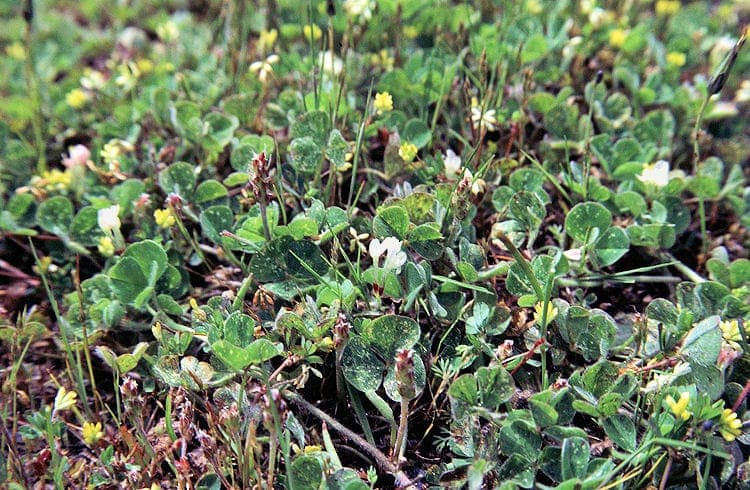
Gordon Leppig & Andrea J. Pickart / Public domain, via Wikimedia Commons
Sub clover: complete guide
Trifolium subterraneum
¿Quieres ver Sub clover: complete guide en tu jardín?
Diseño completo en HD: 7,99 €
Overview
Sub clover (Trifolium subterraneum), also known as Subterranean clover, is a unique annual legume from the Fabaceae family. Native from Europe through the Caucasus to Iran, this remarkable plant has adapted to develop seeds underground, making it perfectly suited for grazed pastures and meadows.
Appearance and Bloom
Sub clover grows as a low, spreading plant reaching approximately 30 centimeters tall. Leaves are trifoliate, typical for clovers. Small white flowers appear from May through August. The characteristic feature is seed pods developing and burrowing underground.
Ideal Location
This plant thrives in full sun to partial shade. Position in sunny locations receiving minimum 6 hours of sunlight. Sub clover grows excellently in open meadows. Storm protection is not necessary.
Soil
Sub clover grows on soils with pH 5.0-8.0. Preference for well-drained soils. The plant accepts various soil types including sand, clay, and loam. Poor soils are well tolerated.
Vista previa gratis
¿Quieres ver Sub clover: complete guide en tu jardín? Crea una vista previa gratis de tu diseño.
Watering
Water regularly after sowing until germination. Mature plants are very drought tolerant and need minimal water. During extremely dry periods, monthly watering suffices. Avoid excess moisture.
Pruning
Sub clover requires no maintenance. The plant dies after seed set. Seeds can remain for natural self-sowing next season. Mature plants can be removed.
Maintenance Calendar
May-June: Flowering begins, insect visitation. July-August: Seed development underground. September: Plant dies. October-April: Seeds dormant.
Winter Hardiness
Sub clover is extremely cold tolerant and grows in all temperate climates. It can overwinter as seed and regrow in spring.
Companion Plants
Grows well in pasture mixes with grasses and other clover species. Combine for forage value and biodiversity benefits.
Conclusion
Sub clover is valuable for meadows and natural land management. This plant helps nitrogen fixation in soils. Purchase seed from garden centers for pasture restoration projects.
Visit gardenworld.app/en for additional meadow tips and gardenworld.app/en for ecological garden solutions.

Míralo en tu jardín
Mira Sub clover en tu jardín
Una foto de tu jardín y unas preguntas. En un minuto aproximadamente ves el resultado.
Pruébalo con una fotoReconoce esta planta en tu propio jardín. Reconocer una planta
Plantas similares
Tall Silky Lupine: complete guide
Lupinus elatus
Tall silky lupine is a fast-growing Californian perennial with silvery foliage and blue-purple flower spikes, ideal for a prairie-style garden.
Garfield Lupine: complete guide
Lupinus garfieldensis
The Garfield lupine is a rare, fast-growing American perennial for alkaline, dry grassland gardens, with striking blue flower spikes.
Lupinus elegans: complete guide
Lupinus elegans
Lupinus elegans, the elegant lupine, is a spectacular blooming plant from Mexico with blue flower spikes. Care, cultivation and garden use.