
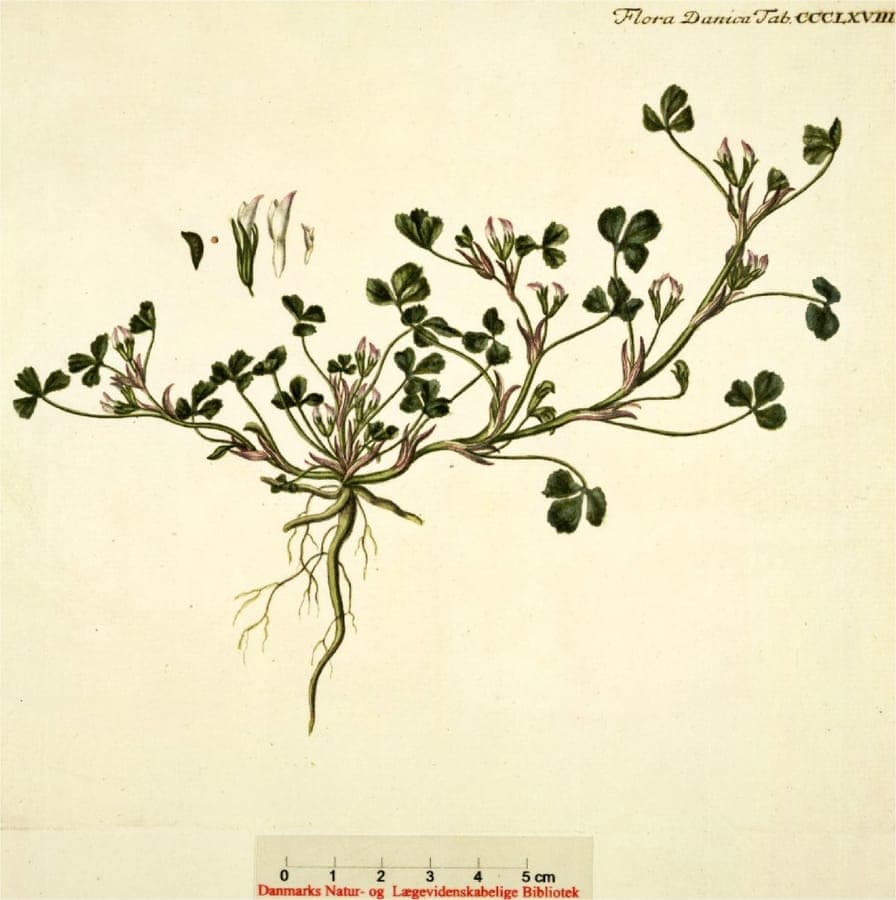
Flora Danica Georg Christian Oeder e.a. (1761-1888) / Public domain, via Wikimedia Commons
Trifolium ornithopodioides: complete guide
Trifolium ornithopodioides
¿Quieres ver Trifolium ornithopodioides: complete guide en tu jardín?
1 minuto, sin tarjeta de crédito
Overview
Trifolium ornithopodioides, commonly called bird's-foot clover or bird's-foot fenugreek, is a delicate, low-growing clover species native to Europe, North Africa, and Eurasia. This plant grows only 10-20 centimeters tall and flowers May-July with fine, white to pink blooms. With its preference for moist, semi-open habitats, trifolium ornithopodioides is ideal for wildflower meadows, damp gardens, and ecologically oriented front yard designs.
In gardenworld.app designs, we employ trifolium ornithopodioides for biodiverse planting schemes that encourage pollinators. The plant is also a nitrogen-fixer, improving soil quality in wildflower meadows.
Appearance and Bloom
Trifolium ornithopodioides possesses very characteristic, fine clover-like leaves with extremely narrow lobes ("bird's feet"). Foliage is green, finely divided, and soft to touch. Flowers emerge in small, loose flower clusters with tiny blooms in white, cream, or very pale pink.
The plant grows in a low, spreading pattern, perfect for meadow edge. Stolons (runners) spread horizontally along ground level, rooting at contact points. This makes the plant excellent for groundcover in moist soils.
Height: 10-20 centimeters. Width: up to 40 centimeters. Growth rate: moderate, establishing fully after first year.
Ideal Location
Trifolium ornithopodioides thrives in dappled light to part shade. 3-4 hours direct sunlight daily is ideal; more sun is acceptable but requires additional watering. Position this plant in moist lowland or beneath light shade.
Wind tolerance: low to moderate. This plant prefers sheltered sites over very windy locations.
Soil moisture: trifolium ornithopodioides accepts permanently moist soils far better than Mediterranean dry slopes. Ideal locations are near springs, in lower garden zones, or alongside moist drainage ditches.
Soil Requirements
Trifolium ornithopodioides thrives in moist soil with good organic content. pH 5.5 to 7.0 (acidic to neutral) is ideal. The plant accepts light clay better than heavy soils.
At planting, work in abundant organic matter (compost, leaf mold); this significantly increases water retention. Sand should be avoided; this plant fails in dry, gritty soils.
Known advantage: trifolium ornithopodioides accepts periodic flooding better than many clovers, making it suitable for lower garden zones or naturally wet places.
Diseño gratis
¿Quieres ver Trifolium ornithopodioides: complete guide en tu jardín? Crea un diseño gratis ahora.
Watering
Trifolium ornithopodioides requires regular water during growth and flowering periods. Water 1-2 times weekly, depending on rainfall. The plant must never dry out; consistently moist is essential.
Summer stress: in extremely dry summers, the plant may yellow but recovers after increased moisture. This is normal.
Winter management: in winter, water sparingly but ensure soil never dries completely. Frequent overwatering is prevented by moderation in moisture-rich regions where groundwater remains high.
Pruning
Trifolium ornithopodioides requires no traditional pruning. After flowering (August), you can cut back faded blooms for neater appearance, though this is optional.
Stolon control: if the plant spreads too aggressively, trim long runners back to desired size. This is especially useful in small gardens.
Winter management: in mild winters, the plant remains semi-evergreen. In frost zones, above-ground biomass dies back; remove dead parts in March.
Maintenance Calendar
March-April: planting period. Water regularly. Check for weeds.
May-July: flowering period. Maintain consistent moisture level. Monitor for aphids.
August-September: after flowering, cut back faded blooms. Reduce fertilization.
October-November: autumn rest. Water less frequently but maintain adequate moisture.
December-February: winter dormancy. In frost zones, plant dies back; remove dead parts in March.
Winter Hardiness
Trifolium ornithopodioides is winter-hardy to approximately -10 degrees Celsius. In the Netherlands and Belgium, it typically survives in mild zones (under protective shrubs). In harsher zones, it dies back and is re-seeded or replanted annually.
Protection: in frost zones, lightly mulch the plant in October for rosette protection. This aids winter survival.
Companion Plants
Pair trifolium ornithopodioides with:
- Veronica chamaedrys for blue flowers
- Primula veris for early yellow accents
- Ajuga reptans for purple contrast
- Ranunculus acris for yellow moisture-lovers
- Filipendula ulmaria for height
Closing Thoughts
Trifolium ornithopodioides is a charming, moisture-loving clover species for wild front yard corners. Its fine leaves, delicate flowers, and nitrogen-fixing ability make it ideal for ecological designs. Plant it in moist zones and enjoy pollinator activity and biodiversity. Order seed or plants now.
Want to integrate trifolium ornithopodioides into your wildflower garden design? Use gardenworld.app and create an ecological paradise.
¿Quieres ver Trifolium ornithopodioides: complete guide en tu jardín? Crea un diseño gratis ahora.
Sube una foto, elige un estilo y obtén un diseño fotorrealista con lista de plantas en menos de un minuto.
Más de 10.000 jardines diseñados
Sin tarjeta de crédito


Plantas similares
Tall Silky Lupine: complete guide
Lupinus elatus
Tall silky lupine is a fast-growing Californian perennial with silvery foliage and blue-purple flower spikes, ideal for a prairie-style garden.
Garfield Lupine: complete guide
Lupinus garfieldensis
The Garfield lupine is a rare, fast-growing American perennial for alkaline, dry grassland gardens, with striking blue flower spikes.
Lupinus elegans: complete guide
Lupinus elegans
Lupinus elegans, the elegant lupine, is a spectacular blooming plant from Mexico with blue flower spikes. Care, cultivation and garden use.