
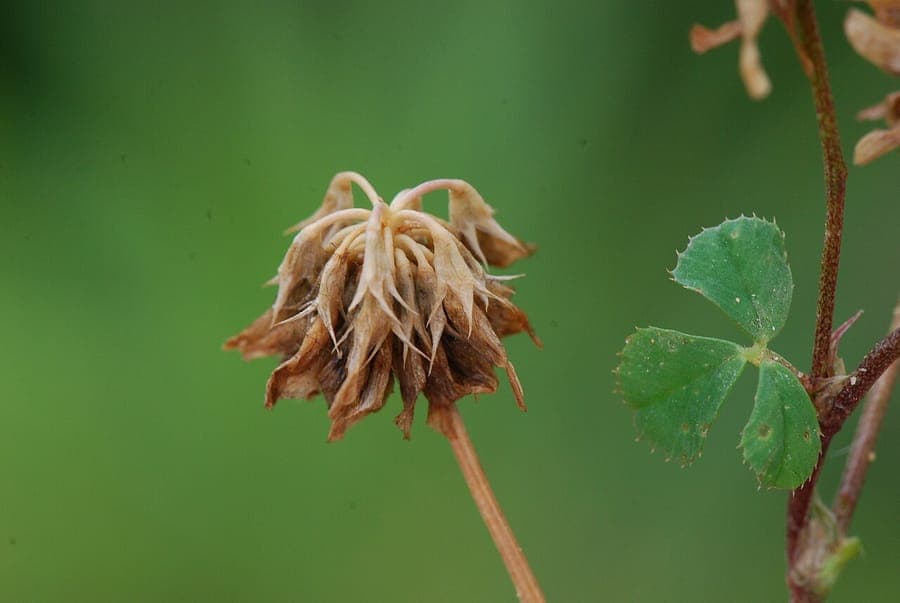
Pancrat / CC BY-SA 3.0, via Wikimedia Commons
Ball Clover: complete guide
Trifolium nigrescens
¿Quieres ver Ball Clover: complete guide en tu jardín?
1 minuto, sin tarjeta de crédito
Overview
Ball clover (Trifolium nigrescens) is a small, distinctive clover species from the Mediterranean region and southeastern Europe to Iran. Belonging to the Fabaceae family, it is valued for its delicate growth habit and characteristic blackening seed pods. Perfect for natural, meadow-like gardens and wildflower mixes.
Appearance and bloom
The plant grows to just 10-30 cm tall, low and herbaceous in nature. The leaves are trifoliate, small, and typical of clovers. The flowers are white to very pale pink, very small, and appear in April-May in compact, ball-shaped flower heads. What characterizes this species is its seed set: the pods turn black as they ripen, creating an attractive and striking visual effect.
Ideal location
Place this plant in sunny to partially shaded locations with well-draining soil. Ball clover grows best in lean meadows, dry slopes, and natural garden settings. Perfect for wildflower meadows, dry grassland areas, and marginal zones in the garden.
Soil
This plant is not fussy but prefers slightly acidic soils (pH 5.6-6.9). It thrives in lean, sandy to clay soils. High-nitrogen amended soil can reduce flowering. The plant is very tolerant of suboptimal soils.
Diseño gratis
¿Quieres ver Ball Clover: complete guide en tu jardín? Crea un diseño gratis ahora.
Watering
Scarcely any water needed. This clover is very drought-tolerant and adapts to natural rainfall. Ideal for dry, low-maintenance gardens and natural landscaping.
Pruning
Not required. Let the plant maintain its natural form. Mowing can be done as part of wildflower-meadow management (once yearly after seed set).
Maintenance calendar
March-April: Seed germinates, growth begins April-May: Blooming, insects attracted May-June: Seed set, pods turn black July-September: Seed ripens and falls, birds feed October-December: Seed overwinters, rest period January-February: No maintenance, awaiting spring
Winter hardiness
Hardy annual in temperate Europe. The plant grows best as an annual or winter-sown in autumn. In Mediterranean regions, it can also be perennial.
Companion plants
Combine with other low-growing wildflowers like Bellis perennis, Veronica, and Daisy. Perfect for meadow mixes and natural grassy gardens.
Closing remarks
Ball clover is a unique, often overlooked plant that adds charm and ecological value. Seed collections available from wildflower suppliers. On gardenworld.app, designers can integrate these fine plants into more natural garden designs.
Want to establish a wildflower meadow? Discuss it with gardenworld.app and discover more seed collections!
¿Quieres ver Ball Clover: complete guide en tu jardín? Crea un diseño gratis ahora.
Sube una foto, elige un estilo y obtén un diseño fotorrealista con lista de plantas en menos de un minuto.
Más de 10.000 jardines diseñados
Sin tarjeta de crédito


Plantas similares
Tall Silky Lupine: complete guide
Lupinus elatus
Tall silky lupine is a fast-growing Californian perennial with silvery foliage and blue-purple flower spikes, ideal for a prairie-style garden.
Garfield Lupine: complete guide
Lupinus garfieldensis
The Garfield lupine is a rare, fast-growing American perennial for alkaline, dry grassland gardens, with striking blue flower spikes.
Lupinus elegans: complete guide
Lupinus elegans
Lupinus elegans, the elegant lupine, is a spectacular blooming plant from Mexico with blue flower spikes. Care, cultivation and garden use.