
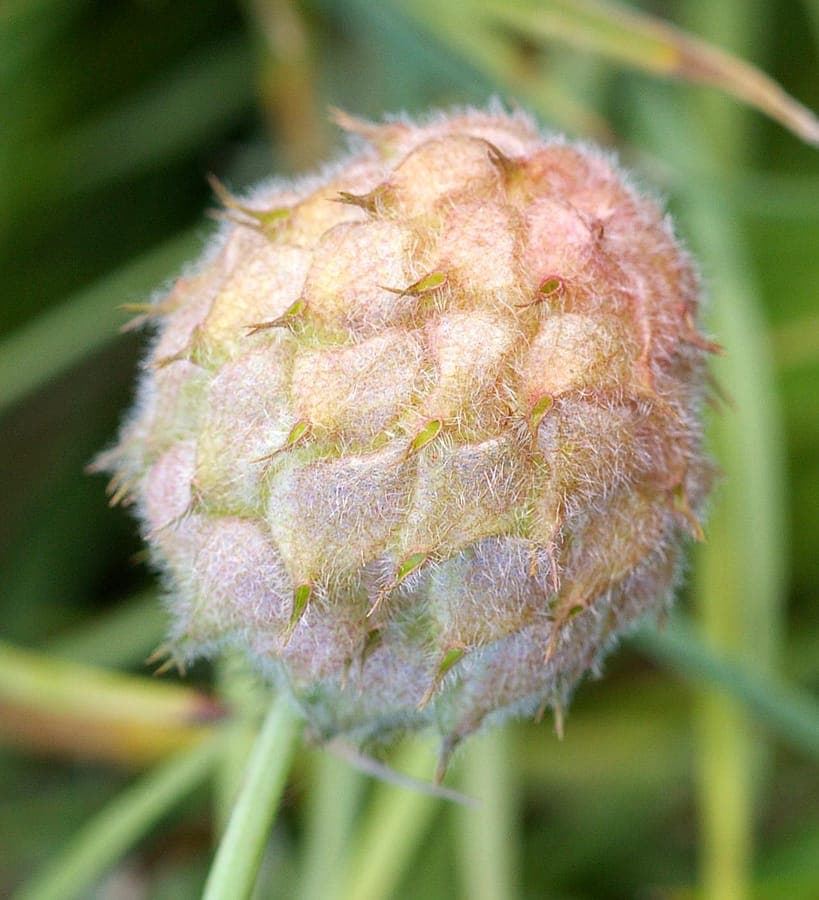
Christian Fischer / CC BY-SA 3.0, via Wikimedia Commons
Strawberry Clover (Trifolium fragiferum): complete guide
Trifolium fragiferum
¿Quieres ver Strawberry Clover (Trifolium fragiferum): complete guide en tu jardín?
1 minuto, sin tarjeta de crédito
Overview
Strawberry clover (Trifolium fragiferum) is a fascinating plant, named for its characteristic seed pods that resemble miniature strawberries. This creeping plant from Europe, North Africa, and Asia Minor spreads along the ground and forms dense mats 10-30 cm tall. The plant flowers June through September with red to purple flower heads that gradually transform into inflated, food-providing seed pods.
Strawberry clover is a nutrient-loving plant that prefers ungrazed, well-maintained grasslands. In gardens, the plant is increasingly used in extensive grasslands and moisture-tolerant planting schemes.
Appearance and Bloom
Trifolium fragiferum distinguishes itself through fine, trifoliate leaves and characteristic growth habit where the plant creeps densely along the ground. Red to purple flowers appear in round capitules above the foliage. After pollination, these flowers transform into inflated, red-tinted seed pods that indeed resemble miniature strawberries.
The seed pods are a special feature: they protect seeds and remain visible on the plant for extended periods, adding extra ornamental value. The bloom period is long and forage-promoting.
Ideal Location
Strawberry clover grows best in full sun to partial shade in well-maintained, ungrazed grasslands. The plant tolerates moderately wet to dry soils and is highly adaptable to various environmental conditions. In gardens, strawberry clover works well in semi-intensive hay meadows and moisture-tolerant planting schemes.
Plant this species in extensive grasslands, ungrazed terraces, and moisture-tolerant landscapes. The plant combines well with other legumes and grasses.
Diseño gratis
¿Quieres ver Strawberry Clover (Trifolium fragiferum): complete guide en tu jardín? Crea un diseño gratis ahora.
Soil
Strawberry clover grows best in moderately fertile to noticeably fertile soils. The plant tolerates both acidic and alkaline soils but feels best in neutral to moderately alkaline grounds. The plant prefers regular moisture and tolerates both fertile and lightly wet soils.
Soil should be well-draining, though surface waterlogging is better tolerated than by other clovers.
Watering
Strawberry clover tolerates regular, consistent moisture better than other clovers. Once established, the plant has moderate water requirements. During dry periods exceeding two weeks, supplemental water can help, but the plant is not overly drought-sensitive.
In wet winters, strawberry clover can grow better than in dry years, distinguishing it from other clovers.
Pruning
Strawberry clover requires no pruning. The plant will naturally spread and thicken. For spread control, you can gently trim long stems back in early summer.
Maintenance Calendar
May-June: sow in fertile ground or plant from containers. June-August: growth and bloom, regular observation. August-October: seed pods form. October-May: dormancy, minimal care.
Winter Hardiness
Strawberry clover is completely hardy in the Netherlands and tolerates temperatures down to -15 degrees Celsius. The plant is a perennial and returns year after year.
Companion Plants
Combine strawberry clover with other forage legumes: white clover, red clover, and sulfur plant. Add fine grasses: timothy and bristle grass. For herb combinations: marjoram and oregano.
Conclusion
Strawberry clover is a fascinating, hardy plant with biological value and aesthetic charm. For those wanting to create flower-rich, ungrazed grasslands, this is a must-have. Learn more at www.gardenworld.app/en.
Find more forage plant species at www.gardenworld.app/en.
¿Quieres ver Strawberry Clover (Trifolium fragiferum): complete guide en tu jardín? Crea un diseño gratis ahora.
Sube una foto, elige un estilo y obtén un diseño fotorrealista con lista de plantas en menos de un minuto.
Más de 10.000 jardines diseñados
Sin tarjeta de crédito


Plantas similares
Tall Silky Lupine: complete guide
Lupinus elatus
Tall silky lupine is a fast-growing Californian perennial with silvery foliage and blue-purple flower spikes, ideal for a prairie-style garden.
Garfield Lupine: complete guide
Lupinus garfieldensis
The Garfield lupine is a rare, fast-growing American perennial for alkaline, dry grassland gardens, with striking blue flower spikes.
Lupinus elegans: complete guide
Lupinus elegans
Lupinus elegans, the elegant lupine, is a spectacular blooming plant from Mexico with blue flower spikes. Care, cultivation and garden use.