
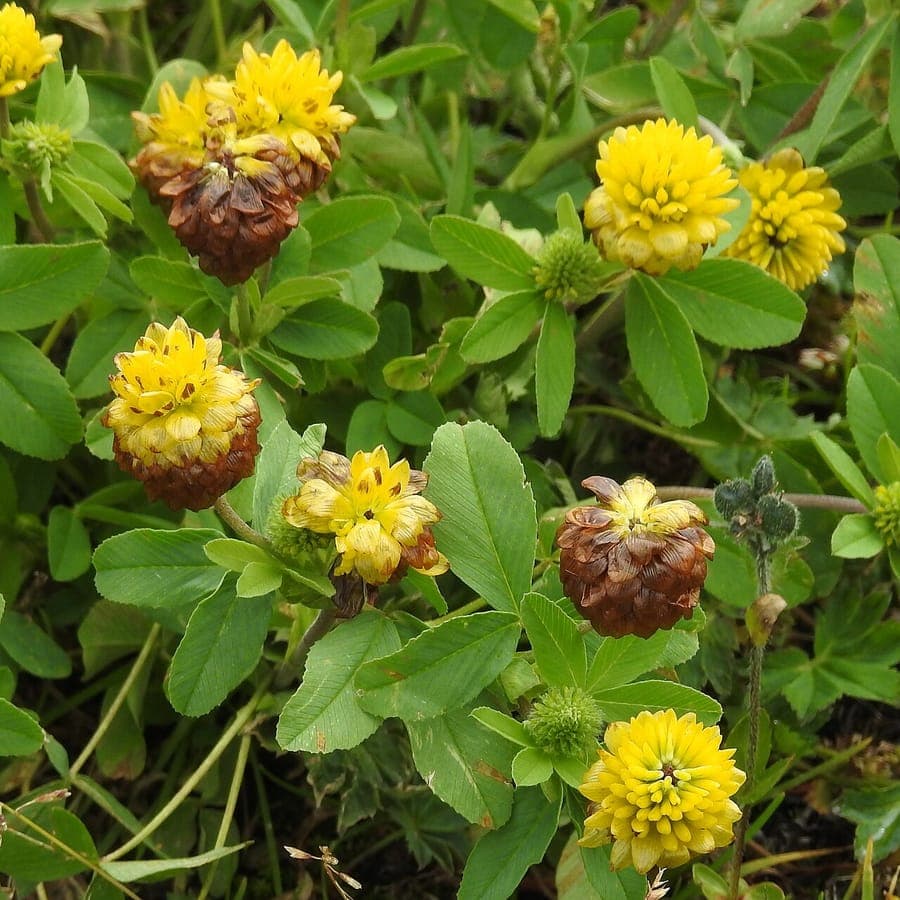
Robert Flogaus-Faust / CC BY 4.0, via Wikimedia Commons
Brown Clover (Trifolium badium): complete guide
Trifolium badium
¿Quieres ver Brown Clover (Trifolium badium): complete guide en tu jardín?
1 minuto, sin tarjeta de crédito
Overview
Brown clover (Trifolium badium) is an elegant alpine plant from Central and Southern Europe, renowned for its distinctive chestnut-brown to reddish-brown flowers. This compact species thrives on shaded mountain slopes and alpine meadows at 800-2000 meters elevation. In gardens, brown clover offers a unique color palette and character that distinguishes itself from typical red and white clovers.
The plant is extremely suitable for alpine gardens, rock gardens, and scree plantings. Despite its mountain origin, brown clover can also grow well in temperate climates with optimal drainage. It reaches only 15-25 cm in height, making it ideal for foreground plantings in rock gardens.
Appearance and Bloom
Brown clover displays attractive, trifoliate leaves with soft structure. The foliage is light green with fine texture. What truly distinguishes it are the flowers: not the typical red or white associations, but warm, chestnut-brown tones that deepen to dark red upon maturity.
Flowers appear June through August in compact spheres above the foliage. Each tiny floret is inconspicuous, but together they form attractive, densely-packed flower heads. The bloom period is quite long for an alpine plant, making brown clover particularly valuable.
Ideal Location
Brown clover grows best in full sun to partial shade, preferring cooler locations with adequate air circulation. In warm, lowland regions, a position with some afternoon shade is beneficial. The plant thrives better in well-ventilated, cooler environments than in stifling lowlands.
Plant this species on rock gardens, alpine scree, or dry slopes where drainage is optimal. Combine with other alpine companions such as edelweiss and alpine columbine.
Soil
Trifolium badium requires well-draining, often calcareous or neutral soils. The plant cannot tolerate wet feet and waterlogging certainly leads to problems. In gardens, sandy, gravelly soils are recommended, or existing soil should be substantially amended with coarse quartz and gravel.
Soil may be nutrient-poor; in fact, brown clover grows better in lean soils. This works well for wild, alpine-style planting schemes.
Diseño gratis
¿Quieres ver Brown Clover (Trifolium badium): complete guide en tu jardín? Crea un diseño gratis ahora.
Watering
Once well-established, brown clover is reasonably drought-tolerant. After planting or sowing, moisture balance must be carefully managed: soil should not dry to the wilting point but should not be waterlogged. In mountain regions, natural moisture is usually sufficient; in lowlands, occasional supplemental watering helps.
Oversummer with moderate moisture. During warm periods some supplemental water helps, but less is better than more. Pots and containers require more careful watering attention.
Pruning
Brown clover requires no pruning. Remove spent flowers only if you wish to prevent self-seeding and direct energy into regrowth. Otherwise, allow the plant to decline naturally.
Maintenance Calendar
Spring: plant or sow carefully. May-June: first flowers appear. June-August: full bloom, regularly observe for sufficient light. August-September: remove seed heads or allow natural drop. October: winter dormancy, minimal maintenance.
Winter Hardiness
Brown clover is completely hardy in the Netherlands and tolerates temperatures down to -15 degrees Celsius. In low-lying locations, winter losses can occur from excessive moisture rather than cold. A dry winter is more favorable than a wet one.
Companion Plants
Combine brown clover with other alpine companions: arnica, edelweiss, sempervivum, fine alpine grasses, and saxifrage. For color play add alpine bellflower and alpine astilbe. In rock terraces, brown clover creates beautiful color combinations with gray-green sedums.
Conclusion
Brown clover is a distinctive alpine plant with warm, unusual flowers. For those who love alpine plantings and mountain flora, this species is indispensable. Learn more at www.gardenworld.app/en.
Discover more alpine beauty at www.gardenworld.app/en.
¿Quieres ver Brown Clover (Trifolium badium): complete guide en tu jardín? Crea un diseño gratis ahora.
Sube una foto, elige un estilo y obtén un diseño fotorrealista con lista de plantas en menos de un minuto.
Más de 10.000 jardines diseñados
Sin tarjeta de crédito


Plantas similares
Tall Silky Lupine: complete guide
Lupinus elatus
Tall silky lupine is a fast-growing Californian perennial with silvery foliage and blue-purple flower spikes, ideal for a prairie-style garden.
Garfield Lupine: complete guide
Lupinus garfieldensis
The Garfield lupine is a rare, fast-growing American perennial for alkaline, dry grassland gardens, with striking blue flower spikes.
Lupinus elegans: complete guide
Lupinus elegans
Lupinus elegans, the elegant lupine, is a spectacular blooming plant from Mexico with blue flower spikes. Care, cultivation and garden use.