
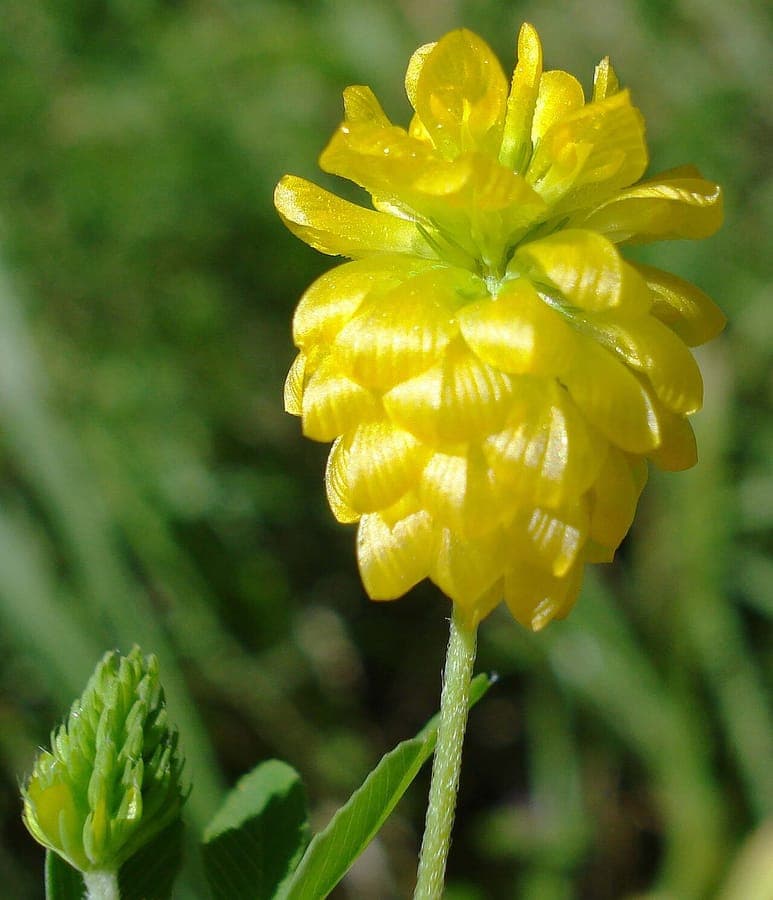
Fornax / CC BY-SA 3.0, via Wikimedia Commons
Golden Clover (Trifolium aureum): complete guide
Trifolium aureum
¿Quieres ver Golden Clover (Trifolium aureum): complete guide en tu jardín?
1 minuto, sin tarjeta de crédito
Overview
Golden clover (Trifolium aureum) is a charming legume native to Europe and Siberia that produces masses of cheerful yellow flower heads from May through September. This annual or winter annual is perfect for gardeners seeking natural, low-maintenance spaces that support wildlife. The plant reaches about 20-30 cm in height and provides valuable nectar for honeybees and bumblebees.
Throughout Europe and into Russia, golden clover appears naturally in semi-wild areas, meadows, and roadsides. It thrives in grasslands where competitive vegetation is absent and has become a familiar sight in conservation areas. Its nitrogen-fixing properties make it particularly valuable for improving soil structure.
Appearance and Bloom
Trifolium aureum features delicate, trifoliate leaves with the characteristic oval shape typical of clovers. The foliage is soft green and relatively fine-textured, creating an airy appearance. The golden-yellow flower heads are composed of numerous tiny florets that gradually shift to orange-brown as they mature.
Flowers appear from May through September, with peak bloom in midsummer. Each flower head lasts approximately two weeks before browning, creating an attractive bicolor effect on mature plants. The plant forms a symbiotic relationship with nitrogen-fixing bacteria in root nodules, enriching the soil naturally.
Ideal Location
Golden clover thrives in sunny to partially shaded positions, though full sun produces the richest flowering. The plant is remarkably adaptable to various soil conditions and actually prefers lean, nutrient-poor soils. This makes it ideal for wildflower meadows, rough grassland, and natural planting schemes.
Position this plant where you can observe visiting bees and butterflies. It combines beautifully with other low-growing legumes such as white clover and bird's-foot trefoil, creating a dynamic pollinator ecosystem.
Soil
Trifolium aureum is a true pioneer, actually flowering more abundantly in poorer soils. Rich garden compost encourages excessive foliage at the expense of flowers. The plant requires good drainage; waterlogging is poorly tolerated and encourages fungal issues.
In heavy clay soils, incorporate coarse sand before sowing. A neutral to slightly alkaline pH (6.5-7.5) is optimal, though the plant adapts reasonably well to variations.
Diseño gratis
¿Quieres ver Golden Clover (Trifolium aureum): complete guide en tu jardín? Crea un diseño gratis ahora.
Watering
After sowing, keep soil consistently moist until seedlings emerge, typically 10-14 days. Once established, golden clover is extremely drought-tolerant due to its deep root system. Supplemental watering is only necessary during drought periods exceeding two weeks.
Excessive watering promotes leaf growth over flowering and increases fungal disease risk. Water early in the morning, avoiding foliage. Container plants require more careful moisture management than garden plants.
Pruning
Golden clover requires no deadheading. For a more compact form, pinch growing tips when plants reach about 15 cm tall, encouraging bushier growth. Leave seed heads intact as wildlife shelter, removing only when completely withered if you wish to prevent self-seeding.
Maintenance Calendar
May-June: direct sow into soil or containers, misting regularly. June-July: thin seedlings as needed. July-September: observe visiting pollinators. October: retain seed heads for bird food or natural regeneration. December-March: growth continues in mild winters.
Winter Hardiness
Trifolium aureum is not fully hardy in cooler climates. The plant is typically annual, dying after the first frost. In mild coastal regions, plants may overwinter. To encourage natural return, allow seed to drop naturally and avoid removing seed heads.
Companion Plants
Combine golden clover with other low-growing legumes: white clover, red clover, bird's-foot trefoil, and lucerne. Add fine grasses such as meadow foxtail and perennial ryegrass for texture. For color contrast, pair with bugle and larkspur varieties.
Conclusion
Golden clover is an uncomplicated, nutrient-cycling plant that naturally attracts insects and improves soil health. For those seeking simple, resilient plants with high ecological value, this is absolutely worth considering. Discover more at www.gardenworld.app/en.
Looking for more plants for a natural garden? Visit www.gardenworld.app/en for more inspiration and guidance.
¿Quieres ver Golden Clover (Trifolium aureum): complete guide en tu jardín? Crea un diseño gratis ahora.
Sube una foto, elige un estilo y obtén un diseño fotorrealista con lista de plantas en menos de un minuto.
Más de 10.000 jardines diseñados
Sin tarjeta de crédito


Plantas similares
Tall Silky Lupine: complete guide
Lupinus elatus
Tall silky lupine is a fast-growing Californian perennial with silvery foliage and blue-purple flower spikes, ideal for a prairie-style garden.
Garfield Lupine: complete guide
Lupinus garfieldensis
The Garfield lupine is a rare, fast-growing American perennial for alkaline, dry grassland gardens, with striking blue flower spikes.
Lupinus elegans: complete guide
Lupinus elegans
Lupinus elegans, the elegant lupine, is a spectacular blooming plant from Mexico with blue flower spikes. Care, cultivation and garden use.