
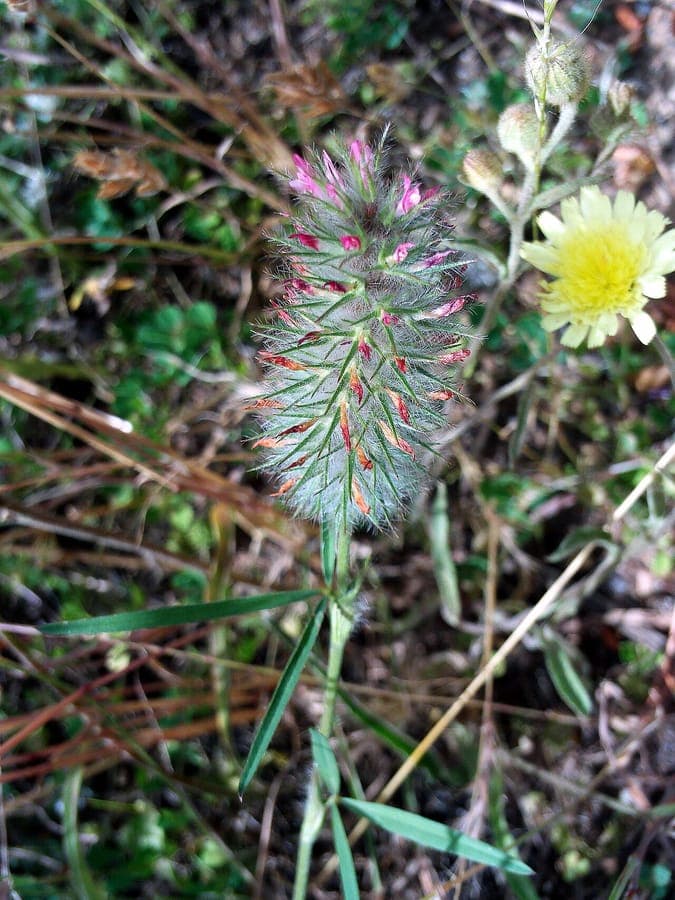
Javier martin / Public domain, via Wikimedia Commons
Narrow clover: complete guide
Trifolium angustifolium
¿Quieres ver Narrow clover: complete guide en tu jardín?
1 minuto, sin tarjeta de crédito
Overview
Narrow clover (Trifolium angustifolium) is a striking Mediterranean plant with fine, narrow leaves and eye-catching red flowers. This annual species is native to the Mediterranean region and extends from North Africa to the Middle East. On gardenworld.app, discover how to integrate this Mediterranean jewel into your garden design.
Narrow clover is perfect for gardeners who love sun-drenched, dry conditions. The plant grows rapidly and reaches 20-50 cm in height. Delicate red to purplish flowers appear during spring and summer. This is an ideal choice for xeriscaping and Mediterranean garden designs.
Appearance and bloom
Narrow clover distinguishes itself through its characteristic, delicate appearance. The plant has very narrow leaves, from which its name is derived. This narrow-leafiness gives the plant a bird-like, airy appearance. The leaves are grayish-green in color with subtle hairs.
The most striking feature is the flowers: dense, cylindrical flower spikes in bright red to dark red. These flowers appear from May to July, making it a spring-summer bloomer. The flowers attract pollinators and are valuable for pollination foundations. After blooming, small seed pods form.
Ideal location
Narrow clover thrives best in full, sunny locations. The plant needs at least 6-8 hours of direct sunlight for healthy growth and optimal flowering. This plant is perfect for warm, sheltered north walls and south-facing terraces.
The plant is ideal for Mediterranean borders, dry gardens, and xeriscaping. It works well in borders with other Mediterranean plants. For gardeners in temperate climates, it can be sown in warm, sheltered spots or in pots on sunny locations.
Soil requirements
Narrow clover is not fussy about soil composition and can grow on various soil types. The plant, however, prefers well-draining soil with low nutrient content. Heavy clay soil should be improved with sand and gravel.
The plant tolerates poor soil well and thrives on marginal, stony soils. This makes it ideal for problematic garden spots where other plants refuse to grow. Slightly acidic to neutral soil (pH 6-7) is preferred, but it is fairly flexible.
Diseño gratis
¿Quieres ver Narrow clover: complete guide en tu jardín? Crea un diseño gratis ahora.
Watering
Narrow clover is drought-tolerant once established. This means you must water regularly in the first growth stage, but as it matures, it needs less water. Ensure the soil drains well to prevent root rot.
During the growing season (spring and summer), water when the top layer of soil feels dry. In periods of normal rainfall in temperate climates, you can rely on natural precipitation. In dry summers, supplemental watering may be needed.
Pruning
Pruning is not essential for this annual plant. Remove only dead or damaged parts. For a neater appearance, spent flowers can be removed, though this is not a requirement. Most gardeners allow the plant to grow essentially naturally.
If you want to collect seeds for next year, leave some flowers to set seed before removing them.
Maintenance calendar
May: Sow in warm soil. June-July: Full growth and intensive flowering; water regularly. July-August: Flowering continues; ensure good water drainage. August-September: Seed ripens; water less. September: Harvest seed; prepare for new plants. October: Remove dead plant material.
Winter hardiness
Narrow clover is not winter-hardy in temperate European climates. This is an annual plant that dies in autumn after frost periods. For cultivation in the Netherlands, Belgium, and Germany, resow each spring. The plant cannot tolerate frost below 0 degrees Celsius.
In warm Mediterranean climates (zone 9 and higher), it can overwinter in some locations, but this is not reliable.
Companion plants
Narrow clover works well in Mediterranean borders with other heat-loving plants. Combine it with other red-flowering plants such as poppies and daisies. It also pairs well with gray-foliaged plants such as Artemisia.
The fine texture of the foliage works well as contrast with thick-leaved plants. In pots on sunny terraces and balconies it thrives well, as long as drainage is excellent.
Closing thoughts
Narrow clover is a beautiful addition to Mediterranean or dry garden designs. With its drought-tolerance and easy care, it is ideal for water-conscious gardeners. For more inspiration on integrating Mediterranean plants into your garden design, visit gardenworld.app.
Whether you design a complete Mediterranean paradise or simply add some drought-tolerant plants, Narrow clover offers beauty with minimal effort. With good drainage and sunlight, you achieve healthy, floriferous plants. Visit gardenworld.app for more advice on water-saving gardening!
¿Quieres ver Narrow clover: complete guide en tu jardín? Crea un diseño gratis ahora.
Sube una foto, elige un estilo y obtén un diseño fotorrealista con lista de plantas en menos de un minuto.
Sin tarjeta de crédito


Plantas similares
Tall Silky Lupine: complete guide
Lupinus elatus
Tall silky lupine is a fast-growing Californian perennial with silvery foliage and blue-purple flower spikes, ideal for a prairie-style garden.
Garfield Lupine: complete guide
Lupinus garfieldensis
The Garfield lupine is a rare, fast-growing American perennial for alkaline, dry grassland gardens, with striking blue flower spikes.
Lupinus elegans: complete guide
Lupinus elegans
Lupinus elegans, the elegant lupine, is a spectacular blooming plant from Mexico with blue flower spikes. Care, cultivation and garden use.