
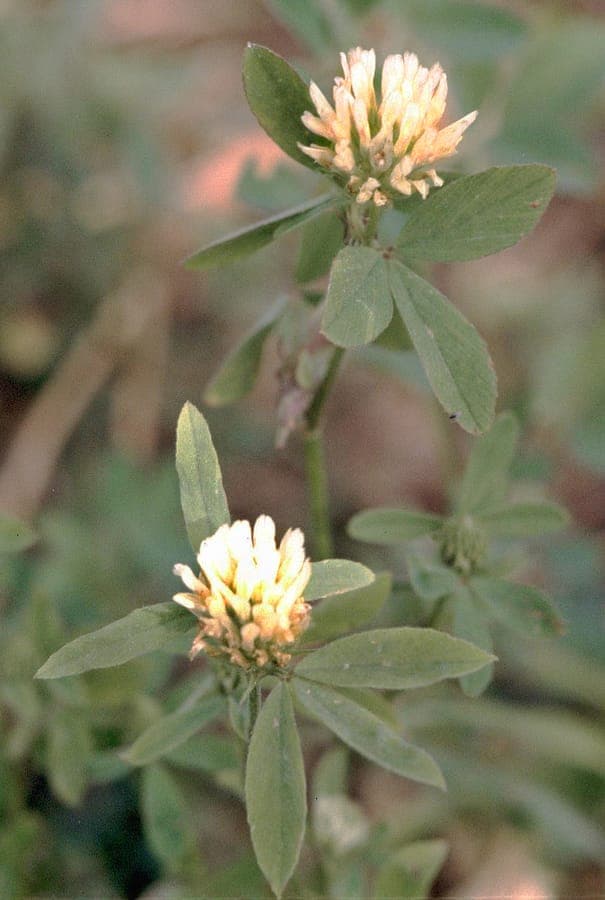
Fornax at German Wikipedia / Public domain, via Wikimedia Commons
Egyptian clover: complete guide
Trifolium alexandrinum
¿Quieres ver Egyptian clover: complete guide en tu jardín?
1 minuto, sin tarjeta de crédito
Overview
Egyptian clover (Trifolium alexandrinum), also known as berseem clover, is a forage crop primarily cultivated in the Middle East and North Africa. This annual herb belongs to the pea family (Fabaceae) and has been traditionally used as livestock feed. The plant is renowned for its nutritional value and ability to fix nitrogen in the soil, making it a valuable component of sustainable agricultural systems.
On gardenworld.app, discover how to integrate this interesting plant into your garden design. The plant grows rapidly and reaches heights of 30-60 cm, making it suitable for various applications. Though primarily grown as livestock fodder, Egyptian clover also offers beautiful visual elements through its striking red to purple flowers.
Appearance and bloom
Egyptian clover distinguishes itself through its characteristic appearance. The plant develops trifoliate leaves typical of clovers. The leaflets are elongated and have a soft texture. The flowers are one of the most striking features: densely packed panicles of red to purplish-red florets. These flowers appear throughout the growing season and attract bees and other pollinators.
The flowering period extends over several weeks, giving the plant an extended period of visual appeal. After flowering, small seed pods form containing the seeds for the next generation. The plant reaches its full height and flowering abundance in 60-90 days after sowing, making it perfect for annual garden or field projects.
Ideal location
Egyptian clover thrives best in locations with full sun. Ensure your plant receives at least 6-8 hours of direct sunlight daily for optimal growth and flowering. The plant is flexible regarding location and grows in both flat gardens and on slightly sloped terrain.
The crop fits well in open ground gardens but can also be grown in large containers. Provide good air circulation to prevent fungal diseases. The plant is fairly frost-sensitive in temperate climates and is usually re-sown annually in spring.
Soil requirements
Egyptian clover prefers well-draining soil with a pH between 6.5 and 8. The crop is fairly tolerant of various soil types and can grow in both light sandy soils and heavier clay soils, as long as drainage is good. Avoid waterlogging, as this can lead to root rot.
Enrich the soil before sowing with organic matter such as compost. This not only improves drainage but also releases nutrients. After harvesting, plant residues can be worked into the soil to increase soil fertility, thanks to the nitrogen-fixing properties of the crop. This makes it an excellent green manure for subsequent crops.
Diseño gratis
¿Quieres ver Egyptian clover: complete guide en tu jardín? Crea un diseño gratis ahora.
Watering
Proper watering is important for healthy growth. In the first weeks after sowing, the soil should be kept moist but not waterlogged. Provide regular watering so the soil remains slightly moist, especially during growing seasons with limited rainfall.
Once well-established, Egyptian clover is fairly drought-sensitive and requires regular watering. In regions with low rainfall, extra watering is necessary, especially during dry summer periods. In areas with normal rainfall (in the Netherlands and Belgium), extra watering is usually only needed during dry spells.
Pruning
Pruning is not essential but can be done to make the plant more compact and fuller. Pinch off the tops when the plant is 15-20 cm high. This stimulates more lateral branching and results in a denser plant. If you grow the crop for livestock feed, you can cut or mow it when in full bloom and nutritional value is highest.
For ornamental purposes, you can remove spent flowers to encourage further blooming. This maintains appearance throughout the season and prevents seed formation if not desired.
Maintenance calendar
May-June: Sow after the last frost in well-prepared soil (2-3 cm deep). Water regularly until plants are well-established. July-August: Plant blooms prolifically, allow growth with minimal intervention. August-September: For livestock feed, harvest in full bloom. For seeds, allow to ripen until brown. October: Remove dead plants and work into the soil. November-April: No growth activity in temperate climates.
Winter hardiness
Egyptian clover is not winter-hardy in temperate European climates. It is an annual crop that dies in autumn after frost periods. For cultivation in the Netherlands, Belgium, and Germany, resow each spring. The crop cannot tolerate frost below 0 degrees Celsius.
In warmer climates (zone 8 and higher), the crop can sometimes overwinter if mild winters occur. But in most European regions, treat it as an annual spring/summer crop.
Companion plants
Egyptian clover works well as a promising field or forage crop. Combine it with other forage crops for diverse yields. In decorative gardens, combine it nicely with other annual climate-adapted plants. It contrasts beautifully with silver-gray plants and adds a playful accent to borders.
The red flowers work well with blue flowers such as cornflower and fleabane. For full-sun borders, add it together with sunflowers and poppies.
Closing thoughts
Egyptian clover is a versatile crop that offers both practical and aesthetic value. Whether you grow it for livestock feed, soil improvement, or simple beauty, it is a plant that stands out with its robustness and rapid growth. For more inspiration on integrating beneficial plants into your garden design, visit gardenworld.app.
Whether you are a farmer, gardener, or hobbyist, Egyptian clover is a valuable addition to your land. With minimal care and regular watering, this crop provides benefits throughout the season. Visit gardenworld.app for more design tips and plant advice for your garden!
¿Quieres ver Egyptian clover: complete guide en tu jardín? Crea un diseño gratis ahora.
Sube una foto, elige un estilo y obtén un diseño fotorrealista con lista de plantas en menos de un minuto.
Más de 10.000 jardines diseñados
Sin tarjeta de crédito


Plantas similares
Tall Silky Lupine: complete guide
Lupinus elatus
Tall silky lupine is a fast-growing Californian perennial with silvery foliage and blue-purple flower spikes, ideal for a prairie-style garden.
Garfield Lupine: complete guide
Lupinus garfieldensis
The Garfield lupine is a rare, fast-growing American perennial for alkaline, dry grassland gardens, with striking blue flower spikes.
Lupinus elegans: complete guide
Lupinus elegans
Lupinus elegans, the elegant lupine, is a spectacular blooming plant from Mexico with blue flower spikes. Care, cultivation and garden use.