
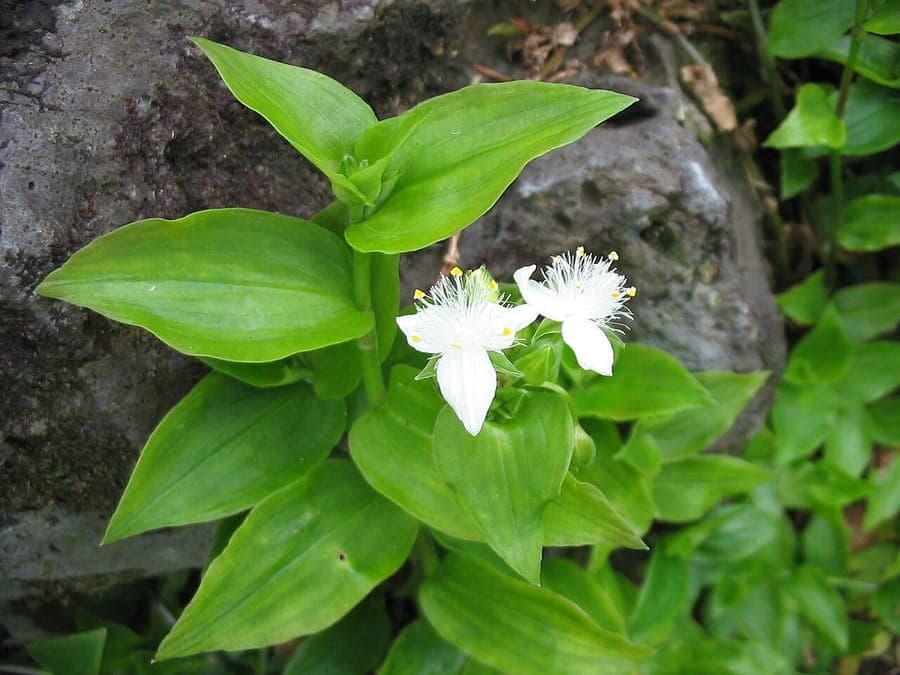
Ixitixel / CC BY-SA 3.0, via Wikimedia Commons
Tradescantia fluminensis: complete guide
Tradescantia fluminensis
¿Quieres ver Tradescantia fluminensis: complete guide en tu jardín?
1 minuto, sin tarjeta de crédito
Tradescantia fluminensis: Complete Guide
Overview
Tradescantia fluminensis, commonly known as inch plant or spiderwort, is a graceful trailing houseplant originating from Southeast Brazil. Its slender stems, tiny glossy leaves, and vigorous growth habit make it one of the most popular houseplants for both beginners and experienced gardeners. This versatile plant thrives in hanging baskets and as a cascading display.
Appearance and Bloom
The inch plant features thin, vining stems with small, oval-shaped leaves arranged in pairs along each stem. The foliage is typically rich green, though variegated cultivars with white or golden stripes are widely available. Small white or pale purple flowers bloom during spring and summer months, though the plant is valued primarily for its attractive foliage rather than flowers.
Ideal Location
Tradescantia fluminensis thrives in bright, indirect light. While the plant tolerates partial shade, growth may slow considerably. Direct sunlight can cause leaf burn and fade variegation. Position your plant near an east or north-facing window where it receives filtered light throughout the day. A location within three feet of a window works well.
Soil
Use a light, well-draining potting mix that prevents waterlogging. A blend of standard potting soil with added perlite or orchid bark improves drainage significantly. Ensure the pot has drainage holes to prevent root rot, which is the primary killer of this species. Optimal soil pH ranges between 7.0 and 7.5.
Diseño gratis
¿Quieres ver Tradescantia fluminensis: complete guide en tu jardín? Crea un diseño gratis ahora.
Watering
Keep the soil consistently moist but never soggy. Water when the top inch of soil feels dry. Reduce frequency during winter months when growth slows. Use room-temperature water and water slowly to saturate the entire root ball. Limp leaves indicate thirst, while yellowing suggests overwatering.
Pruning
Regular pruning encourages fuller, bushier growth. Pinch back stem tips monthly to stimulate branching. Trim damaged or leggy stems anytime. Propagation is simple: place 3-4 inch cuttings in water until roots develop, then pot in soil. Cuttings root within one to two weeks under ideal conditions.
Maintenance Calendar
Spring: Begin monthly feeding during active growth. Summer: Maintain consistent watering and fertilize every two weeks. Autumn: Reduce feeding frequency as growth slows. Winter: Minimal watering, no feeding, focus on pruning and propagation.
Winter Hardiness
Tradescantia fluminensis is not cold-hardy and must be kept indoors where temperatures never drop below 50 degrees Fahrenheit. The plant grows best between 60 and 75 degrees Fahrenheit. Avoid exposure to cold drafts from windows or air conditioning units.
Companion Plants
Pair inch plant with other trailing varieties like pothos, string of pearls, and philodendron. Combine with foliage plants that share similar light and water requirements for cohesive container displays. The contrast of variegated Tradescantia with solid-colored companions creates striking visual interest.
Closing
Tradescantia fluminensis is an excellent choice for anyone seeking an easy-to-grow, rewarding houseplant. Its rapid growth and undemanding nature make it perfect for busy plant parents. Find quality specimens at your local nursery or garden center. For more houseplant guidance, visit gardenworld.app/en today.
¿Quieres ver Tradescantia fluminensis: complete guide en tu jardín? Crea un diseño gratis ahora.
Sube una foto, elige un estilo y obtén un diseño fotorrealista con lista de plantas en menos de un minuto.
Más de 10.000 jardines diseñados
Sin tarjeta de crédito


Plantas similares
Virginia dayflower: complete guide
Commelina virginica
Full guide to Virginia dayflower (Commelina virginica): ideal location, soil, watering, pruning, winter care and companion plants.
Commelina diffusa: complete guide
Commelina diffusa Burm.f.
Commelina diffusa, the climbing dayflower, is an elegant perennial with soft blue flowers that bloom for just a day. This tropical grower thrives in shaded locations and is ideal for hanging baskets, pergolas, and moist garden corners.
Callisia repens: complete guide
Callisia repens
Creeping Inchplant is an elegant trailing plant with delicate foliage, perfect for hanging baskets and groundcover. Learn how to cultivate this popular houseplant successfully.