
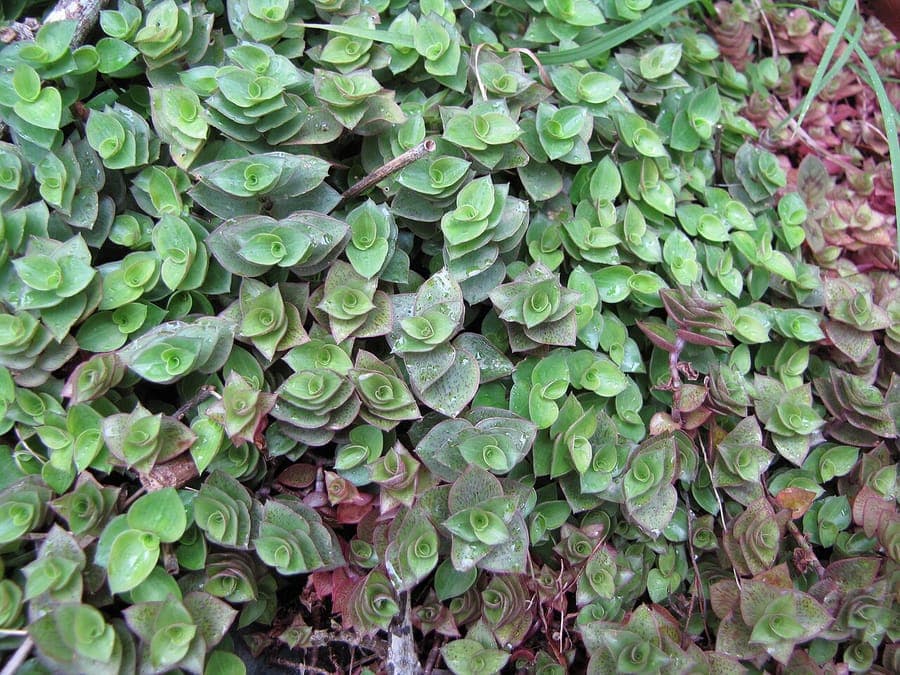
Forest and Kim Starr / CC BY 2.0, via Wikimedia Commons
Callisia repens: complete guide
Callisia repens
¿Quieres ver Callisia repens: complete guide en tu jardín?
1 minuto, sin tarjeta de crédito
Overview
Callisia repens, commonly known as Creeping Inchplant, Turtle Vine and Bolivian Jew, is a tropical trailing plant native to Central and South America. This member of the Commelinaceae family is beloved by houseplant collectors for its graceful, delicate growth habit and ease of cultivation. It serves as attractive groundcover in tropical climates and a stunning trailing specimen in warm indoor environments. Thousands of home gardeners appreciate this plant for its elegant growth form and minimal maintenance requirements.
Appearance and Bloom
Callisia repens grows as a slender, branching trailer with extremely small elliptical leaves approximately five to seven millimeters long in mint-green to purple-tinted hues. The stems are fine and delicate, profusely branched, creating a wispy, silken appearance. Leaves are smooth and arranged in opposite pairs along stems. Flowers are small and discrete, white to pale pink tiny blooms that emerge along the stems. Flowering occurs during warm months, year-round in tropical regions.
Ideal Location
Callisia repens thrives in bright, indirect light. Indoors: position near windows without direct intense midday sun. Outdoors in zone ten and warmer: partial shade is preferred, though the plant tolerates full sun if kept consistently moist. Excessive shade causes weak, thin growth. Protect from frost: plant dies below ten degrees Celsius.
Soil
This plant prospers in light, porous soil mixes. A blend of potting soil forty percent, peat moss thirty percent, and perlite thirty percent works excellently. In hanging baskets, light, humus-rich mixtures perform well. The plant accepts both slightly acidic and neutral soil. Drainage is critical: waterlogging causes root rot, the plant plants primary killer.
Watering
Callisia repens prefers consistently moist, not waterlogged, soil during growing seasons spring and summer. Allow soil to dry slightly between waterings. Autumn and winter: reduce moisture significantly. Dry indoor air causes leaf tip browning; mitigate through frequent misting or placement on humidity trays. Overwatering is far more harmful than underwatering.
Diseño gratis
¿Quieres ver Callisia repens: complete guide en tu jardín? Crea un diseño gratis ahora.
Pruning
Pruning encourages branching and compact growth of paramount importance. Pinch young stem tips regularly, approximately every two to three weeks during growing season, to promote lateral branching. Remove dead or yellowed leaves as they appear. Overgrown plants can be rejuvenated by cutting back at least halfway. The plant responds positively to vigorous pruning and recovers quickly.
Maintenance Calendar
Spring: Begin feeding with dilute liquid fertilizer every two weeks. Remove winter damage. Increase watering. Summer: Continue feeding every two weeks. Regular misting helps combat dry air. Regular pinching maintains form. Autumn: Gradually reduce watering. Cease feeding late October. Winter: Minimal watering. No feeding. Temperature above ten degrees Celsius crucial.
Winter Hardiness
Callisia repens is completely frost-sensitive. Plant dies when exposed to temperatures below ten degrees Celsius without exception. In cold zones: grow only indoors or in containers brought inside for winter. This is not a cold-hardy plant; provide adequate protection.
Companion Plants
In hanging baskets: pair with upright forms like small Begonia, Episcia, or diminutive Hoya species. Outdoors in tropical gardens: border with taller textured plants like caladium or ferns. In ground: Callisia repens functions beautifully as a ground layer beneath shrubs. With flowering groundcovers like Impatiens, it creates contrasting foliage interest and form.
Final Thoughts
Callisia repens is an underestimated ornamental that provides years of beauty in homes and warm gardens without complicated maintenance needs. Easily propagated from cuttings, it multiplies freely for full baskets or extensive groundcover. Ideal for beginners seeking foolproof trailing plants. Available through garden retailers and online nurseries.
¿Quieres ver Callisia repens: complete guide en tu jardín? Crea un diseño gratis ahora.
Sube una foto, elige un estilo y obtén un diseño fotorrealista con lista de plantas en menos de un minuto.
Más de 10.000 jardines diseñados
Sin tarjeta de crédito


Plantas similares
Virginia dayflower: complete guide
Commelina virginica
Full guide to Virginia dayflower (Commelina virginica): ideal location, soil, watering, pruning, winter care and companion plants.
Commelina diffusa: complete guide
Commelina diffusa Burm.f.
Commelina diffusa, the climbing dayflower, is an elegant perennial with soft blue flowers that bloom for just a day. This tropical grower thrives in shaded locations and is ideal for hanging baskets, pergolas, and moist garden corners.
Tradescantia spathacea: complete guide
Tradescantia spathacea
Tradescantia spathacea, commonly known as Moses-in-the-cradle, is a striking tropical plant with vibrant purple leaf undersides. Discover cultivation techniques and care requirements for this eye-catching houseplant.