
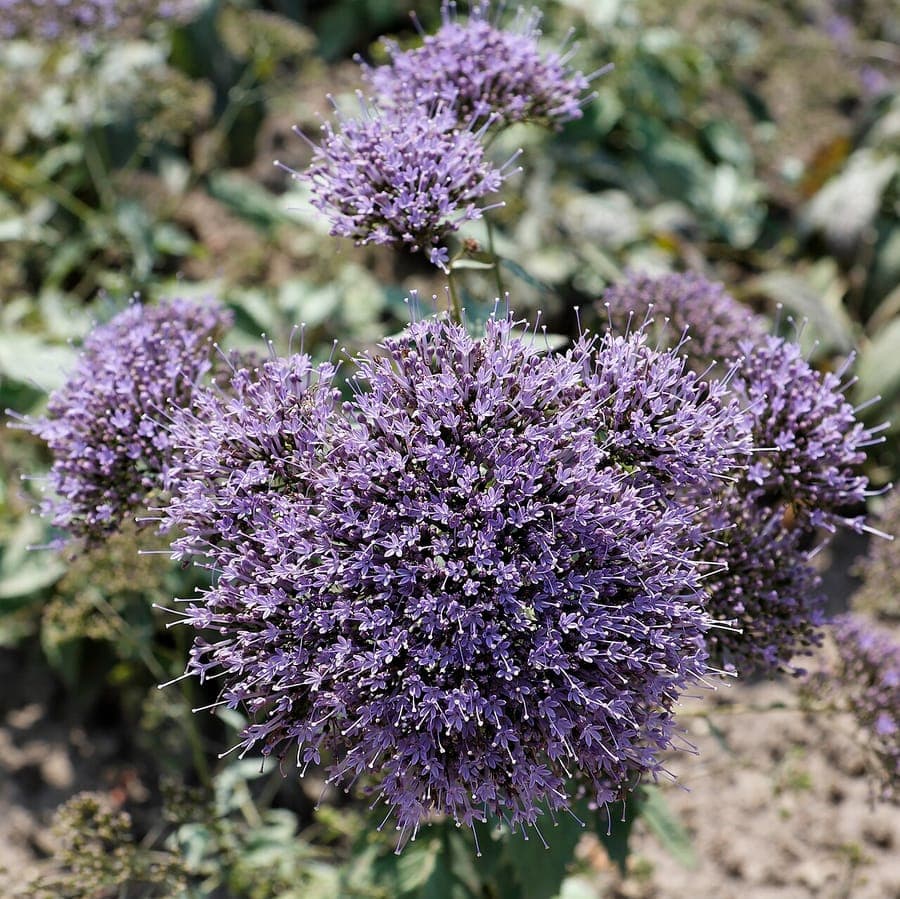
C T Johansson / CC BY 3.0, via Wikimedia Commons
Blue throatwort: complete guide
Trachelium caeruleum
¿Quieres ver Blue throatwort: complete guide en tu jardín?
1 minuto, sin tarjeta de crédito
Overview
Blue throatwort (Trachelium caeruleum) is an elegant, ornamental flower belonging to the bellflower family (Campanulaceae). The plant originates from the Mediterranean region, particularly in North Africa, South Europe, and islands such as Madeira and the Azores. Trachelium takes its common name from its attractive blue coloration and historical medicinal uses.
The plant is popular as a cut flower and is widely cultivated for flower arrangements. With its delicate, dense flower sprays that bloom continuously from July to October, it is a valuable addition to summer borders and containers. The flowers attract butterflies and bees.
Appearance and bloom cycle
Blue throatwort is an elegant, upright plant reaching approximately 40-60 cm in height. The plant has finely branched stems with small, linear leaves. The real attraction are the flowers: extremely small, blue-violet flowers (approximately 3-5 mm) arranged in very dense, airy sprays of 3-8 cm diameter.
These dense clusters appear almost foam-like from a distance, while up close individual tiny, star-shaped flowers become visible. The plant blooms continuously from July to October, and may even continue flowering into November during mild autumns.
Ideal location
Blue throatwort grows best in sunny positions. The plant requires abundant light for optimal flowering. In partial shade it still grows reasonably, but will flower less. Full shade is unsuitable.
This is an excellent plant for summer borders, cut flowers, flower boxes and containers. Blue throatwort also fits well in Mediterranean gardens. In colder climates it is typically grown as an annual or requires overwintering in a protected location.
Soil requirements
Blue throatwort makes no high demands of soil. The plant grows on varied soil types provided drainage is good. A neutral to slightly alkaline soil with pH 7.0-7.5 is ideal. Nutrient-rich soil promotes growth and flowering, so adding compost or balanced fertilizer enhances performance.
Good drainage is important; waterlogged soil is poorly tolerated.
Watering
Blue throatwort requires regular water, especially during dry periods. The plant prefers to be kept evenly moist but not waterlogged. During hot summers, daily watering may be needed, especially for container-grown plants.
Ensure water drains through pots properly - standing water can lead to root rot. Mulching with compost helps improve moisture retention.
Diseño gratis
¿Quieres ver Blue throatwort: complete guide en tu jardín? Crea un diseño gratis ahora.
Pruning
Blue throatwort naturally grows in an attractive shape, but you can encourage denser growth and more side branches by pinching young stems when the plant is still small. Deadheading spent flowers encourages continued blooming.
At season's end, the plant can be cut back to about 15 cm height if you wish to attempt overwintering it for the following year.
Maintenance calendar
April-May: Sow or plant out in warm conditions (18-20 degrees C). Harden off outdoors after frost danger passes. June-July: Pinch young plants to encourage branching. Begin regular watering. July-October: Flowering period; remove spent flowers to encourage continued blooming. August-September: Fertilize every 2-3 weeks with bloom-boosting fertilizer. October-November: Flowering begins to decline. In warm locations, blooming may continue. December-February: Plants die in frost; no hardy varieties are available in temperate zones.
Winter hardiness
Blue throatwort is not winter-hardy in temperate Europe. The plant cannot tolerate temperatures below 5 degrees Celsius and dies at frost. In mild coastal areas or sheltered locations it may sometimes survive with heavy mulching, but this is rare.
Best practice is to treat the plant as an annual or propagate fresh plants from seed or cuttings each spring.
Companion plants
Blue throatwort combines beautifully with other summer-flowering plants with similar requirements, such as verbena, diascia, osteospermum and felicia. It also pairs well with silver-foliaged plants such as Senecio cineraria.
In cut-flower arrangements, blue throatwort is widely used as filler material between larger blooms.
Closing thoughts
Blue throatwort is an elegant, continuously-flowering plant that delivers full value in summer borders and as a cut flower. With its blue-violet coloration and delicate texture, it brings refined elegance to your garden. Seed and plants are readily available from garden centers in spring. Visit gardenworld.app/en for more information about summer bloomers. Design your own garden plan via gardenworld.app.
¿Quieres ver Blue throatwort: complete guide en tu jardín? Crea un diseño gratis ahora.
Sube una foto, elige un estilo y obtén un diseño fotorrealista con lista de plantas en menos de un minuto.
Más de 10.000 jardines diseñados
Sin tarjeta de crédito


Plantas similares
Campanula alaskana: complete guide
Campanula alaskana
Discover Campanula alaskana, the delicate alpine bellflower from Alaska. Growing tips, hardy requirements, and design ideas for rock gardens and alpine troughs.
Campanula scouleri: complete guide
Campanula scouleri
Discover Campanula scouleri, the refined Pacific bellflower. Growing tips, care requirements, and design ideas for woodland and mountain gardens.
Doublehorn calicoflower: complete guide
Downingia bicornuta
All about Downingia bicornuta - the doublehorn calicoflower: sowing, location, bloom and care for this rare annual in your garden.