
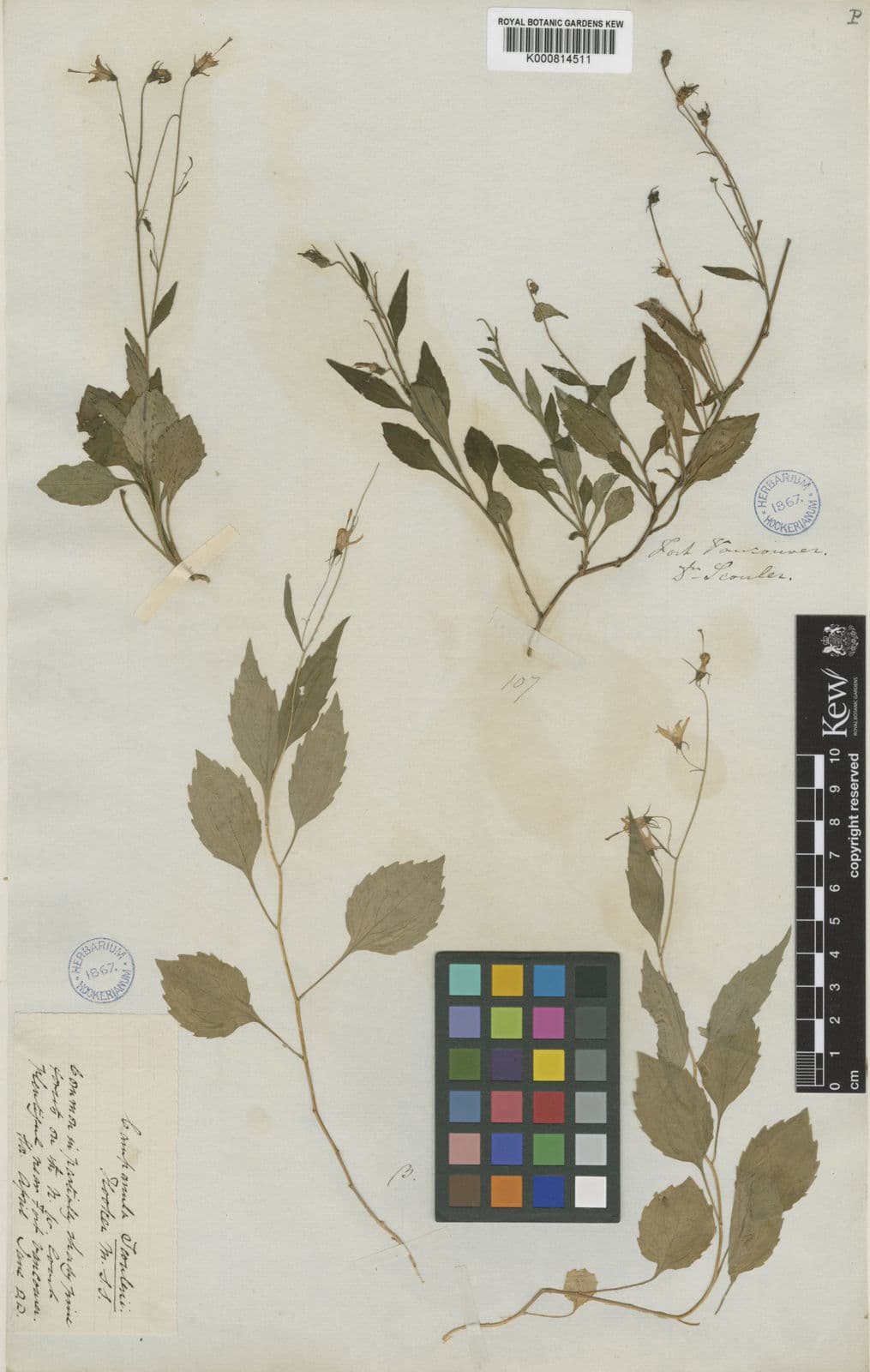
Campanula scouleri: complete guide
Campanula scouleri
¿Quieres ver Campanula scouleri: complete guide en tu jardín?
1 minuto, sin tarjeta de crédito
Overview
Campanula scouleri, commonly known as Scouler's harebell or pale bellflower, is a refined mountain wildflower native to the Pacific Northwest coast of North America. This elegant bellflower belongs to the Campanulaceae family and produces soft purple to lavender-blue flowers throughout much of the summer. The plant is notably hardy and relatively straightforward to cultivate in well-drained soils with adequate moisture.
Campanula scouleri is ideal for woodland edges, mountain gardens, and forest clearings. The plant accepts partial shade and blooms reliably in most climates. Integrate Campanula scouleri into mountain garden designs using GardenWorld's planning tools alongside other alpine specialists.
Appearance and Bloom Time
Campanula scouleri is an upright to semi-spreading plant typically reaching 30 to 50 centimeters in height. The stems are slender, elegant, and adorned with lanceolate, finely toothed leaves. The foliage is dark green with slightly hairy texture adding visual interest even before flowering.
The flowers are the plant's showpiece, measuring approximately 1.5 to 2 centimeters in diameter with characteristic bell-shaped corollas divided into five lobes. Flower color ranges from soft purple to lavender-blue tones, occasionally nearly white. The flowers appear along the upper stems in succession from June through August, sometimes continuing into September in cooler sites.
Following flowering, the plant produces seed capsules containing thousands of tiny seeds that readily disperse by wind and establish in nearby suitable microsites. This self-seeding character contributes to the plant's long-term garden presence.
Ideal Location
Campanula scouleri thrives in partial shade to full sun, with preference for partial shade in very warm climates. The plant tolerates up to 6 hours of direct sunlight daily and flowers more abundantly with increased light. In denser shade, the plant grows but flowers sparsely.
The species is hardy through USDA zones 4 to 8, making it suitable for much of northern Europe. It excels in woodland edges, beneath deciduous trees, and in dappled light conditions. The plant accepts moderate wind exposure but prefers some shelter from harsh gusts.
With GardenWorld's design tools, visualize how Campanula scouleri works along shaded borders beneath trees in mixed herbaceous plantings, adding vertical interest and delicate color.
Soil Requirements
Campanula scouleri prefers moist but well-draining soil rich in organic matter. A slightly acidic to neutral pH (6.0 to 7.0) works well. The plant thrives in native forest soil conditions more than in amended garden soils.
Amend planting areas generously with leaf mold or aged compost before planting. This improves both drainage capacity and water retention, creating the balanced moisture conditions the plant prefers. Apply a 3 to 5 centimeter mulch layer of composting leaves or bark to enhance moisture retention and suppress weeds.
Organic fertilizers work better than synthetic options. The plant responds well to regular light applications of organic feeding throughout the growing season.
Watering
Campanula scouleri enjoys consistent moisture during the growing season. The soil should never completely dry out but must also never become waterlogged. Water approximately weekly or more frequently during very dry spells.
Ensure good drainage to prevent root diseases. The plant tolerates somewhat drier conditions in winter without difficulty. Water sparingly during dormancy. In spring, resume normal watering as growth begins.
Excessive moisture encourages fungal foliage diseases. Ensure good air circulation around plants to minimize disease pressure.
Pruning and Maintenance
Campanula scouleri requires minimal pruning. Spent flowers can be removed for tidiness, though this does not significantly impact seed production if desired. The practice simply maintains neat appearance.
In spring, carefully remove any dead or winter-damaged stems. No additional pruning is necessary. The plant naturally forms its own graceful shape. Staking is rarely necessary unless the plant grows in unusually shade-restricted conditions.
The plant grows slowly to moderately fast depending on growing conditions. No aggressive intervention is needed.
Diseño gratis
¿Quieres ver Campanula scouleri: complete guide en tu jardín? Crea un diseño gratis ahora.
Maintenance Calendar
April-May: Growth accelerates. Begin regular watering. Monitor for emerging shoots.
June-August: Peak flowering period. Enjoy abundant blooms. Water consistently.
September-October: Bloom declines. Begin tapering water applications. Plant prepares for dormancy.
November-March: Winter dormancy. Minimal watering. Plant persists without incident.
Winter Hardiness
Campanula scouleri is hardy through USDA zones 4 to 8, withstanding temperatures approaching -20°C. This hardiness range covers virtually all Dutch and Belgian growing conditions without difficulty. The plant survives winter through underground structures that emerge reliably each spring.
Snow cover is actually beneficial, providing insulation and consistent moisture. No special winter protection is necessary in most regions. In extremely harsh continental winters with repeated freeze-thaw cycles, light mulch of dry leaves can provide modest additional protection, though rarely necessary.
Propagation
Campanula scouleri propagates readily from seed or by dividing established clump-forming plants. Sow fresh seed in autumn into an airy mixture of leaf mold and fine sand; the fine seeds need light to germinate, so cover only very lightly. Germination typically follows within 3 to 5 weeks at a moderate temperature around 15°C.
Division is best performed in early spring, just as new shoots become visible. Carefully lift the plant, divide the root ball into sections with at least two to three shoots each, and replant immediately into moist, humus-rich soil. The plant typically recovers quickly from division and often flowers in the same season. Cuttings taken from young basal shoots in May also succeed, provided they are kept in a shaded, humid environment until rooting occurs.
Pests and Diseases
Campanula scouleri is generally not prone to serious disease, but slugs and snails represent the primary threat, especially to young shoots in spring. Use iron phosphate slug pellets or place coffee grounds and crushed eggshells around vulnerable plants.
Leaf spot and powdery mildew can appear with overly dense planting or poor air circulation, particularly in humid woodland conditions. Give plants adequate spacing (at least 25 to 30 centimeters) and remove affected leaves as soon as they appear. Aphids are rarely a problem but can appear during warm, dry spells; a light soapy solution usually suffices. Young plants and seed are available from specialist perennial nurseries and occasionally from well-stocked garden centers.
Companion Plants
Campanula scouleri harmonizes beautifully with other woodland species. Excellent companions include various Aquilegia species, hellebores, Brunnera, Heuchera, and other shade-loving perennials. These plants share similar cultural requirements and create sophisticated woodland compositions.
Hostas provide good foliage contrast to the delicate bellflower. Ferns also pair well, their feathery texture contrasting effectively with the campanula's smoother leaves. The refined purple bells add sophistication to woodland arrangements.
Avoid pairing with aggressive, space-demanding plants. Other moderate-vigor shade dwellers create the most harmonious combinations. Browse the GardenWorld plant database for further shade-garden pairing suggestions.
Final Thoughts
Campanula scouleri is a refined choice for gardeners with partial shade conditions and moist, well-draining soil. The plant flowers reliably with minimal fuss and adds delicate beauty to numerous garden settings. Once established, this bellflower is relatively maintenance-free, reaching full potential within several seasons.
For those seeking elegant, reliable mountain flowers that integrate seamlessly into woodland and shade garden designs, Campanula scouleri is an excellent choice. Its understated beauty and dependable performance make it worthy of wider cultivation in temperate gardens.
¿Quieres ver Campanula scouleri: complete guide en tu jardín? Crea un diseño gratis ahora.
Sube una foto, elige un estilo y obtén un diseño fotorrealista con lista de plantas en menos de un minuto.
Sin tarjeta de crédito


Plantas similares
Campanula alaskana: complete guide
Campanula alaskana
Discover Campanula alaskana, the delicate alpine bellflower from Alaska. Growing tips, hardy requirements, and design ideas for rock gardens and alpine troughs.
Doublehorn calicoflower: complete guide
Downingia bicornuta
All about Downingia bicornuta - the doublehorn calicoflower: sowing, location, bloom and care for this rare annual in your garden.
Phyteuma charmelii: complete guide
Phyteuma charmelii
Phyteuma charmelii is a rare alpine bellflower-family plant with vivid blue flower heads. Learn how to grow it in rock gardens and alpine beds.