
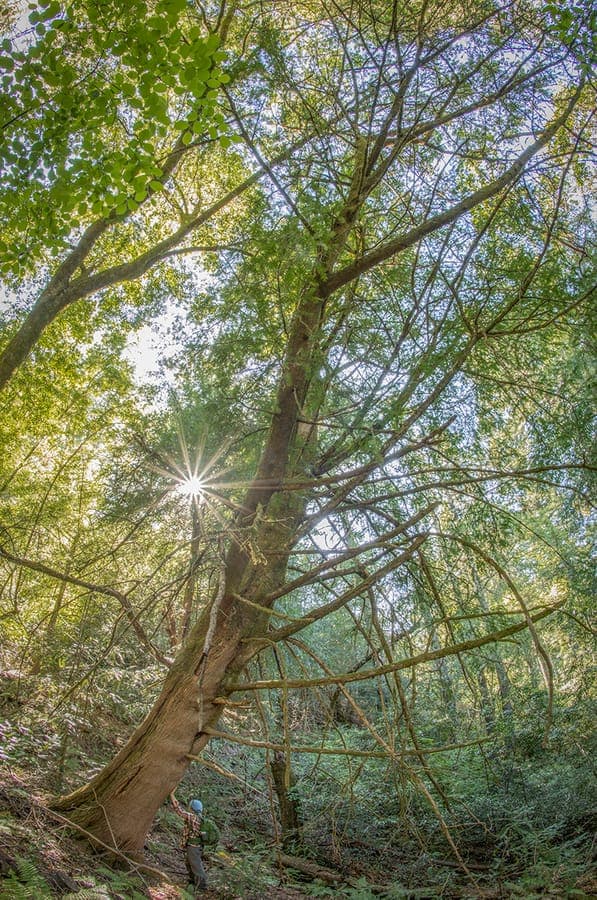
Eric Hongisto / CC BY-SA 4.0, via Wikimedia Commons
California torreya: complete guide
Torreya californica
¿Quieres ver California torreya: complete guide en tu jardín?
1 minuto, sin tarjeta de crédito
Overview
The California torreya (Torreya californica), also known as California nutmeg or stinking cedar, is a rare and geographically restricted conifer endemic to the mountain forests of California. This intriguing species distinguishes itself through its elongated, sharply pointed needles and distinctive fleshy fruits resembling diminutive nutmegs. For discerning gardeners seeking something extraordinary, this fascinating tree offers exceptional ornamental value and unique textural interest.
Appearance and bloom
California torreya develops as a medium to large conifer with pyramidal to columnar form. The needles are long, linear, and acutely pointed, deep green in color, and arranged in two ranks along the shoots. These needles emit a distinctive musky fragrance when crushed or handled. The remarkable female fruits are elongated, fleshy, green structures resembling small nutmegs, approximately 5 centimeters in length. These fruits mature slowly and contain large viable seeds.
Ideal location
California torreya thrives best in shaded to partially shaded locations. Unlike many conifers, this species tolerates and actively prefers partial shade, particularly in warmer climates. It is essential to avoid intense midday sun, which can cause foliage scorch. Select a sheltered position with gentle air movement but protected from strong, desiccating winds.
Soil
California torreya performs optimally in well-draining, slightly acidic soil. An ideal pH range of 6.0 to 6.5 supports vigorous growth. Soil should be rich in organic matter, similar to naturally occurring forest soils. Sandy loam proves suitable provided drainage is exceptional. Incorporate compost or leaf mold at planting to enhance moisture retention and nutrient availability.
Watering
California torreya requires consistent moisture supply, particularly during its establishment year. Ensure soil remains consistently moist but never waterlogged. Young trees prove intolerant of drought and require reliable moisture. Mature specimens develop improved drought tolerance but flourish with adequate water supply. In dry seasons, provide supplemental watering, especially in hot regions.
Diseño gratis
¿Quieres ver California torreya: complete guide en tu jardín? Crea un diseño gratis ahora.
Pruning
California torreya requires minimal pruning intervention. Allow the tree to develop its natural form uninhibited. Remove only dead, damaged, or diseased branches. Heavy pruning should be avoided entirely, as this disrupts natural architecture. Light formative pruning on young material may assist structure development, but established trees form attractive shapes naturally.
Maintenance calendar
Spring: Initiate consistent moisture monitoring as growth accelerates. Inspect new shoots for winter damage. Summer: Provide adequate water during dry spells. Maintain organic mulch around the base to conserve moisture. Autumn: Gradually reduce watering as growth slows. Expect natural needle coloration changes. Winter: Minimal moisture required except during extended droughts.
Winter hardiness
California torreya exhibits moderate winter hardiness suitable for USDA zones 8b through 9. In severe winters with temperatures below minus 10 Celsius, foliage and branch damage may occur. This species performs ideally in temperate coastal and subtropical regions. In continental climates, protection proves essential. Young specimens benefit from enhanced winter protection during their first few years.
Companion plants
California torreya combines beautifully with other shade-tolerant conifers such as coast redwood and Pacific yew. Underplant with hellebores, Japanese hakone grass, or delicate ferns. Add blooming Pacific rhododendrons for spring color contrast. The columnar form works excellently as a backdrop against stonework or natural outcroppings in woodland gardens.
Closing
The California torreya represents a fascinating selection for experienced gardeners and collectors seeking distinctive conifer specimens. With its rarity, fascinating needle arrangement, and unusual fruits, this tree becomes a conversation piece in any garden setting. Available through specialized tree nurseries specializing in rare conifers. For garden design inspiration featuring exceptional specimens, visit gardenworld.app/en and gardenworld.app/nl.
¿Quieres ver California torreya: complete guide en tu jardín? Crea un diseño gratis ahora.
Sube una foto, elige un estilo y obtén un diseño fotorrealista con lista de plantas en menos de un minuto.
Más de 10.000 jardines diseñados
Sin tarjeta de crédito


Plantas similares
Taxus chinensis: complete guide
Taxus chinensis
The Chinese yew is an elegant evergreen conifer with dense dark foliage. Discover cultivation tips, hardiness, and how it differs from other yew species for your garden.
Florida Torreya: Complete Guide to This Endangered Evergreen
Torreya taxifolia
Discover the Florida torreya (Torreya taxifolia), an endangered, elegant evergreen. Learn about care, habitat, and conservation importance.
Chinese Nutmeg Tree: complete guide
Torreya grandis
Learn everything about Torreya grandis, the Chinese nutmeg tree. Discover cultivation methods, care, and special characteristics of this rare tree.