
Digitalbcon1 / CC BY 2.0, via Wikimedia Commons
Piggyback plant: complete guide
Tolmiea menziesii
¿Quieres ver Piggyback plant: complete guide en tu jardín?
1 minuto, sin tarjeta de crédito
Overview
Tolmiea menziesii, better known as Piggyback plant, Pick-a-back plant, or Youth-on-age, is an extraordinary foliage plant from the Saxifragaceae family. This unique plant is native to the Pacific Northwest of North America, from Alaska to Oregon, where it grows in moist, shaded forest environments. The plant is especially valued for its remarkable reproductive ability: tiny baby plantlets grow on each mature leaf that can be detached and replanted.
Tolmiea menziesii is an ideal plant for gardeners seeking an interesting and easily propagatable houseplant. With its minimal light requirements, charming appearance, and fascinating baby-plant reproduction, it is a favourite among plant enthusiasts and children interested in plant biology.
Appearance & bloom cycle
Tolmiea menziesii grows as a compact, densely-leafed plant reaching 30-60 cm tall. The leaves are the main attraction: large, up to 8-10 cm wide, heart-shaped, with wavy edges and deep venation. The leaf colour is bright green, sometimes with reddish-brown spots or tinges. Most remarkably, at each leaf's base where the petiole attaches, a tiny baby plantlet grows.
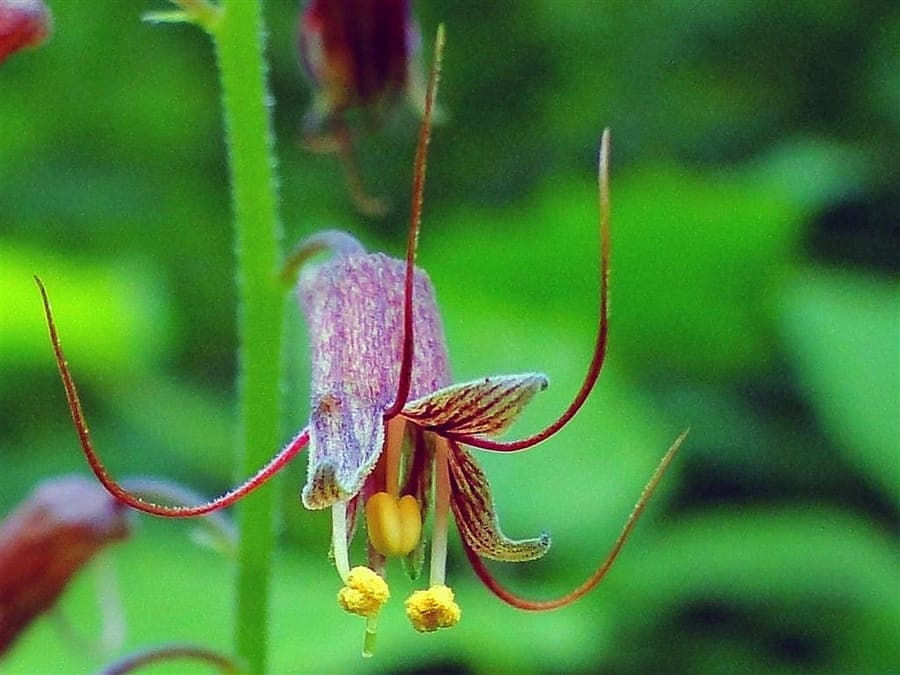
The plant blooms in late spring (April-May) with small, inconspicuous red-pink flowers on slender, upright flower stalks. The flowers themselves are not particularly showy, but they are interesting structurally. The true show is the endless production of baby plantlets and the unique way this plant reproduces.
Ideal location
Tolmiea menziesii grows best in bright, indirect light conditions. Place the plant where it receives brightness without direct sunlight. This could be a spot near a north-facing window, or a location in bright indoor spaces away from harsh light. In its natural environments, it grows in dense woodland under larger trees.
The plant can also grow in full shade, though growth becomes slow. Avoid direct sunlight, especially afternoon sun, as this can cause leaf scorch. For houseplants, position near a window with filtered sunlight, or several metres away from the window.
Soil requirements
Tolmiea menziesii prefers light, moisture-retaining, well-draining soil. A mixture of garden soil, peat or coco coir, and perlite in a ratio of 2:1:1 works excellently. For pot cultivation, use standard potting mix blended with perlite for better drainage.
The plant tolerates acidic soil better than neutral or alkaline soil. Add organic matter to improve moisture-holding capacity. Regular feeding with balanced fertiliser during the growing season promotes vigorous growth.
Watering
Tolmiea menziesii prefers consistently moist (not waterlogged) soil. During the growing period (spring-summer), keep the soil regularly moist by watering frequently. Check the soil regularly; water when the top 1 cm feels dry, but not completely dried out.
In winter, restrict watering and allow the soil to dry slightly more between waterings. Ensure water drains well to prevent root rot. Use lukewarm water, preferably rainwater over tap water due to potential chemicals.
Pruning
Tolmiea menziesii requires minimal pruning. Remove dead or damaged leaves as they appear. If the plant becomes too large, you can pinch off or trim back longer stems. This encourages more lateral branching and a more compact form.
The baby plantlets can be detached for propagation - this doesn't harm the mother plant and actually stimulates further growth.
Diseño gratis
¿Quieres ver Piggyback plant: complete guide en tu jardín? Crea un diseño gratis ahora.
Maintenance calendar
Spring (March-May): Increase watering as growing season begins. Start feeding with balanced fertiliser monthly. Pot baby plantlets in fresh soil.
Summer (June-August): Continue regular watering. Check weekly for pests, especially spider mites. Continue fertilising.
Autumn (September-October): Gradually reduce watering as growth slows.
Winter: Limited water. No feeding. Plant may appear somewhat stressed but recovers in spring.
Winter hardiness
Tolmiea menziesii is not frost-hardy. Temperatures below 10°C can cause damage. The plant may be wounded by temperatures below 5°C. Outdoor overwintering in temperate regions is impossible; this is purely a houseplant.
Keep the plant in warm locations, away from cold draughts and windowsills against cold windows.
Companion plants
If cultivated outdoors as a hanging plant, Tolmiea pairs well with other shade-loving plants: Brunnera, Astilbe, Helleborus, and Bergenia. In houseplant combinations, it works well with Ferns, Peperomia, and Pileas.
Harvesting and use
For fruit-bearing species, harvest when fully ripe and gently detach from the plant. For herbs, snip the top 5-10 cm of branches for fresh use. For flowers, gather just before they fully open for maximum colour and fragrance. Many species can be dried for winter use. Store dried material in airtight containers away from direct sunlight for best preservation.
Vermehrungstechniken in Detail
Die Vermehrung erfolgt durch das einfache Ablosen der Babypflanzchen von den Blattbasen. Dies kann jederzeit wahrend der Wachstumssaison erfolgen. Die abgelosten Plantzen sollten sofort in feuchtes Potting-Mix gesteckt werden und in einem warmen, hellen Ort (nicht direkte Sonne) aufgestellt werden. Wurzeln entwickeln sich typischerweise innerhalb von 2-3 Wochen. Eine Kunststoff-Haube kann die Erfolgsquote erhohen, indem Feuchtigkeit bewahrt wird. Nach der Bewurze lung kann die Haube allmahlich geluftet werden.
Propagation project
A fun activity for children is starting a propagation project with this plant. Let kids detach baby plantlets, place them in potting soil and water them. Seeing roots develop within weeks provides a wonderful "aha moment"! Many schools use Tolmiea to teach children the basics of plant biology and reproduction. Take photo series of the growth process and track progress over time. This project teaches patience and responsibility simultaneously. It's an excellent educational tool for home schooling as well.
An established plant can serve as a "baby factory". With regular watering and feeding it continuously produces baby plantlets throughout the growing season. This makes it a very economical choice for plant collectors wanting to expand their collection inexpensively. Share baby plantlets with friends and family to promote their love of plants. It becomes a living gift that keeps giving.
Indoor environment adaptation: Tolmiea menziesii can adapt to various indoor climates but thrives best in consistent cool to warm temperatures between 15-21 degrees Celsius. During the growing season regular watering and feeding will promote rapid development. When the plant starts to fade in winter this is normal and no cause for concern. The underground portions remain alive and will re-emerge in spring.
Closing
Tolmiea menziesii is a fascinating addition to any home garden plant collection. The combination of attractive foliage, easy propagation, and minimal maintenance requirements makes it ideal for beginners and experienced gardeners alike. Experiment with baby-plantlet propagation and share new plants with friends. For more houseplant combinations and care tips, visit gardenworld.app. Add this unique plant to your home and enjoy years of interesting growth!
Visit gardenworld.app for complete guides on houseplants and their care.
¿Quieres ver Piggyback plant: complete guide en tu jardín? Crea un diseño gratis ahora.
Sube una foto, elige un estilo y obtén un diseño fotorrealista con lista de plantas en menos de un minuto.
Más de 10.000 jardines diseñados
Sin tarjeta de crédito


Plantas similares
Korean astilbe: complete guide
Astilbe grandis
Discover Korean astilbe (Astilbe grandis): a tall shade plant with elegant flower plumes for pond edges and borders.
Heuchera pilosissima: complete guide to seaside alumroot
Heuchera pilosissima
Seaside alumroot (Heuchera pilosissima), an elegant North American dwarf perennial with hairy red-tinged foliage and red flower spikes.
Starry saxifrage: complete guide
Micranthes stellaris
Full guide to Micranthes stellaris, the starry saxifrage: location, soil, blooming and garden use. A tough alpine plant for moist, shady rock faces and pond margins.