
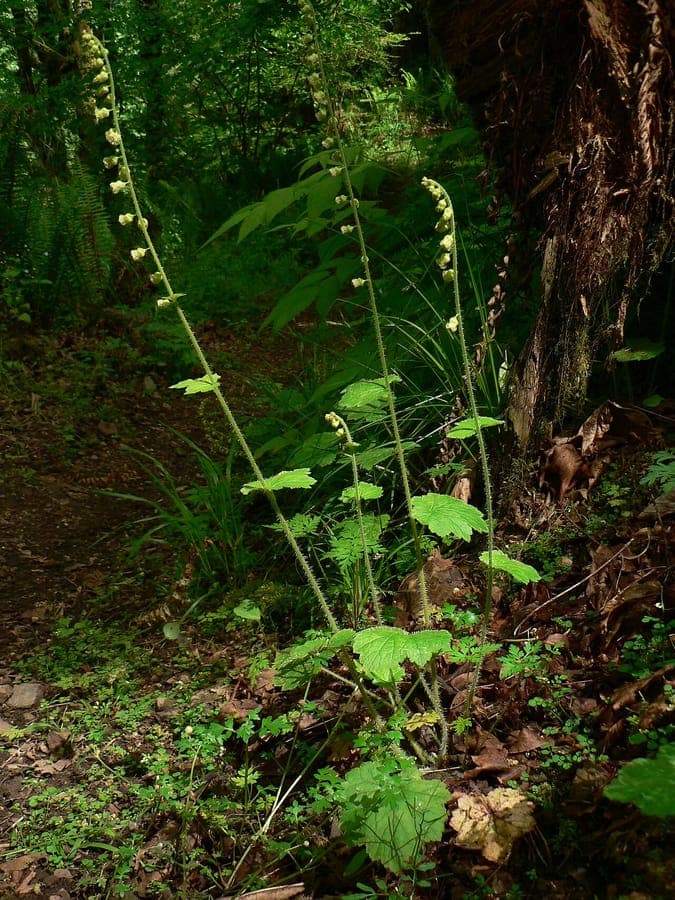
Walter Siegmund / CC BY 2.5, via Wikimedia Commons
Fringecups: complete guide
Tellima grandiflora
¿Quieres ver Fringecups: complete guide en tu jardín?
1 minuto, sin tarjeta de crédito
Overview
Fringecups (Tellima grandiflora), also called bigflower tellima and fragrant fringecup, is a charming shade-loving plant from the coasts of Alaska to California and Washington. This elegant perennial is celebrated for its delicate, pale yellow flowers and attractive foliage that remains beautiful year-round. The plant grows inconspicuously but steadily in half-shaded gardens.
As a member of the Saxifragaceae family, fringecups shares characteristics with other shade-tolerant groundcovers. The plant produces beautiful flower clusters from May to June, making it a valuable addition to shade borders and woodland gardens. With minimal maintenance needs, it's a prized choice for less sunny locations.
Appearance and Bloom
Fringecups grow to approximately 30 to 50 centimeters tall, depending on culture and light. The plant forms attractive rosette structures of green foliage that turns reddish-bronze in autumn. This provides seasonal color shift throughout the year.
Bloom period extends May through June, when delicate, pale yellow flowers appear on slender stems above the foliage. Flowers are small but numerous and feature characteristic fringed edges that give the plant its common name. These blooms attract pollinators.
Ideal Location
Fringecups thrive in partial to full shade. The plant tolerates full sun in cooler climates but appreciates afternoon shade protection. Growth is best beneath deciduous trees or in shaded garden corners where many other plants struggle.
Good air circulation helps prevent fungal diseases. The plant suits woodland gardens, shade borders, and beneath hedges where numerous other plants fail.
Soil
Fringecups grow well in well-drained, slightly acidic to neutral soils. The plant prefers pH between 6.0 and 7.0. Compact clay soils can be lightened with sand or perlite. Adding compost or organic matter significantly improves soil texture.
The plant tolerates less fertile soils but grows better in moderately fertile soil. Mulching aids moisture retention and temperature moderation in shaded areas.
Diseño gratis
¿Quieres ver Fringecups: complete guide en tu jardín? Crea un diseño gratis ahora.
Watering
Water regularly after planting until well-established. Fringecups have moderate water needs and prefer consistently moist soil. The plant grows better with regular moisture than in dry conditions. Waterlogged conditions should be avoided.
During dry periods provide supplemental water, especially in full sun. Morning watering is preferred. The plant is winter-tolerant and needs less water in cold seasons.
Pruning
Fringecups require minimal pruning. The plant maintains its attractive form without much intervention. Remove dead leaves and stems when noticed. After blooming, stems can be cut back to encourage compact growth.
The plant grows slowly and doesn't require regular cutting back. In early spring, old foliage can be removed in preparation for new growth.
Maintenance Calendar
MARCH-APRIL: Preparation; remove dead foliage; light structural pruning. MAY-JUNE: Peak bloom; enjoy flowers and fragrance. JULY-AUGUST: Regular watering; foliage color evolves. SEPTEMBER-OCTOBER: Winter preparation; final watering; reddish tones. NOVEMBER-FEBRUARY: Dormancy; minimal care.
Winter Hardiness
Fringecups are winter-hardy in the Netherlands, Belgium, and Germany. The plant tolerates temperatures to approximately -15 degrees Celsius without protection. The plant enters dormancy and foliage may brown, which is normal.
Winter soil moisture is important; dry, frozen root balls cause damage. Mulching aids root protection. In severe frosts, some foliage damage may occur, but plants regenerate.
Companion Plants
Fringecups combine beautifully with other shade-loving plants like Helleborus and Ajuga. Ferns like Polystichum add textural interest. White-flowering Astilbe creates lovely color contrast. Hostas with their large leaves beautifully contrast with fringecup foliage.
Groundcovering Geranium and Epimedium fit the same ecological niche. These combinations create interesting shade borders that remain visually appealing year-round.
Closing
Fringecups is an elegant, low-maintenance shade plant for those wanting to plant challenging dark corners. With consistent moisture and minimal care, it becomes a faithful seasonal addition. A prized choice for natural, ecological gardens.
Find more at gardenworld.app/nl and gardenworld.app/en.
¿Quieres ver Fringecups: complete guide en tu jardín? Crea un diseño gratis ahora.
Sube una foto, elige un estilo y obtén un diseño fotorrealista con lista de plantas en menos de un minuto.
Sin tarjeta de crédito


Plantas similares
Korean astilbe: complete guide
Astilbe grandis
Discover Korean astilbe (Astilbe grandis): a tall shade plant with elegant flower plumes for pond edges and borders.
Heuchera pilosissima: complete guide to seaside alumroot
Heuchera pilosissima
Seaside alumroot (Heuchera pilosissima), an elegant North American dwarf perennial with hairy red-tinged foliage and red flower spikes.
Starry saxifrage: complete guide
Micranthes stellaris
Full guide to Micranthes stellaris, the starry saxifrage: location, soil, blooming and garden use. A tough alpine plant for moist, shady rock faces and pond margins.