
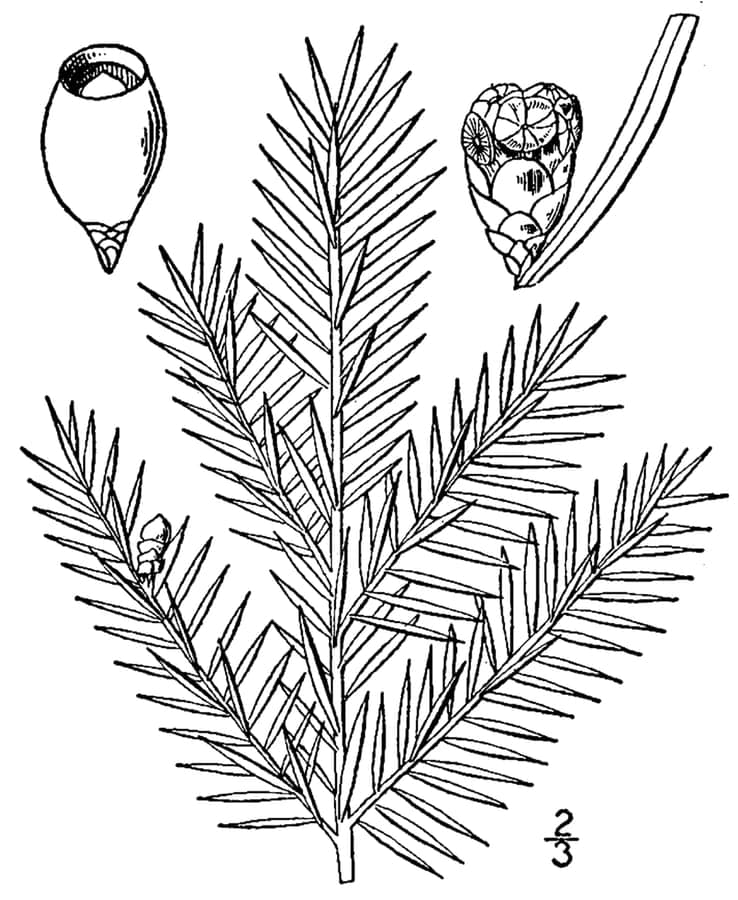
USDA-NRCS PLANTS Database / Britton, N.L., and A. Brown. 1913. Illustrated flora of the northern states and Canada. Vol. 1: 67. / Public domain, via Wikimedia Commons
Taxus canadensis: complete guide
Taxus canadensis
¿Quieres ver Taxus canadensis: complete guide en tu jardín?
1 minuto, sin tarjeta de crédito
Taxus canadensis, commonly known as Canadian yew or ground-hemlock, is an unusual low-growing, spreading conifer native to the woodlands of eastern North America. Unlike most yews, this variety grows as a low, horizontal shrub rather than an upright tree. This makes it a perfect choice for gardeners seeking an interesting, extraordinarily hardy groundcover for shaded locations. The plant is remarkably cold-hardy and thrives in the most severe climates.
Overview
Canadian yew is the most prostrate of all yew species and typically grows only 1.5 to 3 feet tall while spreading 6 to 10 feet wide. This makes it ideal for planting beneath trees, along banks, or as extensive groundcover in large areas. The plant is particularly valued for its exceptional hardiness; it grows even in USDA zones 2 through 3, where many other evergreens perish. It is toxic, so careful placement is necessary in gardens with pets or children.
Appearance & Bloom
Taxus canadensis is distinguished by its low, spreading growth habit and fine, soft needles. The foliage ranges from dark green to grey-green, paler on the underside than the upper surface. The plant forms a delicate, feathery form that is exceptionally decorative, particularly when draped with snow. Female plants produce small, inconspicuous flowers, followed by brilliantly red-colored berries (arils) that are striking against the dark green foliage.
Ideal Location
Canadian yew grows well in light to moderate shade and demonstrates preference for shade in warmer climates. The plant tolerates deep shade better than most groundcovers, making it ideal for locations beneath large trees or on north-facing building foundations. It can thrive even in dappled sun but demonstrates strong preference for filtered or indirect light. This makes it a unique choice for difficult shaded locations.
Soil
Canadian yew prefers well-draining, acidic to neutral soil with pH 5.3 to 7.5. The plant tolerates heavy, wet soil better than many groundcovers. Incorporate abundant organic matter when planting. The plant thrives in rich, humus-filled woodland soil, typical of the understory beneath mature trees. It even tolerates poor soil better than many ornamental plants.
Diseño gratis
¿Quieres ver Taxus canadensis: complete guide en tu jardín? Crea un diseño gratis ahora.
Watering
Canadian yew prefers consistent moisture but is fairly drought-tolerant once established. Water regularly during the first growing season. In subsequent years, supplemental watering is necessary only during severe drought. The plant tolerates even wet conditions better than many groundcovers. However, avoid extended dry periods that could damage shallow root systems.
Pruning
Canadian yew requires minimal pruning when properly sited. The plant will naturally assume a low, spreading form. Remove only dead, damaged, or excessively long branches. Cautious light pruning can be performed in late spring to encourage compact growth, though formal shearing is not recommended. This plant grows so slowly that pruning is rarely necessary.
Maintenance Calendar
Spring: Inspect for winter damage, ensure consistent moisture levels. Summer: Monitor moisture during dry spells. Autumn: Enjoy brilliant red fruiting display, prepare for dormancy. Winter: Minimal maintenance; protective snow cover helps prevent severe freeze-thaw damage.
Winter Hardiness
Canadian yew is the hardiest of all yew species and is hardy to zone 2. This means it can grow in virtually all climates throughout Europe, including the most severe winters in Scandinavia, Eastern Europe, and mountain regions. The plant will persist even through the harshest winters and will survive even beneath heavy snow cover. This makes it an invaluable plant for gardeners in cold climates.
Companion Plants
Canadian yew works beautifully as groundcover beneath large trees, paired with ferns, hellebores, and other shade-loving plants. It looks striking on banks, at borders, or along rock faces. The red fruits provide excellent color accent. It can also be used effectively in Japanese gardens and naturalistic woodland settings.
Closing Thoughts
Canadian yew is an unusual and exceptionally valuable plant for gardeners with shaded locations and cold climates. With its low, spreading habit, extreme hardiness, and brilliant red fruits, it provides years of horticultural interest. Though slow-growing, it is a thoroughly reliable and resilient choice. Find your specimens at specialist tree nurseries or large garden centers. For more inspiration and groundcover options, visit gardenworld.app/en and explore additional shade-tolerant specimens on gardenworld.app/en.
¿Quieres ver Taxus canadensis: complete guide en tu jardín? Crea un diseño gratis ahora.
Sube una foto, elige un estilo y obtén un diseño fotorrealista con lista de plantas en menos de un minuto.
Más de 10.000 jardines diseñados
Sin tarjeta de crédito


Plantas similares
Taxus chinensis: complete guide
Taxus chinensis
The Chinese yew is an elegant evergreen conifer with dense dark foliage. Discover cultivation tips, hardiness, and how it differs from other yew species for your garden.
Florida Torreya: Complete Guide to This Endangered Evergreen
Torreya taxifolia
Discover the Florida torreya (Torreya taxifolia), an endangered, elegant evergreen. Learn about care, habitat, and conservation importance.
Chinese Nutmeg Tree: complete guide
Torreya grandis
Learn everything about Torreya grandis, the Chinese nutmeg tree. Discover cultivation methods, care, and special characteristics of this rare tree.