
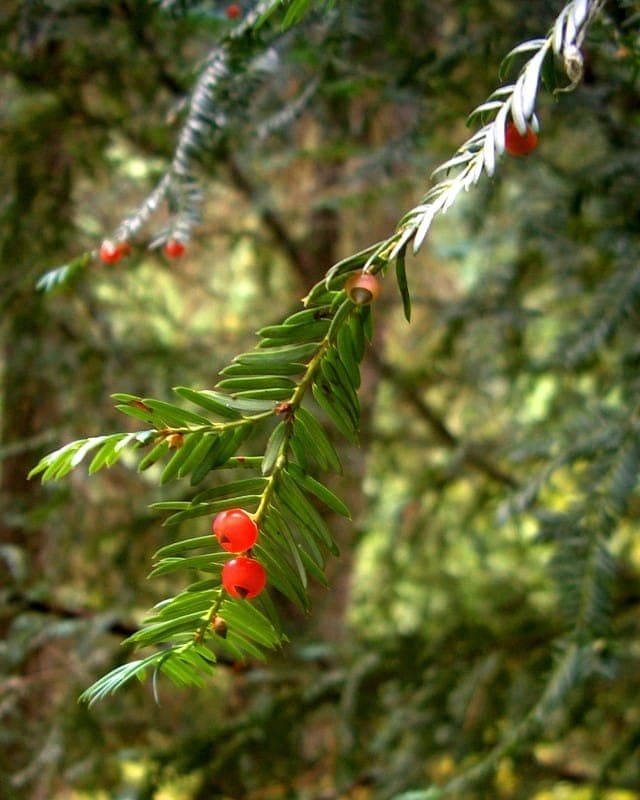
Jason Hollinger / CC BY 2.0, via Wikimedia Commons
Taxus brevifolia: complete guide
Taxus brevifolia
¿Quieres ver Taxus brevifolia: complete guide en tu jardín?
1 minuto, sin tarjeta de crédito
Taxus brevifolia, commonly known as Pacific yew or western yew, is a graceful, slow-growing conifer native to the temperate rainforests of the Pacific Northwest of North America. This elegant tree is celebrated for its soft, densely arranged needles and striking red fruits that stand out dramatically against the dark green foliage. In European gardens, it is particularly valued for its remarkable ability to thrive in shaded locations and its predictable, measured growth habit.
Overview
The Pacific yew belongs to the Taxaceae family and grows slowly to approximately 30 to 50 feet in cultivation, though it attains greater heights in its native habitat. Unlike many other conifers, this species tolerates moderate to deep shade exceptionally well. The tree is particularly prized in woodland and shadowy gardens where sun-loving evergreens struggle. All plant parts are toxic except the berry-like aril, necessitating careful placement in gardens with pets or children.
Appearance & Bloom
Taxus brevifolia is distinguished by its slender, columnar form and exceptionally soft, fine needles. The needles are very short (hence the species name "brevifolia") and create a very fine-textured appearance. The foliage ranges from dark green to grey-green. The tree produces inconspicuous flowers, but female trees can develop spectacular bright red, fleshy fruits. These arils (seed coverings) measure approximately one centimeter in length and create striking visual accents against the dark green foliage.
Ideal Location
Pacific yew thrives better in shade to partial shade than in full sun. This makes it ideal for tree-shaded gardens, under eaves, or on the north side of buildings where most conifers perform poorly. The tree tolerates light to moderate sun but demonstrates strong preference for moderate to deep shade. This characteristic makes it perfect for underplanting beneath larger trees or as an accent in a woodland garden setting.
Soil
Pacific yew prefers well-draining, moisture-retentive loam with pH 6.2 to 7.5. The tree performs poorly in heavy clay soils; improved sandy or silty loam is strongly preferred. Incorporate generous amounts of compost when planting and ensure excellent drainage. The tree struggles in compacted soils and in acid rain-affected areas.
Diseño gratis
¿Quieres ver Taxus brevifolia: complete guide en tu jardín? Crea un diseño gratis ahora.
Watering
Pacific yew prefers consistent moisture but is not water-loving. Water regularly during the first two to three years to establish a strong root system. Once established, the tree exhibits moderate drought tolerance, though consistent moisture promotes superior growth and appearance. Avoid waterlogging at all times; this can cause serious root diseases. In dry climates or during extended droughts, supplemental watering may prove necessary.
Pruning
Pacific yew requires minimal pruning due to its naturally elegant form and slow growth. Remove only dead, diseased, or damaged branches. Formal pruning is not recommended unless achieving a very specific form is desired. Cautious shortening of excessively long branches can be performed in late spring or early summer, though this would rarely be necessary.
Maintenance Calendar
Spring: Inspect for winter damage, maintain consistent moisture as growth begins. Summer: Monitor moisture levels during dry spells, avoid aggressive pruning. Autumn: Enjoy vibrant red fruiting, prepare for dormancy. Winter: Minimal maintenance; protective windscreen may prevent damage in severe winters.
Winter Hardiness
Pacific yew is hardy to zone 6, meaning it can withstand considerable cold, though it performs better in milder conditions. In harsh winters, foliage loss and branch breakage may occur. In severe continental climates (zone 5 and colder), protection from intense wind and frost desiccation may be necessary. Mulch around the base to protect roots from severe freeze-thaw stress.
Companion Plants
Pacific yew works beautifully as a specimen tree in shaded corners but pairs well with other shade-loving evergreens such as holly and other woodland plants. It pairs elegantly with ferns, astilbe, and low-growing groundcovers. The red fruits provide striking visual contrast against grey-green and silver foliage.
Closing Thoughts
Pacific yew is a subtle and elegant choice for gardeners with shaded locations seeking something distinctive and refined. With its soft needles, slow predictable growth, and cardinal-red fruits, it offers years of horticultural interest. Though less common than other yew species, it thrives reliably in moderate gardens. Seek out specialized tree nurseries for specimens. For more inspiration and plant discoveries, visit gardenworld.app/en and explore more shade-tolerant specimens on gardenworld.app/en.
¿Quieres ver Taxus brevifolia: complete guide en tu jardín? Crea un diseño gratis ahora.
Sube una foto, elige un estilo y obtén un diseño fotorrealista con lista de plantas en menos de un minuto.
Más de 10.000 jardines diseñados
Sin tarjeta de crédito


Plantas similares
Taxus chinensis: complete guide
Taxus chinensis
The Chinese yew is an elegant evergreen conifer with dense dark foliage. Discover cultivation tips, hardiness, and how it differs from other yew species for your garden.
Florida Torreya: Complete Guide to This Endangered Evergreen
Torreya taxifolia
Discover the Florida torreya (Torreya taxifolia), an endangered, elegant evergreen. Learn about care, habitat, and conservation importance.
Chinese Nutmeg Tree: complete guide
Torreya grandis
Learn everything about Torreya grandis, the Chinese nutmeg tree. Discover cultivation methods, care, and special characteristics of this rare tree.