
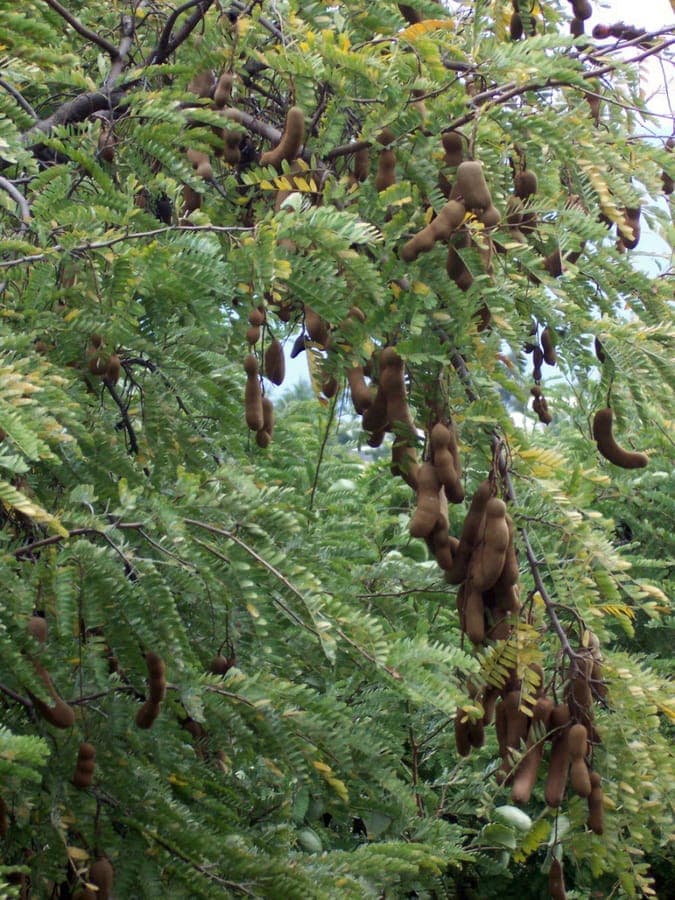
B.navez / CC BY 2.5, via Wikimedia Commons
Tamarind: complete guide
Tamarindus indica
¿Quieres ver Tamarind: complete guide en tu jardín?
1 minuto, sin tarjeta de crédito
Overview
The tamarind (Tamarindus indica) is a majestic tropical tree from Madagascar and Africa that shines in warm climates. This tree is especially renowned for its sour fruits used extensively in Asian and West Indian cuisines. With its fine feathery foliage and graceful silhouette, tamarind offers both aesthetic and practical benefits. It's a slow-growing tree requiring patience but providing enjoyment for many years.
Appearance and bloom
The tamarind grows into an impressive tree reaching 15-25 meters in natural conditions, though typically 8-10 meters in gardens. The tree features fine, elegant feathery leaves creating a light, graceful impression. In spring, yellowish flowers with red veins appear in clusters. These bloom in delicate formations. Following flowering, elongated brown pods (fruits) develop containing sour pulp highly valued in cooking.
Ideal location
Tamarind thrives best in full sun with good air circulation. Provide at least 6-8 hours of direct sunlight daily. This tree is suitable for large gardens, parks, and landscaping corners. Don't plant too close to houses or patios as the mature tree becomes large. In temperate climates, it can stay outside during summer in large containers.
Soil
Tamarind is not particularly fussy and grows in many soil types. A well-draining soil with moderate fertility is ideal however. The tree performs well in sandy, loamy soils. Avoid wet, clay soils causing waterlogging. pH can range from acidic to alkaline, though neutral is preferred (pH 6.0-8.0).
Diseño gratis
¿Quieres ver Tamarind: complete guide en tu jardín? Crea un diseño gratis ahora.
Watering
Although tamarind is fairly drought-tolerant once established, young specimens need regular watering. Water thoroughly during the growing season but allow soil to dry slightly between waterings. Once established, this tree tolerates prolonged dry periods. During very wet periods, reduce watering slightly; excessive water causes root rot.
Pruning
Pruning young tamarinds helps build strong structure. Remove crossing branches and those growing inward. Once established, pruning becomes less necessary, though you can remove dead branches. Light pruning in spring encourages more compact growth. Heavy pruning should be avoided as it causes damage and slow healing.
Maintenance calendar
Spring: Active growth, begin regular watering and feeding\nSummer: Peak growth, sometimes flowering and fruiting\nAutumn: Reduce feeding as growth slows\nWinter: Minimal care in warm climates
Winter hardiness
Tamarind is not winter-hardy in temperate climates. Trees die with prolonged exposure to temperatures below 5 degrees Celsius. In cooler regions, keep the tree indoors in a heated space or bring container plants inside before winter. In true tropical and subtropical zones, it can remain outside year-round.
Companion plants
In warm gardens, tamarind pairs well with other tropical and fruit trees like mango and papaya. Understory plants can be Plumbago or other heat and drought-tolerant crops. Herbaceous vines can grow along branches if not overly heavy.
Conclusion
Tamarind is a sublime choice for anyone wanting a tropical tree that also produces fruit. With its elegant appearance, culinary value, and relative indifference to difficult conditions, it deserves a place in warm gardens. Seek young trees and seedlings from specialized tree nurseries or tropical plant centers.
¿Quieres ver Tamarind: complete guide en tu jardín? Crea un diseño gratis ahora.
Sube una foto, elige un estilo y obtén un diseño fotorrealista con lista de plantas en menos de un minuto.
Más de 10.000 jardines diseñados
Sin tarjeta de crédito


Plantas similares
Tall Silky Lupine: complete guide
Lupinus elatus
Tall silky lupine is a fast-growing Californian perennial with silvery foliage and blue-purple flower spikes, ideal for a prairie-style garden.
Garfield Lupine: complete guide
Lupinus garfieldensis
The Garfield lupine is a rare, fast-growing American perennial for alkaline, dry grassland gardens, with striking blue flower spikes.
Lupinus elegans: complete guide
Lupinus elegans
Lupinus elegans, the elegant lupine, is a spectacular blooming plant from Mexico with blue flower spikes. Care, cultivation and garden use.