
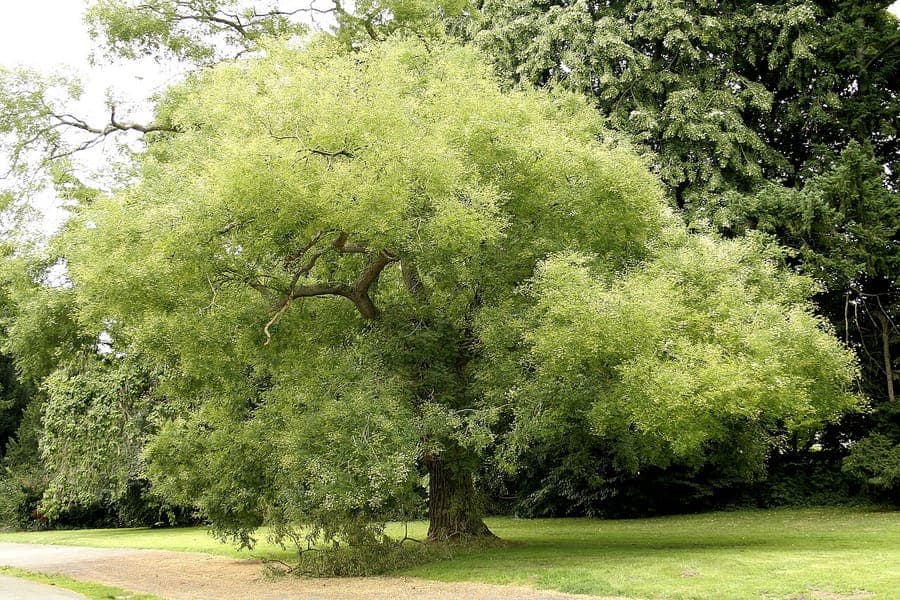
Jean-Pol GRANDMONT / CC BY 3.0, via Wikimedia Commons
Japanese pagoda-tree: complete guide
Styphnolobium japonicum
¿Quieres ver Japanese pagoda-tree: complete guide en tu jardín?
1 minuto, sin tarjeta de crédito
Japanese Pagoda-Tree: Complete Guide
The Japanese pagoda-tree (Styphnolobium japonicum), also called Pagoda-tree, is a beautiful deciduous tree from Central and South China. This member of the legume family (Fabaceae) is known for its elegant growth, impressive white flowers, and fine ornamental value. In this complete guide, we present this magnificent garden tree.
Overview
Styphnolobium japonicum is a medium-sized tree naturally found in mixed forests. The tree reaches normal heights of 15 to 25 meters. In gardens, the tree grows more compactly and is usually 10 to 15 meters tall. The tree is known for rapid growth in favorable conditions.
Appearance and Bloom
The tree has an elegant, open crown with fine, compound leaves that fall in July. The leaves are 15-25 cm long and consist of 13-17 small leaflets. Very striking white flowers appear in July-August in large, hanging panicles 20-30 cm long. The flowers smell lightly sweet and attract bees. After flowering, long, swollen pods of 5-10 cm form.
Ideal Location
The Japanese pagoda-tree thrives in full sun (minimum 6 hours of daily sunlight). The tree can also grow in semi-shade, but will flower less abundantly. Choose a sheltered, but not too warm location for optimal growth.
Soil
The tree is not very particular about soil. Good drainage is, however, essential; avoid wet or poorly draining soils. The tree grows better in nutrient-rich, neutral to slightly alkaline soil. Heavy clay soils can be amended with sand and compost.
Diseño gratis
¿Quieres ver Japanese pagoda-tree: complete guide en tu jardín? Crea un diseño gratis ahora.
Watering
Young trees need regular watering until well-established (2-3 years). After that, the tree is relatively drought-tolerant. In very dry summers, supplementary watering can be beneficial. In winter, minimal watering.
Pruning
The Japanese pagoda-tree usually requires little pruning. Remove damaged or overlapping branches in spring. Prevent dense growth by avoiding excessive pruning, as this worsens flowering.
Maintenance Calendar
In spring: prune damaged branches, replenish mulch layer. Summer: water regularly during dry periods. After flowering: remove withered panicles. Fall: clean up fallen leaves. Winter: no maintenance needed.
Winter Hardiness
The Japanese pagoda-tree is hardy in zones 5-10 (down to approximately -25 degrees Celsius). In very cold regions, young trees can be protected with a bag or stake against wind.
Health and Pests
The tree is relatively pest-resistant. Occasionally insects may occur, but usually cause no serious damage. Fungi can occur in very moist situations; ensure good ventilation.
Companion Plants
The Japanese pagoda-tree combines well with other trees such as Cherry, Magnolia, and Hawthorn. Shade-loving ground covers under the tree also work well.
Conclusion
The Japanese pagoda-tree is a beautiful choice for gardens seeking elegance, flowering abundance, and ornamental value. With its rapid growth and low-maintenance character, it is a perfect addition to any garden. For more garden inspiration, visit gardenworld.app/en.
¿Quieres ver Japanese pagoda-tree: complete guide en tu jardín? Crea un diseño gratis ahora.
Sube una foto, elige un estilo y obtén un diseño fotorrealista con lista de plantas en menos de un minuto.
Más de 10.000 jardines diseñados
Sin tarjeta de crédito


Plantas similares
Tall Silky Lupine: complete guide
Lupinus elatus
Tall silky lupine is a fast-growing Californian perennial with silvery foliage and blue-purple flower spikes, ideal for a prairie-style garden.
Garfield Lupine: complete guide
Lupinus garfieldensis
The Garfield lupine is a rare, fast-growing American perennial for alkaline, dry grassland gardens, with striking blue flower spikes.
Lupinus elegans: complete guide
Lupinus elegans
Lupinus elegans, the elegant lupine, is a spectacular blooming plant from Mexico with blue flower spikes. Care, cultivation and garden use.