
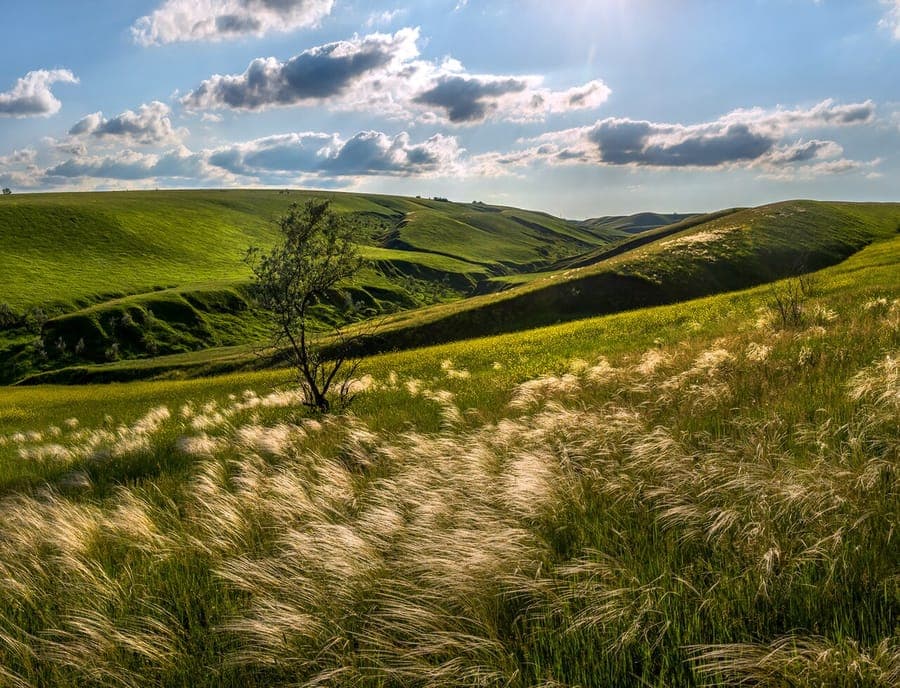
Лашков Фёдор / CC BY 4.0, via Wikimedia Commons
Stipa lessingiana: complete guide
Stipa lessingiana
¿Quieres ver Stipa lessingiana: complete guide en tu jardín?
1 minuto, sin tarjeta de crédito
Overview
Stipa lessingiana, commonly known as feather grass or needle grass, is an elegant ornamental grass native to the steppes from Greece to Mongolia. This remarkable plant is renowned for its fine, needle-like foliage and spectacular long awns that dance in the wind. With its light silvery-grey colour, Stipa lessingiana creates a romantic, almost fairy-tale effect in the garden. The grass is robust, thrives in dry places, and is an excellent choice for modern, Mediterranean or natural garden styles.
The plant grows slowly to a compact size (approximately 60 to 80 centimetres tall) and forms a beautiful fountain-shaped habit. The awns, which appear in summer and autumn, possess a delicate elegance that attracts many birds and insects. Stipa lessingiana is fully hardy and suitable for temperate climates throughout Europe.
Appearance and bloom
Stipa lessingiana grows as a compact, fountain-like mound with fine, thin leaves displaying a deep green to grey-green colour. The foliage is needle-like and very narrow, giving the plant its characteristic fine texture. The awns are long, graceful, and silvery-white to light brown, with fine hairs that make them extra delicate.
The flowering period extends from June to September, with awns appearing in great abundance above the leaf mass. In the wind, the awns sway gently, creating a mesmerising visual effect. The awns remain intact for a long time and may persist on the plant until late autumn or early winter.
After flowering, the awns wither and become brownish. Many gardeners leave the dead awns standing until spring, as they remain decorative and provide bird food.
Ideal location
Stipa lessingiana grows best in a fully sunny location. The grass requires a minimum of six hours of direct sunlight daily, preferably more. Without sufficient sunlight, the grass will grow less compactly and produce fewer awns.
The plant is extremely drought-tolerant and withstands full, intense sun without problems. It thrives excellently in Mediterranean or southern gardens. Position Stipa lessingiana where the sun highlights its elegance, such as against a dark background or where light can shine through it.
Soil
Stipa lessingiana grows well in virtually any soil, provided it drains well. The grass cannot tolerate wet or heavy clay soils. Ensure good drainage by adding sand or gravel if your soil contains too much clay.
The plant is very undemanding regarding nutrients and can grow in poor, sandy or stony soils. It prefers chalky soils but also grows well in neutral or slightly acidic ones. Avoid soils that remain constantly wet.
Soil preparation: Mix your garden soil with coarse sand (20-30 percent) and gravel (10-15 percent) for perfect drainage.
Diseño gratis
¿Quieres ver Stipa lessingiana: complete guide en tu jardín? Crea un diseño gratis ahora.
Watering
Stipa lessingiana is extremely drought-tolerant once established. After planting, water the grass regularly (weekly) for the first two to three months until it roots well. Thereafter, it needs minimal moisture.
During the growing season (spring and early summer), you can water the grass once a week, but only if the weather is dry. In summer and autumn, when the grass is fully grown, it needs virtually no additional water.
Avoid waterlogged conditions and excess moisture, as these cause root rot. In rainy seasons (autumn and winter), additional watering is unnecessary.
Pruning
Stipa lessingiana requires very little maintenance. In early spring (March to April), you can cut the grass short (to approximately ten centimetres from the ground) or carefully remove dead leaves and awns. Many gardeners leave the grass standing until spring and let wind and weather do the work.
Trim only with gloves and carefully, as the ornamental awns are fragile. You can also simply comb out the dried upper layer by hand.
Remember: never cut the grass in autumn, as this damages the plant and protective winter layers.
Maintenance calendar
March-April: Clean the plant and remove dead leaves. May-June: The plant begins to grow; ensure good drainage. July-September: Flowering period; enjoy the ornamental awns. October-February: Leave the grass standing for winter protection and bird food.
Winter hardiness
Stipa lessingiana is fully hardy to approximately -15 degrees Celsius. In many parts of northern Europe it will survive winter without problems. In areas with severe winters, protect the plant by adding extra mulch around its base.
The plant tolerates snow and frost well, although heavy snowfall may damage the ornamental awns. This poses no threat to the plant's health.
Companion plants
Stipa lessingiana combines beautifully with other drought-tolerant plants and ornamental grasses. Consider:
Lavandula angustifolia (English lavender): Creates striking colour contrast with blue flowers. Coreopsis tinctoria: Yellow and red flowers that stand out beautifully. Euphorbia characias: A structurally strong plant with yellow-green flower heads. Santolina chamaecyparissus: Silver-grey foliage that pairs well with fine ornamental grass. Dichondra argentea 'Silver Falls': For ground-level planting combinations.
Plant Stipa lessingiana in groups of three to five specimens for maximum effect.
Closing thoughts
Stipa lessingiana is an excellent choice for anyone seeking an elegant, drought-tolerant plant. With minimal care, you will enjoy years of its graceful, dancing awns. Whether creating a Mediterranean or modern garden, this needle grass adds texture, movement and lightness. At gardenworld.app you will find inspiration and guidance for incorporating this beautiful grass into your garden design. At gardenworld.app we can help integrate this grass into your ideal front garden.
¿Quieres ver Stipa lessingiana: complete guide en tu jardín? Crea un diseño gratis ahora.
Sube una foto, elige un estilo y obtén un diseño fotorrealista con lista de plantas en menos de un minuto.
Más de 10.000 jardines diseñados
Sin tarjeta de crédito


Plantas similares
Sporobolus pungens: complete guide
Sporobolus pungens
Sporobolus pungens is a stoloniferous Mediterranean coastal grass with outstanding salt and drought tolerance, perfect for seaside and dry gardens.
Mediterranean aegilops: complete guide
Aegilops biuncialis
Everything about Aegilops biuncialis, a Mediterranean annual grass with ornamental spikes and outstanding drought tolerance for dry gardens.
Silver bluestem: complete guide
Bothriochloa saccharoides
Full guide to Bothriochloa saccharoides (silver bluestem): site, soil, watering, winter hardiness, pruning, and garden companions.