
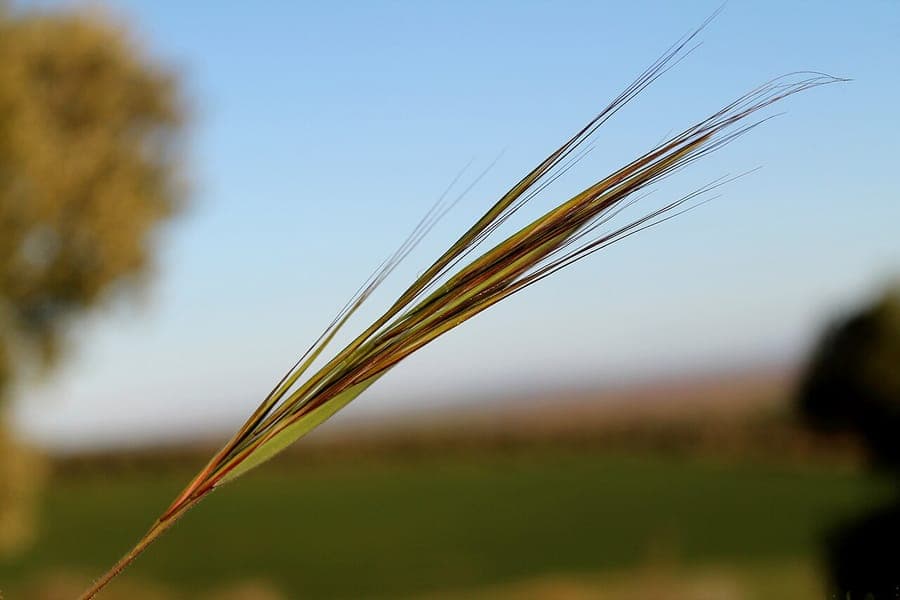
Juanmadro / CC BY-SA 3.0, via Wikimedia Commons
Stipa capensis: complete guide
Stipa capensis
¿Quieres ver Stipa capensis: complete guide en tu jardín?
1 minuto, sin tarjeta de crédito
Overview
Stipa capensis, commonly known as Mediterranean feather grass or Cape rice grass, is an elegant ornamental grass originating from the Mediterranean region. This fine, airy grass reaches heights of approximately 40-60 centimeters and is beloved by gardeners seeking texture and movement in their compositions. Its characteristic feature is the thin, long flower spikes that wave in the breeze, giving the plant a highly refined appearance.
The grass grows naturally in Mediterranean climates where summers are warm and dry. Despite this origin, it can overwinter reasonably well in the Netherlands, though it requires protection during very cold winters. While not simple for everyday gardens, those willing to take the risk are rewarded with unique aesthetic value.
Appearance and bloom cycle
Stipa capensis forms dense, shrub-like clumps of fine foliage. The leaves are narrow and rippling, displaying a grey-green to green coloration. From April to May, the characteristic plumes appear - extremely thin and long flower spikes that can extend to 20 centimeters. These are the absolute eye-catchers of the grass, creating a refined, almost ethereal impression when backlit.
The plumes are initially greenish and later fade to a light brown or silvery-grey color. This seasonal color play makes the grass interesting throughout extended periods. In autumn, the plumes brown further while retaining their structure deep into winter, which proves valuable in garden designs that emphasize winter interest.
Ideal location
Stipa capensis requires a sunny location, ideally south or west-facing. Minimum 6-8 hours of direct sunlight daily is needed for optimal growth. In partial shade, the grass grows but remains dense and less elegant. Because this Mediterranean grass loves heat, a warm position is essential for overwintering.
The plant functions well as a solitary accent or in groups of three to five specimens. In borders, it works beautifully combined with perennials that similarly favor warm, dry locations. Avoid areas where wind blows too harshly, as while the grass feels anchored, very strong wind can damage the plumes.
Soil requirements
Stipa capensis is very particular about soil composition. It requires well-draining, sandy to gravelly soil. Heavy clay is completely unsuitable - the plant suffers in wet, water-retaining soils. Excellent drainage is essential, especially during winters.
The plant prefers poor soil, so rich, nutrient-heavy soils lead to weaker material with greater disease susceptibility. When planting, add sand or gravel to the planting location to improve drainage. A pH between 6.5 and 7.5 is ideal.
Diseño gratis
¿Quieres ver Stipa capensis: complete guide en tu jardín? Crea un diseño gratis ahora.
Watering
Once established, Stipa capensis is drought-tolerant and requires minimal supplemental water. During dry growing seasons (June-August), you can occasionally water, but preference goes to infrequent deep watering over regular misting. Excessive moisture leads to disease and weak growth.
After planting (May-June), you need regular water for several weeks until the root system establishes well. Thereafter, minimize watering significantly. In winter, typically no water is needed unless conditions are very dry.
Pruning
Stipa capensis requires minimal pruning work. Remove dead leaves and damaged plumes in spring (March-April). Don't cut the plant drastically - this can lead to death. A light cleanup suffices.
After winter, you can gently remove dead vegetation. Wear gloves, as the leaves can be sharp. Avoid pruning after May, as this may hinder flowering.
Maintenance calendar
May-June: Plant and water regularly initially. July-August: Water during persistent drought. September-October: Prepare for winter, no feeding. November-March: Winter rest; gently remove dead leaves. April: Spring cleanup and check for damage.
Winter hardiness
Stipa capensis is only moderately winter-hardy (USDA zones 8-9). In the Netherlands, it can survive winter in warm, protected locations, especially in the western and southern regions. In other areas, winter protection is recommended - cover the plant base with dry leaves, branches, or burlap.
In severe winters, part of the plant will die. This is not unusual. Some gardeners treat it as an annual and replant yearly. This is an acceptable approach for those unwilling to take risks.
Companion plants
Combine Stipa capensis with other Mediterranean lovers such as lavender, sage, rosemary, and santolina. Roses in red or yellow tones contrast beautifully with the fine, grey-green foliage. Low, dense ground covers like creeping thyme create a beautiful understory.
Avoid dense-growing, moisture-loving plants in immediate vicinity. Combining different ornamental grasses (e.g., with Stipa tenuissima or Bouteloua gracilis) creates interesting textures.
Closing
Stipa capensis is not a grass for every gardener and every location. It requires warmth, well-draining soil, and dry conditions. Those who can meet these requirements are rewarded with an extremely elegant, refined grass that adds considerable visual interest. Beginners should purchase from Intratuin or Gamma. For more information on ornamental grass use, read articles on gardenworld.app about drought-tolerant plants or Mediterranean gardens.
Via gardenworld.app, you can also discover how to shape your entire garden in Mediterranean style with similar plants and colors. This grass certainly deserves attention from lovers of refined, sustainable garden composition.
¿Quieres ver Stipa capensis: complete guide en tu jardín? Crea un diseño gratis ahora.
Sube una foto, elige un estilo y obtén un diseño fotorrealista con lista de plantas en menos de un minuto.
Más de 10.000 jardines diseñados
Sin tarjeta de crédito


Plantas similares
Sporobolus pungens: complete guide
Sporobolus pungens
Sporobolus pungens is a stoloniferous Mediterranean coastal grass with outstanding salt and drought tolerance, perfect for seaside and dry gardens.
Mediterranean aegilops: complete guide
Aegilops biuncialis
Everything about Aegilops biuncialis, a Mediterranean annual grass with ornamental spikes and outstanding drought tolerance for dry gardens.
Silver bluestem: complete guide
Bothriochloa saccharoides
Full guide to Bothriochloa saccharoides (silver bluestem): site, soil, watering, winter hardiness, pruning, and garden companions.