
Wikimedia Commons / Public domain, via Wikimedia Commons
Smooth cordgrass: complete guide
Sporobolus alterniflorus
¿Quieres ver Smooth cordgrass: complete guide en tu jardín?
1 minuto, sin tarjeta de crédito
Overview
Smooth cordgrass (Sporobolus alterniflorus) is a resilient saltwater-tolerant grass from the Poaceae family. This species plays a vital role in coastal gardens and is widely used for bank stabilization and shoreline erosion control. The plant thrives from Eastern Canada to Eastern Mexico and has been introduced to Europe, Asia, and Africa.
Appearance and Bloom
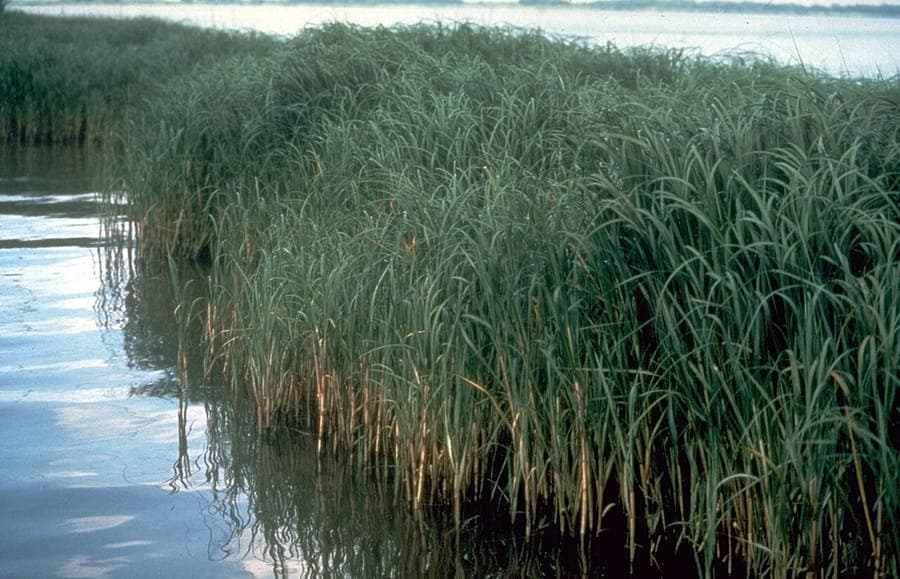
The plant forms dense, upright grass clumps reaching approximately 120 centimeters in height. Leaves alternate along the stem, giving the plant its distinctive name. Flowers emerge as slender panicles in yellow to brown tones. Blooming occurs from August through October. Foliage remains evergreen throughout the year.
Ideal Location
Smooth cordgrass thrives in full sun conditions. Place in sunny locations receiving minimum 6-8 hours of direct sunlight daily. The plant tolerates partial shade but develops denser, stronger growth in complete sunlight. Protection from strong winds is advisable for optimal development.
Soil
The plant flourishes in wet, saline soils. Smooth cordgrass accepts heavy clay soils and handles periodic waterlogging without difficulty. It contributes to salt tolerance and nutrient cycling. Good drainage structure prevents compaction.
Watering
Maintain consistent water levels for best results. The plant tolerates freshwater and saltwater irrigation, making it ideal for coastal applications. Regular watering stimulates vigorous growth. Increase frequency during dry spells to ensure vitality.
Diseño gratis
¿Quieres ver Smooth cordgrass: complete guide en tu jardín? Crea un diseño gratis ahora.
Pruning
Smooth cordgrass requires minimal maintenance. Remove dead material in early spring. Natural reserves benefit from allowing vegetation to decompose naturally. Regular removal of senescent foliage promotes new shoot emergence.
Maintenance Calendar
February-March: Growth begins, remove old stems. May-June: Rapid expansion, monitor water levels. August-October: Flowering and seed maturation. November-January: Winter dormancy, minimal care.
Winter Hardiness
The plant tolerates temperatures to -15 degrees Celsius and regenerates readily after frost exposure. Suitable for temperate climates worldwide. Regions with temperatures below -20 degrees Celsius benefit from protective measures.
Companion Plants
Pairs excellently with other salt-tolerant species including Phragmites australis, Scirpus maritimus, and Atriplex halima. These combinations strengthen shoreline vegetation and create valuable wildlife habitat.
Conclusion
Smooth cordgrass is an essential plant for coastal erosion management and wetland restoration. Purchase seeds or seedlings from garden centers. Plant density of 4-6 specimens per square meter recommended for rapid ground coverage.
Visit gardenworld.app/en for additional plant recommendations and gardenworld.app/en for landscape design consultation.
¿Quieres ver Smooth cordgrass: complete guide en tu jardín? Crea un diseño gratis ahora.
Sube una foto, elige un estilo y obtén un diseño fotorrealista con lista de plantas en menos de un minuto.
Más de 10.000 jardines diseñados
Sin tarjeta de crédito


Plantas similares
Sporobolus pungens: complete guide
Sporobolus pungens
Sporobolus pungens is a stoloniferous Mediterranean coastal grass with outstanding salt and drought tolerance, perfect for seaside and dry gardens.
Mediterranean aegilops: complete guide
Aegilops biuncialis
Everything about Aegilops biuncialis, a Mediterranean annual grass with ornamental spikes and outstanding drought tolerance for dry gardens.
Silver bluestem: complete guide
Bothriochloa saccharoides
Full guide to Bothriochloa saccharoides (silver bluestem): site, soil, watering, winter hardiness, pruning, and garden companions.