
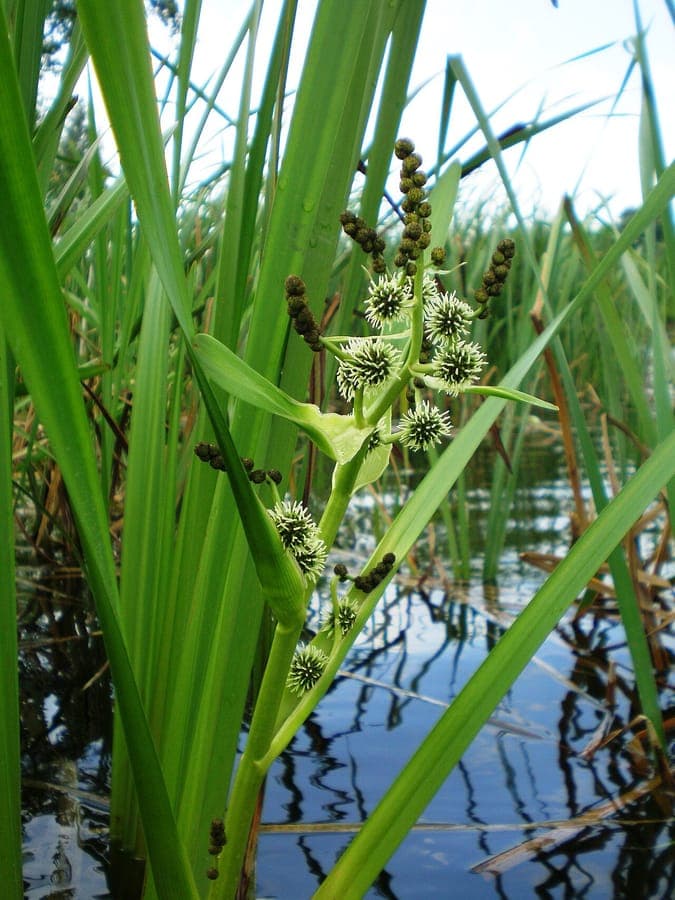
Hugo.arg / CC BY-SA 4.0, via Wikimedia Commons
Branched bur-reed: complete guide
Sparganium erectum
¿Quieres ver Branched bur-reed: complete guide en tu jardín?
1 minuto, sin tarjeta de crédito
Branched Bur-Reed: Complete Guide
Overview
The branched bur-reed (Sparganium erectum), also known as exotic bur-reed or simple-stem burr-reed, is a robust aquatic plant from the Typhaceae family. This plant naturally grows in temperate regions from Europe to Central Asia and North Africa. The branched bur-reed is one of the most adaptive and versatile species in the Sparganium genus.
This powerful plant is perfect for larger water gardens and natural pond ecosystems. The branched bur-reed distinguishes itself through its size, vigor, and ability to thrive in very diverse water situations. It is an excellent choice for professional landscapers and enthusiastic home gardeners.
Appearance and Bloom
Sparganium erectum is a large, upright plant that can reach 60-150 centimeters high. The plant has broad, greenish leaves clearly visible above water. The characteristic flowers appear as large, spherical flower heads that are bright green.
Bloom occurs from May to August, offering a longer flowering period than many other species. The flowers are highly attractive to insects, especially bees and flies. After blooming, seeds develop that attract many bird species.
Ideal Location
The branched bur-reed grows optimally in fresh water at moderate depths (30-120 centimeters) in open, sunny locations. This plant needs at least 6-8 hours of direct sunlight daily for optimal growth. In partial shade, the plant grows more slowly but still well.
The plant grows in both still waters and moderate currents. In landscape designs, use this plant to indicate the background of water gardens or as natural screening. The height makes it ideal for privacy screening.
Soil Requirements
The branched bur-reed thrives best in nutrient-rich, muddy soils with a pH between 7.0 and 7.5. This is a very adaptive plant that can grow in diverse soil types. The plant tolerates acidic, neutral, and slightly alkaline soils.
Ensure a well-grounded planting soil with abundant organic material. Clay-based, heavy soils are ideal because they retain nutrients well. Add compost yearly to keep soil nutrient-rich.
Watering
The branched bur-reed is a fully aquatic plant requiring constant water supply. The plant grows in fresh water and can rarely show tolerance for slightly brackish water. Keep water at the correct depth consistently for optimal growth.
The plant grows in both excavated ponds and large water basins. For best results, ensure water is regularly refreshed and nutrients are available. Water temperature can range from cold to moderately warm.
Diseño gratis
¿Quieres ver Branched bur-reed: complete guide en tu jardín? Crea un diseño gratis ahora.
Pruning
The branched bur-reed requires regular pruning to stay under control. This is a vigorous grower that can become invasive without proper control. Remove dead leaves and stems regularly.
Pruning can occur throughout the growing season. Sharp pruning shears prevent damage. Maintaining the plant at reasonable size protects other aquatic plants and maintains aesthetic balance in your water garden.
Maintenance Calendar
March-April: Cleanup and check for overwintering damage. May-June: Growth begins, check regularly. July-August: Peak growth, intensive maintenance. September-October: Winter preparation. November-February: Dormancy.
Monthly: Check water quality, add nutrients, remove damaged parts. Weekly during growth: Check for new weeds and pests.
Winter Hardiness
The branched bur-reed is highly winter-hardy and can tolerate temperatures to -25 degrees Celsius. The plant is native to Europe and therefore very well adapted to seasonal changes. In frozen waters, the underwater root system remains intact and alive.
Ensure you regularly make holes in the ice for gas exchange. This prevents toxic gas buildup under the ice. In mild winters, the plant can even maintain above-water growth.
Companion Plants
The branched bur-reed is a dominant plant that works well as background for more delicate aquatic plants. Combine it with narrower, more elegant plants like water lilies and aquatic plants. In more natural settings, it grows well with reed, willow trees, and other wetland flora.
The height of this plant makes it ideal for creating layered arrangements in water gardens. Use it as background structure with lower plants in foreground for optimal visual balance.
Conclusion
The branched bur-reed is an excellent choice for those seeking a strong, dominant aquatic plant for larger water gardens. Its fast growth, robustness, and natural beauty make it valuable for any water garden project. Start now integrating this powerful plant!
For purchasing branched bur-reed, consult specialized garden centers. Visit gardenworld.app/en for comprehensive water garden planning guides. Expert advisors help you select the perfect aquatic plant combination for your garden.
¿Quieres ver Branched bur-reed: complete guide en tu jardín? Crea un diseño gratis ahora.
Sube una foto, elige un estilo y obtén un diseño fotorrealista con lista de plantas en menos de un minuto.
Más de 10.000 jardines diseñados
Sin tarjeta de crédito


Plantas similares
American bur-reed: complete guide
Sparganium americanum
Everything about Sparganium americanum: location, soil, care and use of this robust North American aquatic plant in ponds and water margins.
Broadfruit bur-reed: complete guide
Sparganium eurycarpum
Everything about broadfruit bur-reed (Sparganium eurycarpum): location, soil, care, and use in ponds and waterside plantings.
Narrow-leaf cattail: complete guide
Typha domingensis
Narrow-leaf cattail is a water plant from tropical and subtropical Africa with characteristic brown flower spikes. Ideal for marsh gardens, shorelines and water gardens. Very hardy.