
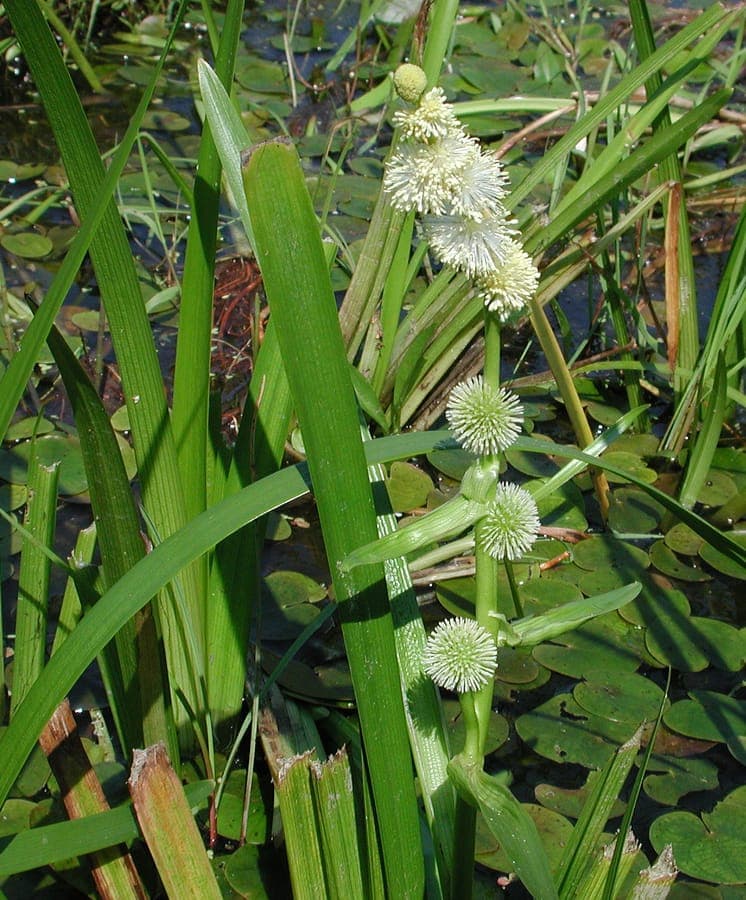
G.-U. Tolkiehn / CC BY 3.0, via Wikimedia Commons
European bur-reed: complete guide
Sparganium emersum
¿Quieres ver European bur-reed: complete guide en tu jardín?
1 minuto, sin tarjeta de crédito
European Bur-Reed: Complete Guide
Overview
The European bur-reed (Sparganium emersum) is an adaptive aquatic plant from the Typhaceae family widely distributed across Europe. Also known as Rubanier dressé in French and Aufrechter Igelkolben in German, this plant naturally grows in temperate waters from Europe to Central Asia. The plant is renowned for being robust and flexible in various water conditions.
This species is highly suitable for gardens and landscape projects because it adapts well to changing water quality and depths. The European bur-reed offers both aesthetic beauty and practical benefits for water ecosystems.
Appearance and Bloom
Sparganium emersum is a herbaceous plant with stiffly upright stems reaching 40-90 centimeters high. The plant has long, narrow leaves with a verdant appearance. The striking flowers appear as dark green spheres that are highly characteristic.
The flowering period extends from June to September, making this plant perfect for summer gardens. The flowers attract many insects and are valuable for beekeeping and pollinating insects. After blooming, seeds develop, providing bird food in autumn.
Ideal Location
The European bur-reed thrives best in fresh water at moderate depths (30-80 centimeters). The plant grows in both still and slowly flowing waters, making it highly adaptive. The plant prefers full sun but tolerates light shade.
Ensure the planting location has good water retention and is not exposed to extreme drought. In landscape designs, you can use the plant as a focal point in shallow zones of water gardens or along pond edges.
Soil Requirements
The European bur-reed grows well in nutrient-rich, muddy soils with a pH around 7.0-7.5. This plant's tolerance is much higher than the floating bur-reed and can even grow in slightly calcareous substrates. This makes it a more versatile choice for diverse water gardens.
Make the planting medium rich by adding organic matter like peat or compost. Heavy, clay-based soils with plenty of nutrients are ideal. Avoid purely sandy soils without organic material.
Watering
The European bur-reed is an aquatic plant requiring constant water access. The plant grows in fresh water and can show tolerance for slightly brackish conditions. Keep the water surface consistent, with the plant partially submerged.
The plant grows in both excavated ponds and water basins. For optimal growth, ensure water is regularly refreshed and nutrients are available. Water temperature can range from cold to moderately warm.
Diseño gratis
¿Quieres ver European bur-reed: complete guide en tu jardín? Crea un diseño gratis ahora.
Pruning
The European bur-reed requires moderate maintenance and regular pruning. Remove damaged parts and dead leaves regularly to keep the plant healthy. Pruning can occur throughout the growing season.
Preventing overgrowth is important, especially since this plant is vigorous and fast-growing. Regularly control growth to maintain balance in your water garden. This will prevent the plant from overrunning other species.
Maintenance Calendar
Spring (March-April): Start cleaning and begin checking for overwintering issues. May to July: Peak growth period, regularly check for pests. August to October: Monitoring and winter preparation. November to February: Dormancy with minimal maintenance.
Monthly maintenance includes water quality checks, nutrient supplementation, and pest/disease monitoring. Ensure you remove all damaged material immediately.
Winter Hardiness
The European bur-reed is highly winter-hardy and can tolerate temperatures down to -25 degrees Celsius. The plant originates from Europe and is therefore excellently adapted to seasonal changes. In cold winters, the underwater-growing parts of the plant remain vital.
In frozen waters, the plant survives thanks to its strong root system remaining below the ice. Ensure you regularly make holes in the ice for gas exchange. This prevents toxic gas accumulation that is harmful to aquatic life.
Companion Plants
The European bur-reed grows harmoniously with water lilies, aquatic plants and moss plants. Group these according to water depth and growth requirements for natural effects. The plant is ideal in combinations with chives, watermint and other herbaceous aquatic plants.
In marshy transition zones, reed, willows and other paludi culture plants pair well with European bur-reed. This creates dynamic, ecologically healthy water habitats with good biodiversity.
Conclusion
The European bur-reed is a highly practical and versatile choice for any water garden project. Its robustness, adaptability and natural beauty make it ideal for professional and private applications. Start now integrating this plant into your waterscape!
For purchasing European bur-reed, consult reputable garden centers. Visit gardenworld.app/en for inspiration on water garden design and plant collections. Let expert advisors help you create the most suitable design for your needs.
¿Quieres ver European bur-reed: complete guide en tu jardín? Crea un diseño gratis ahora.
Sube una foto, elige un estilo y obtén un diseño fotorrealista con lista de plantas en menos de un minuto.
Más de 10.000 jardines diseñados
Sin tarjeta de crédito


Plantas similares
American bur-reed: complete guide
Sparganium americanum
Everything about Sparganium americanum: location, soil, care and use of this robust North American aquatic plant in ponds and water margins.
Broadfruit bur-reed: complete guide
Sparganium eurycarpum
Everything about broadfruit bur-reed (Sparganium eurycarpum): location, soil, care, and use in ponds and waterside plantings.
Narrow-leaf cattail: complete guide
Typha domingensis
Narrow-leaf cattail is a water plant from tropical and subtropical Africa with characteristic brown flower spikes. Ideal for marsh gardens, shorelines and water gardens. Very hardy.