
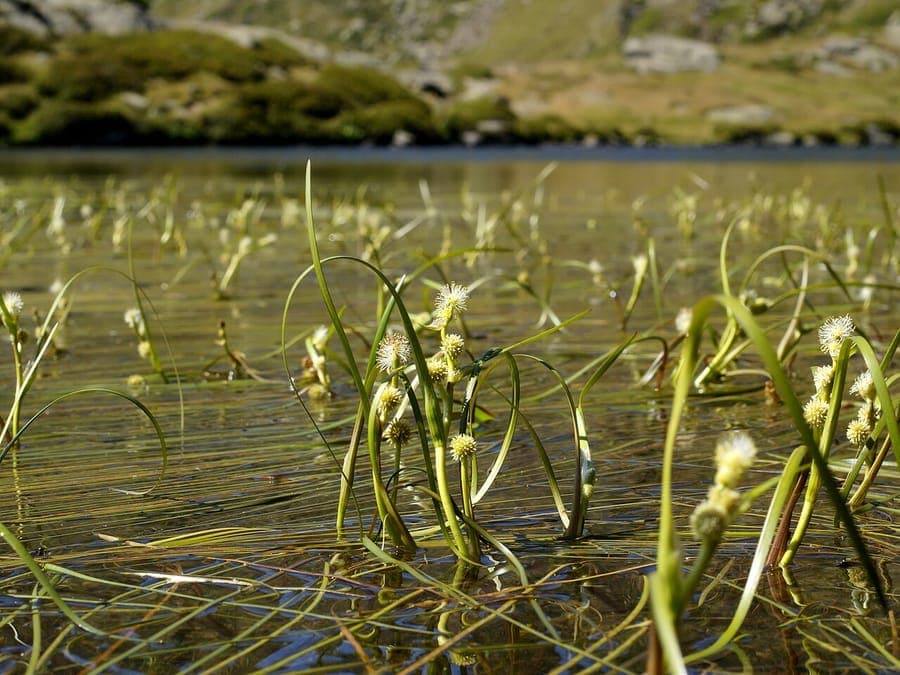
Hans Hillewaert / CC BY-SA 4.0, via Wikimedia Commons
Floating bur-reed: complete guide
Sparganium angustifolium
¿Quieres ver Floating bur-reed: complete guide en tu jardín?
1 minuto, sin tarjeta de crédito
Floating Bur-Reed: Complete Guide
Overview
The floating bur-reed (Sparganium angustifolium), also known as narrowleaf bur-reed, is an elegant aquatic plant belonging to the Typhaceae family. The common name "bur-reed" refers to the characteristic spiky flower heads that resemble small hedgehogs. This plant grows naturally in temperate regions of the northern hemisphere, from Europe to North America.
The floating bur-reed is a fascinating underwater plant that works excellently for ponds, lakes and water gardens. With its graceful growth pattern and attractive flowers, it is a popular choice among plant enthusiasts looking to enhance their aquatic landscapes.
Appearance and Bloom
Sparganium angustifolium distinguishes itself through long, narrow leaves that grow underwater. The plant typically reaches heights of 30 to 60 centimeters above the water surface. The flower heads are characteristic rounded structures, greenish in color.
The plant flowers from July to September, making it ideal for late summer aquatic flora. The blooms attract insects and contribute to your water ecosystem's biodiversity. In autumn, seeds develop and spread via water and bird dispersal.
Ideal Location
Floating bur-reed thrives best in fresh water at moderate to shallow depths (30-100 centimeters). The plant requires abundant light and grows optimally in full sun to partial shade. Ensure your plant receives at least 6-8 hours of direct sunlight daily.
This plant grows well in both still water and slow-moving streams. However, strong currents can damage the plant. Choose a location in your pond where it receives some protection from wind and flow.
Soil Requirements
Floating bur-reed grows best in nutrient-rich, muddy substrates with a pH between 5.0 and 5.5. Heavy, clay-based soil is ideal for this aquatic plant because it retains nutrients well. Ensure the substrate is nutrient-rich by adding compost regularly.
The plant prefers wet, marshy soils with abundant organic material. This provides a stable growing environment and continuous nutrition. Sand alone is unsuitable; mix sand with clay and compost for optimal results.
Watering
As an aquatic plant, floating bur-reed requires continuous water access. The plant grows in fresh water and does not tolerate salt water. Moisture levels must remain constantly high, with the plant partially submerged.
For container cultivation, place the plant in a water-filled basin with regular water changes. Water temperature can vary from cold (alpine environments) to moderately warm. Ensure your pond or container never dries completely.
Diseño gratis
¿Quieres ver Floating bur-reed: complete guide en tu jardín? Crea un diseño gratis ahora.
Pruning
Floating bur-reed requires minimal maintenance and pruning. Remove damaged or dead leaves to keep the plant healthy and attractive. Prune in early spring before growth fully commences.
Preventing overgrowth is important in smaller water gardens. Regularly remove excess growth to allow other aquatic plants sufficient space. This also helps maintain the natural appearance of your water ecosystem.
Maintenance Calendar
Spring (March-April): Check for damage and begin regular maintenance. May to August is the growth period when you regularly monitor plant health. September to October is seed collection time if desired. November to February is dormancy.
Regular checks: Monitor water levels and quality monthly. Watch for pests and diseases. Add nutrients as needed based on plant requirements.
Winter Hardiness
Floating bur-reed is winter-hardy in temperate to cold climates. In Europe, this plant naturally grows in regions with fairly harsh winters. The plant can tolerate temperatures down to -20 degrees Celsius.
In winter conditions, the plant survives underwater thanks to its strong root system. Ensure your pond does not freeze solid by regularly making holes in the ice to allow gas exchange. This prevents toxic gas buildup under ice.
Companion Plants
Floating bur-reed grows well with other aquatic plants such as water crowfoot, water gentian, and watermint. Group plants according to their water depth preferences to create a natural, layered look.
In marshy zones, plants like reed, cattail, and willow pair well with floating bur-reed. This creates a rich, biodiverse water habitat. Avoid planting too many different species simultaneously, as this can cause congestion.
Conclusion
Floating bur-reed is a valuable addition to any water garden. With its graceful growth, interesting flowers, and low maintenance requirements, it is a perfect choice for both beginners and experienced gardeners. Start today and enjoy the beauty of this native aquatic plant!
For purchasing floating bur-reed, consult local garden centers with quality aquatic plant selections. Visit gardenworld.app/en for more information about aquatic plant collections and garden design. You will find inspiration and expert advice for your water garden.
¿Quieres ver Floating bur-reed: complete guide en tu jardín? Crea un diseño gratis ahora.
Sube una foto, elige un estilo y obtén un diseño fotorrealista con lista de plantas en menos de un minuto.
Más de 10.000 jardines diseñados
Sin tarjeta de crédito


Plantas similares
American bur-reed: complete guide
Sparganium americanum
Everything about Sparganium americanum: location, soil, care and use of this robust North American aquatic plant in ponds and water margins.
Broadfruit bur-reed: complete guide
Sparganium eurycarpum
Everything about broadfruit bur-reed (Sparganium eurycarpum): location, soil, care, and use in ponds and waterside plantings.
Narrow-leaf cattail: complete guide
Typha domingensis
Narrow-leaf cattail is a water plant from tropical and subtropical Africa with characteristic brown flower spikes. Ideal for marsh gardens, shorelines and water gardens. Very hardy.